PART 3
“That sounds like a perfectly reasonable explanation.”
Silence.
Then Vanessa lowered her voice.
“You canceled my card?”
“I canceled my permission for you to spend my money.”
“But Christmas is in four days!”
“Then I suppose you should be grateful you found out now instead of on Christmas morning.”
She made a sound somewhere between a gasp and a laugh.
“You cannot be serious. Your son and I are living in your house. We are family!”
“Exactly,” I replied. “And family should be able to discuss a holiday budget before spending thousands of dollars that belong to someone else.”
“Colin told me you agreed to pay for everything!”
“No. Colin told you I should pay for everything. Those are two very different statements.”
She was quiet for a moment.
Then came the words I had heard so many times over the years.
“You’re doing this to punish me.”
“No, Vanessa. I’m simply no longer doing it for you.”
I ended the call.
For the first time in three years, I did not feel the need to explain myself afterward.
I didn’t send a follow-up message. I didn’t apologize for my tone. I didn’t offer to transfer money into her account so she could save face in front of the cashier.
I finished my coffee, paid the bill, and walked out into the cold.
My flight to Arizona was scheduled for the following morning.
And for the first time since Diane died, I was looking forward to Christmas.
Not because I expected it to be joyful.
Because I had finally stopped being afraid of disappointing people who had never been afraid of disappointing me.
The First Crack in Their Perfect Christmas
When I arrived home that afternoon, Vanessa was standing in the kitchen with both hands planted on the counter.
The shopping bags were gone.
So was her cheerful Christmas playlist.
Colin sat at the dining table with his laptop open, scrolling through his bank account. His expensive watch glinted beneath the kitchen lights, a gift he had bought himself only a month earlier.
Neither of them greeted me.
Finally, Vanessa turned around.
“Your son and I need to talk to you.”
I hung my coat on the rack.
“Then talk.”
She glanced at Colin, silently asking him to begin.
He cleared his throat.
“Dad, I think there’s been a misunderstanding.”
“I’m listening.”
“Vanessa thought you were covering the Christmas expenses. I thought you were covering the Christmas expenses. We made commitments to her family based on that understanding.”
“Did you ask me to cover thirty people’s expenses?”
He rubbed his forehead.
“Well, not specifically.”
“Did you show me the final grocery bill before placing the orders?”
“No.”
“Did you ask whether I was comfortable giving up my bedroom?”
He looked away.
“Dad, that’s not really the point.”
I nodded slowly.
“You’re right. The point is that you made a series of decisions about my money, my home, and my time without asking me. And now you’re upset because I have stopped allowing it.”
Vanessa folded her arms.
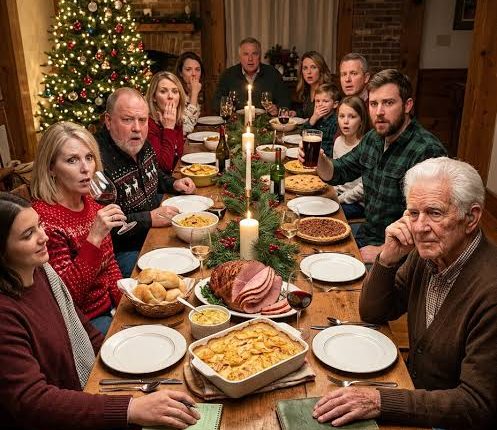
“This is unbelievable. You know how important Christmas is to my family. My mother has already told everyone how beautiful the house is going to look. My sister has arranged for the children to wear matching pajamas. My brother-in-law has taken time off work. We can’t just cancel everything!”
“Then don’t cancel everything.”
She blinked.
“What?”
“Have Christmas. Invite your family. Cook the meals. Buy the groceries. Clean the house. You’re perfectly capable of doing all those things.”
“With what money?”
It was the first honest question she had asked me all afternoon.
I looked at my son.
“That’s something you and Colin will have to work out.”
Colin shut his laptop.
“Dad, we don’t have five thousand dollars sitting around.”
“Then perhaps you shouldn’t have planned a five-thousand-dollar Christmas.”
Vanessa’s cheeks turned red.
“You’re making us look terrible!”
“No. I’m letting you decide what you can afford.”
She stared at me as if I had spoken a foreign language.
For three years, she had mistaken my generosity for an obligation. Every time I paid a bill, she treated it as proof that I had agreed to pay the next one. Every time I stepped in to solve a problem, she assumed I would be available to solve the next ten.
And because I loved my son, I had allowed that pattern to continue.
I had told myself that I was helping a young couple get established.
But Colin was thirty-six years old.
Vanessa was thirty-four.
They were not children trying to find their footing.
They were adults who had learned that someone else would always catch them if they jumped.
I wasn’t going to catch them anymore.
Vanessa suddenly pointed toward the staircase.
“And what about my parents’ bedroom? My mother has already packed her medication and her special bath products. She has arthritis. You can’t expect her to sleep in a guest room with a tiny bathroom!”
I looked at her for several seconds.
Then I said something that made her lower her hand.
“Vanessa, there is something you should know about this house.”
She frowned.
“What?”
“I won’t be here for Christmas.”
“We know that! You keep saying you’re going on vacation.”
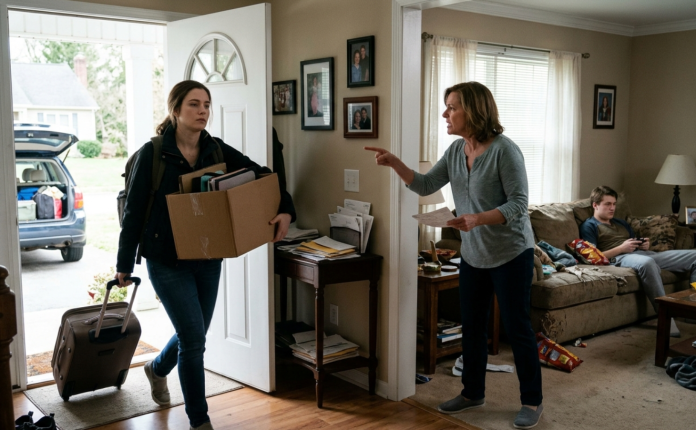
“No. I mean I won’t be living here when you return from your Christmas shopping.”
Colin looked up sharply.
“What does that mean?”
I walked toward my study.
“It means I’ve made some arrangements.”
“What arrangements?”
I stopped at the doorway.
“Ask your attorney if you want the legal details.”
Vanessa laughed, but the sound was thin and nervous.
“You can’t just throw us out!”
I looked directly at her.
“I haven’t thrown anyone out. And I suggest you stop making assumptions before you understand the situation.”
Then I closed the study door.
Behind me, I heard her whisper something to Colin.
I couldn’t make out every word, but I heard one sentence clearly.
“He’s bluffing. He wouldn’t do that to his own son.”
I stood beside Diane’s empty reading chair and looked through the window at the snow settling over the garden she had planted.
For years, I had believed that loving my son meant protecting him from hardship.
Now I understood something I should have learned long ago.
Sometimes, protecting an adult child from every consequence is simply another way of preventing him from growing up.
And I was done doing that.
The Thirty People Who Had Already Been Promised My House
The following morning, I woke at five.
I showered, dressed, and carried my suitcase downstairs.
On the kitchen counter, I left a folder containing copies of the household bills, the emergency contact numbers, the instructions for the heating system, and the name of the plumber who had serviced the house for the past twelve years.
I also left a handwritten note.
Colin and Vanessa,
The house is in working order. Please make sure the doors are locked, the heating remains on, and the pipes are protected during freezing weather.
I have arranged for the mail to be forwarded while I am away.
The remaining decisions about Christmas are yours.
Dad.
I deliberately left out the one thing I knew they expected to find: an envelope containing money.
At six thirty, my taxi arrived.
I was halfway to the door when Colin came stumbling down the stairs in his pajamas.
“Dad? You’re actually leaving?”
I turned.
“Yes.”
He looked at my suitcase, then at the folder on the counter.
“Can we talk for a minute?”
“We’ve been talking for two days.”
“No, I mean really talk.”
For a moment, I saw the boy who used to run into my workshop when he was little, carrying a broken toy and asking me to fix it.
I remembered the first bicycle we repaired together. The summer I taught him to swim. The night Diane and I stayed awake until dawn when he had pneumonia at six years old.
Those memories were real.
My love for him was real.
But so was the hurt.
I set my suitcase down.
“What do you want to talk about, son?”
He looked toward the kitchen, making sure Vanessa wasn’t there.
“I’m worried about you.”
I almost smiled.
“You’re worried about me?”
“You’ve been acting differently lately. You’re selling things. You’re packing up Mom’s belongings. You’re canceling accounts. You’re making decisions without telling us.”
“I see.”
“You’re not yourself.”
I studied him carefully.
“Colin, when was the last time you asked me how I was doing without immediately asking me for something?”
His mouth opened.
Then closed.
I waited.
He rubbed the back of his neck.
“That’s not fair.”
“Perhaps not. But it’s a question worth thinking about.”
He glanced at the clock.
“Look, I know things have been difficult since Mom died. I know you miss her. But you can’t just change everything because you’re upset.”
There it was again.
My grief, reduced to an inconvenience.
I had heard variations of that sentence from both of them for years.
Whenever I wanted to keep Diane’s Christmas traditions, Vanessa called me sentimental.
Whenever I wanted to visit her grave on our anniversary, Colin suggested that I should try to move forward.
Whenever I wanted to spend an evening alone in the garden, Vanessa invited relatives over because she thought the house was too quiet.
They had mistaken my silence for an inability to make decisions.
I picked up my suitcase.
“I’m not changing everything because I’m upset, Colin. I’m changing things because I finally understand them.”
“What does that mean?”
“It means your mother spent forty years building a home with me. She never once made me feel like a guest in my own bedroom. She never treated my money as an unlimited resource. And she certainly never believed that being family meant she could make decisions for me.”
His face tightened at the mention of Diane.
“Don’t bring Mom into this.”
“She has been part of this from the beginning.”
He looked down.
For a few seconds, neither of us spoke.
Then he asked, “When are you coming back?”
“After Christmas.”
“And everything will be normal again?”
I could have told him the truth right then.
I could have explained the sale, the transfer date, the legal notice, and the conversations I had already had with Stanley.
Instead, I said, “Normal is exactly what I’m trying to stop.”
I walked outside.
The taxi driver opened the trunk, and I placed my suitcase inside.
As I settled into the back seat, I looked through the window at the house where I had raised my son, loved my wife, and spent forty years believing that hard work and kindness would always be enough to keep a family together.
Colin stood in the doorway.
He looked smaller than I remembered.
For one dangerous moment, I wanted to get out of the car, hug him, and promise him that everything would be all right.
Then I remembered the emergency fund.
The luxury SUV.
The unpaid utilities.
The master bedroom.
The way he had pushed a carrot around his plate rather than defend the memory of his own mother.
I leaned back against the seat.
“Airport, please.”
And the taxi pulled away.
Christmas Eve Without the Man Who Always Paid
By noon, I was sitting beside the window of a hotel room in Scottsdale, Arizona.
The sky was bright blue, the temperature was mild, and a palm tree swayed gently outside my balcony.
For the first time in decades, I had no shopping to finish, no guests to feed, no oven to monitor, and no one asking me to fix something.
I ordered a sandwich from room service.
Then I turned off my phone.
I intended to spend the afternoon reading.
Instead, I fell asleep.
I slept for nearly three hours.
When I woke, the room was quiet, and the sunlight had turned golden across the carpet.
I sat on the edge of the bed and laughed softly.
Diane would have been delighted.
She used to tell me that I worked too much, worried too much, and took responsibility for things that did not belong to me.
“You can’t spend your whole life holding up the ceiling, Henry,” she would say. “Eventually, people forget that you’re the one keeping it from falling.”
At the time, I always answered that someone had to do it.
She would smile and shake her head.
“Someone has to learn to hold it themselves.”
I wish I had listened sooner.
That evening, I turned my phone back on.
There were twenty-three missed calls.
Fourteen from Vanessa.
Six from Colin.
Three from unfamiliar numbers.
I also had a text message from Stanley.
Everything is proceeding according to schedule. The required notices have been prepared and will be served in accordance with the applicable law. The transfer remains scheduled for the agreed date.
I replied with a simple thank-you.
Then I opened Vanessa’s messages.
The first was furious.
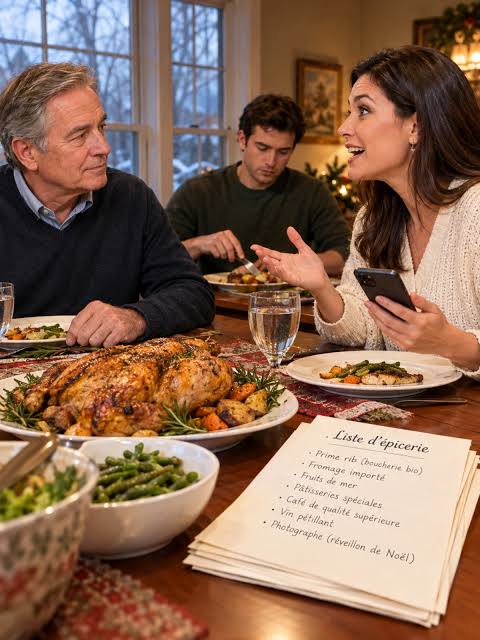
Your card was declined again. The bakery won’t release the cake because the deposit hasn’t been paid.
The second was anxious.
My parents are asking where you are. Please call me.
The third was almost pleading.
Henry, this is getting out of hand. Colin says you haven’t answered him. We need to discuss Christmas.
The fourth made me sit up straight.
Your son is talking about canceling the whole thing. You need to explain to him that this is a family responsibility.
I read that sentence twice.
A family responsibility.
Apparently, the responsibility belonged to me whenever a bill arrived, but the authority belonged to Vanessa whenever a decision had to be made.
I placed the phone on the table.
Then I called Colin.
He answered immediately.
“Dad?”
“I’m here.”
“Thank God. Where have you been?”
“Arizona.”
“I know that, but where in Arizona?”
“Scottsdale.”
He exhaled sharply.
“Dad, please. We have a serious problem.”
“What happened?”
“Vanessa’s parents arrived early. Her sisters are coming tomorrow. The food situation is a mess, and we can’t afford everything.”
“Then reduce the menu.”
“She can’t do that. She already promised them.”
“Then she can explain the situation.”
“Dad, you don’t understand. Her father is furious.”
I looked out at the palm trees.
“Why is her father furious?”
“Because he thought everything was arranged. He expected a proper family Christmas.”
“Did he offer to contribute?”
Colin fell silent.
“Dad.”
“Did he?”
“I don’t know.”
“Then perhaps you should ask him.”
He sighed.
“You’re making this so difficult.”
“No, Colin. I’m making it possible for you to see how difficult it has been for me.”
He said nothing.
I continued.
“You and Vanessa invited thirty people to a house that doesn’t belong to either of you. You planned six days of meals without agreeing on a budget. You promised your in-laws a bedroom that belongs to me. And you expected me to pay for the entire arrangement.”
“We didn’t think you’d mind.”
“That’s precisely the problem.”
His voice became quieter.
“What do you want me to do?”
“Be honest. Tell everyone that the original plan was made without my permission. Decide what you and Vanessa can afford. If necessary, ask your guests to contribute or simplify the celebration.”
“And if they get angry?”
“Then they will have to manage their disappointment, just as you are learning to manage yours.”
He breathed heavily into the phone.
“Are you really going to make us do this alone?”
I closed my eyes.
“Yes.”
The word hurt more than I expected.
Not because I doubted it was right.
Because I had spent so many years hoping that I would never have to say it.
Colin finally whispered, “I don’t know how to do this.”
For the first time that evening, I felt something other than anger.
I felt pity.
Not the kind that made me reach for my wallet, but the kind that recognized how badly I had failed him by doing too much for too long.
“You start by telling the truth,” I said. “Then you make a plan. One decision at a time.”
He didn’t answer.
After a moment, I added, “You are capable of doing this, Colin. But I cannot do it for you.”
Then we ended the call.
I sat quietly for a long time.
Outside, the Arizona sky deepened into purple.
I missed Diane terribly.
I missed the way she hummed while wrapping presents, the way she insisted that every guest take leftovers home, and the way she could settle a family argument with a single raised eyebrow.
But I no longer felt obligated to recreate the Christmas she and I had shared by sacrificing myself to people who didn’t understand what made it special.
A home was not measured by the number of guests squeezed into its bedrooms.
A family was not measured by the amount of money one person spent.
And love was not proven by how much mistreatment a person was willing to endure.
The Phone Call That Changed Everything
At nine fifteen on Christmas Eve, my phone rang again.
This time, the caller was not Colin or Vanessa.
It was a woman named Margaret, Vanessa’s mother.
I had met her many times over the years. She was usually pleasant enough, although she had a habit of treating my home as if it were a vacation property available for her use.
I answered politely.
“Hello, Margaret.”
“Henry, we need to talk.”
“Of course.”
She sounded angry.
“Vanessa tells me you have canceled the credit card and abandoned your Christmas responsibilities.”
I looked at the book lying open on my lap.
“Is that what she told you?”
“She said you suddenly became unreasonable and refused to help your own family.”
“I see.”
“This is not the time for family disputes. We have children here. People have traveled a long way. Surely you can put your differences aside for a few days.”
I let her finish.
Then I asked a simple question.
“Margaret, when you invited thirty people to my house, did you ask me whether I wanted to host them?”
She paused.
“Well, Vanessa said—”
“Did you ask me?”
“No.”
“Did you offer to pay for the food?”
“I assumed that—”
“Did you ask me whether I was comfortable giving up the bedroom my wife and I shared for forty years?”
Her voice grew defensive.
“Vanessa said it would be fine.”
“Vanessa doesn’t own the house.”
A long silence followed.
Then Margaret said, “I don’t think this conversation is productive.”
“I agree. But before we end it, I want you to understand one thing. You and your family are welcome to celebrate Christmas with Colin and Vanessa if they choose to host you. I have never forbidden that. However, I will not finance a celebration I did not agree to, and I will not surrender my personal space to make someone else feel important.”
“You’re being very selfish.”
I felt a strange calm settle over me.
For years, that accusation would have wounded me.
I would have rushed to defend my generosity, listed the things I had done, and tried to prove that I was a good man.
Now, I simply replied, “Perhaps. But at least I am finally being honest.”
I wished her a good evening and ended the call.
I thought that would be the end of it.
I was wrong.
Ten minutes later, my phone rang again.
This time, it was Colin.
His voice sounded different.
Not angry.
Not demanding.
Frightened.
“Dad, you need to come home.”
I stood up.
“What happened?”
He hesitated.
“Vanessa found something in your study.”
My heart began to beat faster.
“What did she find?”
“A document from a property developer. It says something about a sale.”
I stared at the dark window.
I had known this moment would come eventually.
I simply hadn’t expected it to happen on Christmas Eve.
“Colin,” I said carefully, “put the document back where you found it.”
“I can’t.”
“Why not?”
“Because Vanessa is reading it to everyone.”
I closed my eyes.
In the background, I heard raised voices.
Then I heard Vanessa shouting my name.
“Henry! HENRY! What have you done?”
Colin returned to the phone.
“Dad, she’s saying you’re selling the house.”
I didn’t answer immediately.
Then I said, “Yes.”
Silence.
“You actually sold it?”
“The sale is scheduled to close according to the contract.”
“But where are we supposed to live?”
The question struck me harder than I expected.
Not because it was unreasonable for a son to worry about his future.
But because he had lived in my home for three years without paying rent, saved little, spent freely, and never once asked what would happen when I was no longer able—or willing—to support him.
And now, with the consequences finally visible, he sounded as if I had suddenly created a problem out of nothing.
“You and Vanessa will need to find somewhere to live,” I replied. “The legal notice gives you time to make arrangements.”
“You can’t do this to us!”
“I can make decisions about my own property, Colin. But I’m not going to debate the legal process over the phone. Stanley can explain the paperwork to you.”
He sounded almost breathless.
“Dad, please. At least wait until after Christmas.”
I looked at the small photograph on my bedside table.
It was a picture of Diane and me standing outside the house on the day we bought it. We were young, exhausted, and grinning at the camera as if we had just won the world.
We had spent forty years paying the mortgage, repairing the roof, replacing the windows, and building a life in those rooms.
We had raised Colin there.
We had celebrated birthdays, graduations, anniversaries, and Christmas mornings.
And we had buried part of our hearts there when Diane died.
Selling it was not easy.
But I had finally accepted that keeping a building out of fear was not the same as keeping my wife’s memory alive.
“Colin,” I said, “I gave you time. I gave you money. I gave you a place to live. I gave you opportunities to become independent. And every time I tried to discuss the future, you told me there was no need to worry.”
He began to speak, but I continued.
“I am not doing this because I hate you. I’m doing it because I cannot spend the rest of my life funding a life that you refuse to take responsibility for.”
His voice cracked.
“So you’re choosing a house over your son?”
“No,” I said softly. “I’m choosing not to lose myself trying to save my son from every consequence of his own decisions.”
Neither of us spoke for several seconds.
Then, from somewhere behind him, I heard Vanessa shout again.
“Ask him about the money! Ask him what else he’s hiding!”
Colin covered the phone, but not before I heard her next words.
“Tell him we know about the accounts!”
My stomach tightened.
The accounts.
I knew exactly which accounts she meant.
The ones she had never been authorized to access.
The ones connected to the financial records I had been quietly reviewing for months.
The ones that contained evidence of something far more serious than unpaid groceries or a stolen bedroom.
I lowered my voice.
“Colin, what exactly did Vanessa find?”
He didn’t answer.
Instead, he said something that made the room seem suddenly colder.
“Dad, there are bank statements here with my name on them. And there’s a transfer I don’t remember making.”
I gripped the phone.
“What transfer?”
“I don’t know. It’s from the emergency account you opened for me when I turned eighteen. The account you said had been closed.”
My mind began racing.
I had closed the account after discovering that the original funds had been withdrawn to cover the SUV down payment. I had replaced the missing money from my own savings, intending to discuss it with Colin once I had all the records.
But I had not authorized another transfer.
And I had not told Vanessa anything about it.
“Colin,” I said, “do not sign anything, move any money, or agree to anything tonight. Put those statements somewhere safe. I’ll contact Stanley.”
“Dad, what is going on?”
I stared at the photograph of Diane.
For the first time since this entire nightmare began, I wasn’t thinking about Christmas, the house, or even my son’s ingratitude.
I was thinking about the possibility that the financial betrayal I had discovered was only the beginning.
“I’m not sure yet,” I told him. “But we’re going to find out.”
I ended the call and immediately dialed Stanley.
He answered on the second ring.
“Henry?”
“Stanley, we have a problem.”
His voice sharpened.
“What happened?”
“Vanessa found some financial documents in my study. Colin says there’s a transfer from the emergency account I established for him. He doesn’t recognize it.”
Stanley was silent for a moment.
Then he asked a question that made my blood run cold.
“Henry, are you certain the documents were kept in the safe?”
“Yes.”
“And who had access to the safe?”
“Only me.”
Another pause.
“Then I need you to tell me something very carefully. When you last reviewed the records, did you see any transactions connected to Colin’s vehicle purchase beyond the original withdrawal?”
I sat down slowly.
“No. Why?”
“Because I received a notification this afternoon concerning a document submitted in connection with the property sale. It appears someone has been attempting to establish a financial claim that could affect the closing.”
I stared at the wall.
“What kind of claim?”
“I don’t want to speculate until I verify the records. But I need you to send me every document you have relating to the account and the property. Do not confront anyone until we’ve reviewed everything.”
For a long moment, I couldn’t speak.
Then I asked, “Stanley, are you telling me someone is trying to interfere with the sale of my house?”
“I’m telling you that something doesn’t look right. And given what you’ve just told me, we need to establish exactly what happened.”
Outside my hotel window, the palm trees swayed beneath the Christmas lights.
Somewhere in Ohio, thirty people were gathered in the house where Diane and I had built our lives.
My son was frightened.
My daughter-in-law was furious.
And someone had apparently decided that the boundaries I had finally established were worth challenging.
I opened my laptop.
The next morning, I would begin reviewing every financial record I had collected.
Because if there was one thing forty years as a structural engineer had taught me, it was this:
When a building begins to crack, the visible damage is rarely the whole story.
And I had a terrible feeling that the greatest crack in my family had been hidden beneath the surface for far longer than I had ever imagined.