The Bills Beneath the Table
At dinner, they ate steak while my plate held leftovers. i stayed quiet, drove home, and looked over years of bills i had quietly covered for them. by dawn, i was at the bank making a few changes—and before the day was over, they finally understood how much of their comfortable life had depended on me.
I knew the dinner was different before anyone said a word.
My plate told me.
Daniel had grilled thick ribeyes for everyone else. I could still hear them sizzling when he carried the platter through the dining room, proud of the dark crust and pink centers. Madison had opened an expensive bottle of red wine. My grandchildren had roasted potatoes, asparagus, and little pats of herb butter melting over their steaks.
Then Madison placed my plate in front of me.
One thin slice of meat sat beside a spoonful of potatoes that had clearly been reheated.
The meat was gray at the edges.
Cold in the middle.
There was no asparagus.
No wineglass.
Just water.
“Is everything all right, Helen?” Madison asked.
Her voice held the polished concern she used when other people were listening.
I looked up.
She was wearing cream silk and small gold earrings, her hair smooth enough to reflect the pendant lights above the table.
“Yes,” I said.
“Good.”
She moved on.
No one else looked at my plate.
That was the part that stayed with me.
Not the leftover food.
Not even the insult.
The way everyone understood the arrangement without needing it explained.
I was seventy-three years old, and I had reached the point in life when disrespect rarely arrived dramatically. It did not need shouting. It came through small omissions.
An extra chair brought in after the table was set.
A napkin that did not match.
A plate assembled from yesterday’s dinner while everyone else cut into something fresh.
A family conversation where every person was included except the one quietly paying several of the bills that made the conversation possible.
Daniel sat near the head of the long glass table.
My son had been beautiful as a boy.
Every mother is permitted one irrational belief, and mine was that Daniel had the warmest laugh in California.
When he was six, he ran through the surf at Santa Monica shouting for his father and me to watch every wave as if he had personally discovered the Pacific Ocean.
Now he was forty-eight.
His laugh had become smaller.
More strategic.
He laughed hardest when the right person was listening.
That night two of his colleagues were there with their wives, along with Madison’s sister and her husband.
The dinner was not technically business.
But everyone wore business versions of themselves.
They discussed a remodel of the upstairs guest suite.
A trip to Napa.
A possible summer program for the children.
A newer car for Madison because her current SUV was “starting to feel dated.”
I listened.
And because numbers had been my profession, my mind automatically translated every sentence into dollars.
Guest suite renovation: perhaps thirty thousand.
Napa weekend: five, maybe six.
Summer program: eleven thousand for two children.
New SUV: at least seventy.
I knew the numbers because I knew which of those categories I had quietly supported before.
For years.
My granddaughter Lily sat across from me.
She was sixteen and still young enough to show concern before remembering that adults sometimes punish concern by calling it disloyal.
Her eyes moved from my plate to mine.
I smiled slightly.
I wanted to tell her not to worry.
Before I could, Madison touched Lily’s shoulder.
“Sweetheart, did you tell Aunt Rachel about the school trip?”
Lily looked away from me.
The conversation changed.
Dessert arrived an hour later.
Madison had ordered a glossy chocolate tart from a bakery in Brentwood.
Everyone received a neat triangular slice.
Mine was barely half the size.
Madison set it beside my water glass without comment.
I ate two bites.
Daniel walked me to the front door after dinner with his phone already in his hand.
“Drive safe, Mom.”
“I always do.”
“Call me when you get home.”
He was reading something on the screen before the sentence ended.
I stood there for a second longer than necessary.
“Daniel.”
He looked up.
“Yes?”
There had been a time when I would have asked.
Is everything all right between us?
Did I do something?
Are you upset with me?
That night I did not.
I simply said, “Good night.”
He smiled.
“Night, Mom.”
The door closed.
Los Angeles air had cooled after sunset.
My old silver sedan waited at the curb between two newer cars that cost more than my first house.
I sat behind the wheel and looked back.
Daniel’s home glowed behind tall windows.
Modern art.
Custom lighting.
The pale stone entryway I had helped him afford.
Six years earlier, I had transferred one hundred eighty thousand dollars toward the down payment.
Daniel called it a bridge loan.
No repayment schedule was ever written.
No repayment ever arrived.
I had not asked.
At the time, I told myself parents did not need receipts from their children.
That sentence would bother me before the night was over.
My house was smaller.
It sat in a quiet neighborhood east of Santa Monica where jacaranda petals collected along the curb every spring.
Charles and I bought it when Daniel was eleven.
Charles had been gone nine years by then.
His gardening gloves were still in a drawer in the garage.
I had moved them twice and thrown them away zero times.
The house was silent when I came in.
Usually I turned on the television for company.
That night I did not.
I made tea.
Then I walked into the small room I still called the office.
For thirty-one years, I worked as a financial controller for a regional logistics company. Nothing glamorous. Trucks, warehouses, fuel contracts, payroll, insurance, equipment leases.
Numbers.
Numbers behave when people do not.
I knew where every document in my life was located.
On the second shelf of the office bookcase sat a thick black binder.
FAMILY SUPPORT.
I had written the label myself.
At the time, it sounded loving.
Now it sounded like accounting.
I carried the binder to my desk.
The first divider was labeled HOUSE.
Under it were copies of the transfers toward Daniel’s down payment.
A repair bill from three years earlier when their roof leaked after heavy winter rain.
Nine thousand four hundred dollars.
I had paid it because Daniel’s bonus was delayed.
The next divider was EDUCATION.
Private school tuition.
Books.
Fees.
Summer programs.
A tutoring service when Lily struggled with algebra.
I had never regretted a dollar spent on the children.
But further down were things that had less to do with children.
A car lease.
Madison’s dental work.
A membership at a private club Daniel said was necessary for networking.
A kitchen renovation over budget.
Three separate transfers into Daniel’s business account during quarters when “cash flow was temporarily tight.”
I found a calculator even though I did not need one.
Still, I added.
Then added again.
Over fourteen years, excluding birthday gifts and college savings, I had transferred or directly paid more than seven hundred thousand dollars for Daniel’s household.
I sat back.
Seven hundred thousand dollars.
I had never seen the number in one place.
That was partly my fault.
I had kept each payment emotionally separate.
Roof.
School.
Car.
Mortgage.
Business emergency.
Vacation after a hard year.
Dental surgery.
Insurance.
One check at a time, each easy to justify.
People can cross an ocean one teaspoon at a time if nobody ever puts the teaspoons together.
Then I reached the last section.
CURRENT.
Automatic mortgage supplement.
Automatic school payment.
Shared family credit card.
Recurring insurance transfer.
Business reserve line.
I stared.
My money had become infrastructure.
They did not ask anymore.
The payments simply happened.
I turned another page.
A printed email fell onto the desk.
I recognized it immediately.
I had printed it two weeks earlier because something about it bothered me, then filed it away without addressing it.
The email was from an investment company I had used for decades.
Subject: Account Access Inquiry.
Dear Mrs. Mercer, we received a request regarding the possible conversion of one of your individual investment accounts to a joint-access structure. As requested, no action has been taken pending your personal authorization.
The request had come through Daniel.
He was listed as my emergency family contact, nothing more.
At the bottom was a note from the representative.
Mr. Mercer stated that he was helping you simplify finances due to your age and would follow up after discussing it with you.
He had never discussed it with me.
I sat motionless.
The house was so quiet I heard the refrigerator cycle off in the kitchen.
That email changed the shape of the evening.
The dinner had been cruel.
The financial request was different.
Cold steak could be dismissed as bad manners.
This could not.
I opened my laptop.
There were no formal authorizations on my accounts.
Good.
I changed passwords.
Then I opened my bank records.
The automatic payments were all there.
Like little rivers flowing outward.
I thought of Madison talking about Napa.
Daniel discussing renovations.
The leftover meat.
Then something even smaller came back to me.
Three months earlier, Daniel had asked where I kept my original property deed.
At the time, he said he wanted to make sure I had everything “organized.”
I told him it was with my estate papers.
He asked which attorney handled them.
I answered.
I closed the laptop.
For years, I had mistaken generosity for safety.
I thought helping Daniel would make him secure enough not to need more.
Instead, my help had become part of his definition of normal.
I slept perhaps an hour.
Before sunrise, I showered, dressed, and carried the black binder to my car.
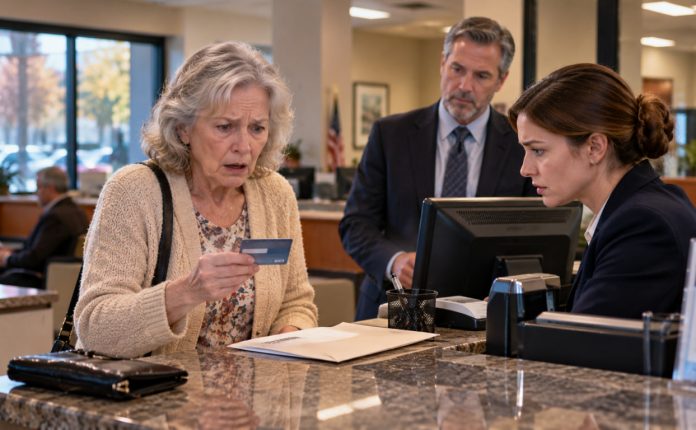
I arrived at my bank before the lobby opened.
A marine layer had settled over the city, turning the streetlights pale.
I sat in the parking lot watching employees arrive one by one.
At exactly nine, the doors unlocked.
I asked for Sophia Morales.
She had helped me six months earlier when I moved a certificate of deposit.
Sophia was perhaps forty, with observant eyes and the calm voice of someone who understood that money conversations were rarely about money alone.
“Helen,” she said. “You’re here early.”
“I need several changes made.”
She gestured toward the chair across from her desk.
“Tell me what you need.”
I placed the binder down.
“All automatic payments connected to accounts I do not own should stop.”
Sophia opened the binder.
She read quietly.
“These mortgage transfers?”
“Stop them.”
“The school payments?”
I hesitated.
The children.
Then I said, “Stop them. I’ll decide separately what I want to provide directly for education.”
She nodded.
“The shared card?”
“Close my responsibility on it.”
She typed.
“The business reserve account?”
“Remove my automatic contribution.”
Sophia looked at me.
“Some of these payments have been running for years.”
“I know.”
“Has something changed?”
“Yes.”
She did not ask for gossip.
That was one of the reasons I liked her.
Her fingers moved over the keyboard.
Then she stopped.
Her expression changed.
“Helen.”
“What?”
“There was an attempted access to one of your investment-linked accounts early this morning.”
My hands became still.
“What kind?”
“Credentials were entered incorrectly. Then a transfer request was started but not completed.”
“How much?”
She told me.
Large enough to matter.
Small enough that whoever initiated it might have hoped it looked routine.
“Can you tell where it came from?”
“I can see device information and location indicators, but I can’t identify a person from this screen.”
“Was it me?”
“No.”
“Freeze outside access.”
“We can do that immediately.”
“And add verbal verification.”
“Yes.”
“Anything that changes beneficiaries, signers, linked accounts, mailing addresses, phone numbers, or transfer authority requires me in person.”
Sophia nodded.
“Absolutely.”
We worked for almost an hour.
Every recurring payment stopped.
Every shared privilege ended.
New account numbers were generated where needed.
Alerts were added.
Then Sophia printed a confirmation packet.
She placed it in front of me.
“Everything you requested is active.”
I read every page.
Old habit.
Before leaving, I asked one more question.
“If someone calls claiming to be my son?”
“We note the call and contact you directly.”
“Good.”
Sophia folded her hands.
“Helen, I don’t normally say this, but you might also want to review your estate documents.”
“I plan to.”
Outside, the marine layer was lifting.
By the time I reached home, sunlight was reflecting off car windows all along my street.
I put the binder on the kitchen counter and filled the kettle.
My phone rang.
Daniel.
I let it ring.
Then a text.
Mom, call me.
Another.
Something is wrong with the card.
Then Madison.
My card was declined. Please fix whatever happened.
I poured tea.
The phone rang again.
Daniel.
Then another message.
The business reserve transfer didn’t arrive this morning. Is the bank having an issue?
The language interested me.
Is the bank having an issue?
Not: Did you change something?
The assumption was still that the system existed for them.
At lunchtime Daniel called six times.
Madison called three.
Then Madison wrote:
I was at the spa and the card failed in front of everyone. This needs to be corrected today.
I looked at the message.
Then set the phone facedown.
At one-thirty, a different name appeared.
Lily.
Grandma, are you okay?
I answered immediately.
I’m fine, sweetheart. Are you?
Her reply came quickly.
Mom and Dad are upset about money stuff. I just wanted to make sure you weren’t sick.
That one sentence affected me more than all the calls before it.
No demand.
No accusation.
Only concern.
I wrote:
Thank you for checking. I am perfectly well.
A heart appeared.
Then another message.
Dad keeps saying the bank made a mistake.
I typed carefully.
Sometimes a change feels like a mistake when people were not expecting it.
Lily responded:
Okay. Love you.
Love you too.
At three-fifteen, Daniel’s SUV stopped outside my house.
Madison sat in the passenger seat.
I watched them through the living room window.
Daniel paced beside the curb while talking on his phone.
Madison gestured at him through the open window.
Eventually they came to the porch.
Daniel knocked.
“Mom.”
Another knock.
“Open up.”
I finished folding a towel.
Madison knocked harder.
“Helen, this is ridiculous.”
I sat in the chair near the window and drank tea.
For years, urgency from Daniel had worked on me like an alarm.
Car trouble.
School deadline.
Mortgage issue.
Business cash flow.
Every emergency became my emergency before I understood the question.
That afternoon I discovered that a ringing phone and a knocking door were simply sounds.
I did not have to answer them.
They left after twenty minutes.
The following morning, I called Victor Hale.
Victor had handled Charles’s estate.
His office was downtown in an old brick building with wooden floors and a receptionist who still kept peppermint candies in a glass bowl.
When I entered, Victor stood.
“Helen.”
His hair had turned almost completely silver.
“It’s been too long.”
“Not long enough for the kind of paperwork I need.”
He smiled.
Then saw the binder.
His expression became serious.
“What are we doing?”
“Updating my will.”
“All right.”
“And creating a trust.”
He took out a legal pad.
We reviewed everything.
House.
Savings.
Investments.
Retirement accounts.
Personal property.
I did not remove Daniel from my life.
I removed him from automatic control over the results of my life.
That distinction mattered.
Most of my estate would go into a trust for Lily and her younger brother, with an independent trustee managing it until both reached adulthood and met conditions related to education and financial counseling.
No parent could access the principal.
No spouse.
No creditor tied to Daniel’s business.
The house would be held and eventually sold or transferred according to instructions designed to protect the grandchildren.
Victor listened.
Then said, “There’s something you should know.”
I looked up.
“Daniel called this office two months ago.”
My chest tightened.
“Why?”
“He asked general questions about power of attorney.”
I remained very still.
“For me?”
“Yes.”
“What did you tell him?”
“That I could not discuss your affairs with him and that any document would require your direct participation.”
“Did he say why?”
“He said you were getting older and he wanted to help organize your financial life before there was a crisis.”
A strange calm came over me.
The same calm I used to feel at work when months of confusing numbers finally reconciled.
“Did I ever call you about a power of attorney?”
“No.”
“Then you have your answer.”
Victor removed his glasses.
“Helen, I need to ask directly. Do you feel pressured?”
“I feel informed.”
“Do you feel unsafe?”
“No.”
“Do you want Daniel involved in financial decisions?”
“No.”
“Then we proceed accordingly.”
We did.
Each signature gave me back something I had surrendered without realizing it.
Not money.
Authority.
The right to decide.
By late afternoon I returned home carrying copies of the new documents.
Daniel’s SUV was in my driveway.
This time, he and Madison were waiting on the porch.
Daniel walked toward me.
“Mom, we need to talk.”
I closed my car door.
“Talking requires listening.”
Madison gave a short laugh.
“This is not the time for philosophy.”
I walked past them.
“If you want to speak calmly, come inside.”
They followed.
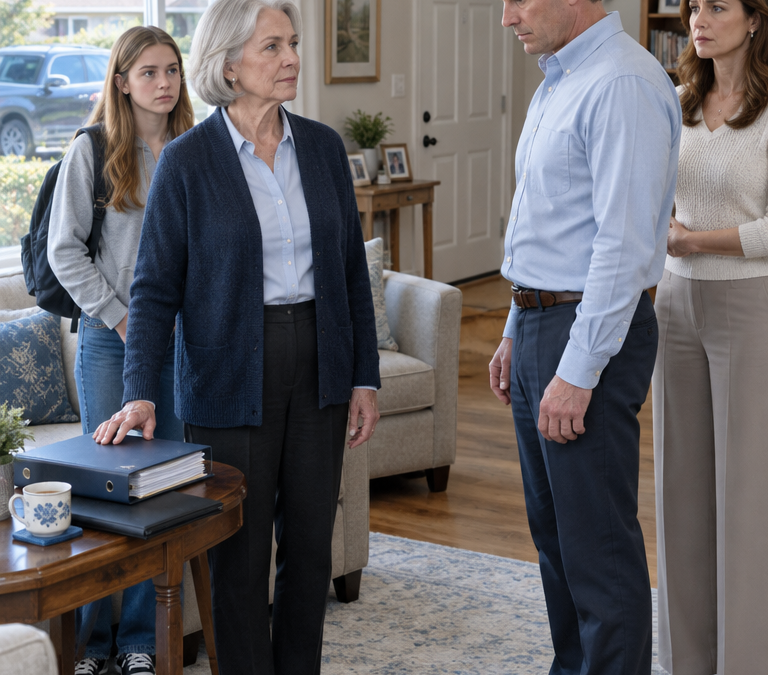
I placed the binder on the kitchen table.
Daniel remained standing.
“You stopped the mortgage payment.”
“I stopped paying your mortgage.”
“You froze the card.”
“I removed myself from a shared account.”
“The school called.”
“I will speak directly with the school about any support I choose to provide for the children.”
Madison stepped forward.
“You can’t just dismantle everything overnight.”
“I created most of it overnight.”
“That’s not the point.”
“What is the point?”
Her mouth opened.
No answer arrived.
Daniel sat down.
His anger had begun to look more like panic.
“Mom, we budgeted around those payments.”
“I know.”
“You never said they were temporary.”
“I never said they were permanent.”
“You’ve paid them for years.”
“Yes.”
He put both hands flat on the table.
“You know what happens if this stops?”
“I assume you adjust your spending.”
Madison stared at me.
“Our entire financial structure is built around commitments you made.”
“No.”
I looked directly at her.
“Your entire financial structure is built around assumptions you made.”
Silence.
Daniel’s face changed.
“Mom.”
“I gave because I wanted to help.”
I opened the binder.
“Your down payment.”
I turned a page.
“School payments.”
Another.
“Business transfers.”
Another.
“Car.”
Another.
“Roof.”
Another.
“Insurance.”
I pushed the binder toward him.
“Seven hundred thousand dollars, Daniel.”
His eyes dropped to the page.
Madison stepped closer.
“What?”
“Approximately.”
Daniel flipped backward.
Then forward.
He looked as though the numbers were written in another language.
“You kept track?”
“Yes.”
“Why?”
“I was a controller for thirty-one years.”
“No, I mean—why keep track of family?”
I thought about that.
“Because keeping records and demanding repayment are not the same thing.”
Madison picked up one of the statements.
Her eyes moved rapidly.
“We didn’t know it was that much.”
“That is part of the problem.”
Daniel looked up.
“I thought some of this came from Dad’s estate.”
“It came from me.”
“The tuition?”
“Me.”
“The roof?”
“Me.”
“The business reserve?”
“Me.”
His face drained.
Madison set down the paper.
“But you can afford it.”
There it was.
The sentence that explained years.
I nodded.
“Yes.”
She seemed relieved.
“Then why are you doing this?”
“Because my ability to pay does not make me responsible for paying.”
Daniel leaned back.
Then the front door opened.
Lily stepped inside wearing her school backpack.
Madison turned sharply.
“I told you to wait in the car.”
“I didn’t want to.”
“Lily.”
My granddaughter looked at me.
“Grandma, I need to tell you something.”
Daniel stood.
“Not now.”
“Yes, now.”
Her voice shook.
But she stayed where she was.
“I heard Dad and Mom talking last week.”
Madison’s face changed.
“About what?”
Lily looked at me.
“Your house.”
Daniel closed his eyes.
My heartbeat slowed rather than quickened.
“What about my house?”
Lily swallowed.
“Dad said if you kept refusing to organize your money, he might have to get legal authority eventually.”
Madison stepped toward her.
“That is not what was said.”
Lily continued.
“He said once he could manage the accounts, selling this house would be easy because you wouldn’t need it if you moved somewhere smaller.”
The kitchen became completely silent.
Daniel whispered, “Lily.”
She looked at him.
“You said it.”
“It was hypothetical.”
“You said Grandma would never agree if you asked.”
Madison’s composure cracked.
“We were worried about her.”
Lily shook her head.
“You were talking about her house like she wasn’t here.”
I watched my granddaughter fight tears.
Something inside me settled.
Not triumph.
Not revenge.
A boundary becoming permanent.
I turned toward Daniel.
“This morning Victor Hale told me you contacted him about power of attorney.”
Daniel’s eyes closed.
Madison stared at him.
“You told me you were only asking the bank.”
Interesting.
Even she had not known everything.
Daniel looked trapped between his wife, his daughter, and his mother.
For the first time, nobody rushed to rescue him.
He sat down.
“I was trying to plan.”
“For whose future?”
No answer.
Madison began gathering her purse.
“This is becoming ridiculous.”
I looked at her.
“No.”
My voice remained quiet.
“It is becoming clear.”
She stopped.
“I have established a trust.”
Daniel looked up.
“What?”
“My estate has been reorganized.”
“Mom.”
“The children are protected.”
Madison’s expression tightened.
“What does that mean?”
“It means neither of you controls what they receive.”
Madison stared.
Daniel said nothing.
I continued.
“The house is protected. My investments are protected. My accounts require my authorization.”
Daniel rubbed his forehead.
“You did all this because of one dinner?”
“No.”
I closed the binder.
“The dinner only made me go home and look.”
No one moved.
Then I looked at Lily.
“Sweetheart, thank you for telling me the truth.”
She began crying.
I opened my arms.
She crossed the kitchen and hugged me.
Behind her, Daniel looked older than he had that morning.
Madison walked out first.
Daniel followed a few minutes later.
He stopped at the door.
“Mom.”
I waited.
“I don’t know what to say.”
“Then don’t say anything yet.”
He nodded.
That night he came back alone.
No SUV blocking the driveway.
No Madison.
No phone in his hand.
He stood beneath the porch light looking like a man who had finally discovered the weight of a life someone else had been carrying.
“Can I come in?”
“Yes.”
We sat in the living room.
For a long time, he did not speak.
Then he said, “I messed up.”
I looked at my son.
He was crying quietly.
“I got angry today because everything failed at once.”
He laughed bitterly.
“The cards. The mortgage. Tuition. My business transfer.”
He covered his face.
“I kept thinking you had ruined my life.”
“And now?”
“Now I think maybe I didn’t realize how much of my life you were holding up.”
I said nothing.
“I thought you liked helping.”
“I did.”
“That’s the worst part.”
“Why?”
“Because I used the fact that you liked helping to stop noticing whether I was asking too much.”
He wiped his face.
“I told myself you had more money than you needed.”
I almost smiled.
“That is a very convenient measurement.”
“I know.”
“You never asked what I needed.”
His eyes closed.
“No.”
We sat quietly.
Then he whispered, “I did call Victor.”
“I know.”
“I didn’t plan to take anything.”
“I believe you.”
He looked surprised.
“I thought if I had authority, I could simplify things later.”
“For me?”
He hesitated.
There was the truth.
“For all of us.”
I nodded.
“That is the problem.”
His shoulders dropped.
“I’m sorry.”
I looked at him for a long time.
“An apology is not a plan.”
“I know.”
“What will you change?”
He took a breath.
“We’re selling the second car.”
Good.
“We’re canceling Napa.”
Better.
“I’m meeting with someone about the business.”
“Financial advisor?”
“Yes.”
“Independent?”
“Yes.”
I nodded.
“And the house?”
He looked down.
“We may have to refinance.”
“That is your decision.”
“I know.”
No request came after.
That mattered.
He looked toward Charles’s photograph on the bookshelf.
“Dad would be ashamed of me.”
“I don’t know.”
Daniel looked at me.
“Your father understood mistakes better than most people.”
“He never did anything like this.”
“No.”
I smiled faintly.
“He did other things.”
Daniel almost smiled too.
Then he asked, “Do you hate Madison?”
“No.”
His eyebrows rose.
“I am disappointed in both of you.”
“That sounds worse.”
“It can be.”
He leaned forward.
“What happens now?”
“You become my son again.”
He looked confused.
“What does that mean?”
“It means you stop being my dependent.”
A shaky laugh escaped him.
“I deserved that.”
“It wasn’t meant to hurt.”
“I know.”
I reached for his hand.
“You are forty-eight years old. I do not want to spend whatever time I have left managing your bills.”
His eyes filled again.
“What do you want?”
The question surprised me.
Nobody had asked it in a very long time.
“I want dinner with my grandchildren where I am invited because I am their grandmother.”
He nodded.
“I want you to call me without needing money.”
Another nod.
“I want Madison to stop treating generosity as an obligation.”
His mouth tightened.
“That will take work.”
“So will your mortgage.”
He laughed.
A real laugh.
For one second, I heard the little boy on Santa Monica beach.
That did not erase anything.
But it reminded me why repair was still possible.
Over the next several months, Daniel did not become a different man overnight.
Real change is much less cinematic than that.
He sold the expensive sedan.
Madison canceled the spa membership.
They postponed the renovation.
Daniel moved his business into a smaller office.
The children stayed in school, but Daniel took responsibility for the tuition arrangement. I later chose to contribute to Lily’s college savings directly through the trust, not through her parents.
Madison did not apologize immediately.
She kept her distance.
Then one afternoon she called.
“Helen.”
“Hello, Madison.”
“I found the binder.”
“You saw it already.”
“No. Daniel copied some pages.”
I waited.
“I didn’t realize.”
I believed that.
She had known I helped.
She had not known how often.
“How could you not tell us?”
“I thought generosity worked better quietly.”
“That sounds like a criticism.”
“It is mostly criticism of myself.”
Silence.
Then she said, “The dinner.”
I waited.
“The steak.”
“Yes.”
“I knew what I was doing.”
I appreciated the sentence because it was ugly and honest.
“I was irritated with you.”
“Why?”
“Because Daniel had told me you were questioning some expenses.”
“I asked about the business transfer.”
“I know.”
She exhaled.
“I wanted you to feel… less central.”
There are apologies that reveal more than people intend.
I sat down.
“Madison, you succeeded.”
She began crying.
“I am sorry.”
I closed my eyes.
“Thank you for saying it.”
“Can we fix this?”
“Not by pretending it did not happen.”
“I know.”
“Then maybe.”
The following Christmas, Daniel asked whether I would come for dinner.
Asked.
Not assumed.
I agreed.
When I arrived, Lily opened the door.
“Grandma!”
She hugged me.
Daniel took my coat.
Madison stood in the dining room.
The table was already set.
There were matching napkins.
Wine.
Water.
Eight places.
Mine was beside Lily.
Not at the end.
Not squeezed in.
Madison brought out dinner.
Steak.
I almost laughed.
She noticed.
“This seemed dangerous.”
“Very.”
She put my plate down.
The same cut as everyone else.
Then she looked directly at me.
“If you want something else, say so.”
“I will.”
That was perhaps the greatest change.
Not the steak.
Permission to speak without the family collapsing.
Halfway through dinner, Daniel asked Lily about school.
Madison told a story about work.
My grandson complained about homework.
Nobody discussed my money.
After dessert, Daniel walked me to the door.
He did not have his phone in his hand.
“Drive safe, Mom.”
“I always do.”
He smiled.
Then he hugged me.
“Call me when you get home.”
“Why?”
“So I know you’re safe.”
I studied him.
“No financial emergency?”
“None.”
“No payment due?”
“Not from you.”
“Progress.”
He laughed.
I drove home through quiet streets.
Charles’s house waited for me with the porch light on.
My binder was still in the office.
I kept it.
Not because I expected another battle.
Because records tell stories memory sometimes softens too quickly.
The trust documents were in the safe.
My accounts were secure.
My son was responsible for his own mortgage.
And my grandchildren knew that money from their grandmother came with love, not access to their grandmother.
That distinction gave me more peace than the money itself ever had.
For years, I thought generosity meant never keeping score.
I was wrong.
There is a difference between keeping score and keeping track.
Keeping score asks, “What do you owe me?”
Keeping track asks, “What am I giving away?”
I had failed to ask the second question until there was very little space between helping my family and disappearing inside their expectations.
That dinner did not transform me because my steak was cold.
It transformed me because I looked around a beautiful table I had helped make possible and realized nobody there remembered that I was a person before I was a resource.
Except Lily.
Sometimes one person seeing you is enough to remind you to see yourself.
The money did not teach Daniel the lesson.
Losing access did.
My silence at the door did.
The binder did.
Lily’s honesty did.
And eventually, the simple fact that his life continued even after I stopped paying for parts of it.
Mine continued too.
That may have surprised me most.
I traveled.
Not to Napa.
I had no interest in Napa after hearing about it for three years.
I went to Oregon with an old friend from work.
I replaced the carpeting in my bedroom.
I donated to a community college scholarship for students studying accounting.
I bought a new coat because my old one had a torn lining, something I would once have ignored while paying somebody else’s car lease.
One afternoon Sophia from the bank called.
“Helen, I’m reviewing your account notes. Everything still working the way you want?”
“Yes.”
“No new access requests?”
“No.”
“Good.”
Before hanging up, she said, “I hope things are calmer.”
“They are.”
“Sometimes boundaries create noise before they create calm.”
I wrote that sentence down after the call.
It was true.
The first day had been noise.
Calls.
Texts.
Knocking.
Anger.
By the following year, the quiet felt completely different.
It no longer sounded lonely.
It sounded like ownership.
One Sunday afternoon, Lily came over alone.
We made tea.
She wandered into the office and saw the black binder.
“Is that the famous binder?”
“Your father told you?”
“He said it nearly ended him.”
“That seems dramatic.”
“He’s Dad.”
Fair enough.
She sat beside me.
“Can I ask something?”
“Yes.”
“Why did you help them so much?”
I looked at her.
“Because I loved them.”
“That simple?”
“At first.”
“And later?”
I thought.
“Later I think I became afraid that if I stopped being useful, I might become less necessary.”
Lily frowned.
“That’s sad.”
“Yes.”
She leaned her head on my shoulder.
“You know we would love you if you had no money.”
“I know that now.”
“Dad would too.”
“I know.”
She looked toward the binder.
“Do you forgive him?”
“Yes.”
“That fast?”
I smiled.
“It was not fast.”
“What does forgiveness feel like?”
I considered the question.
“It feels like not needing him to suffer in order for me to heal.”
She nodded slowly.
“Does that mean you trust him again?”
“No.”
Her eyes widened.
“You can forgive someone and still make them rebuild trust.”
“Oh.”
“That is one of adulthood’s less exciting discoveries.”
She smiled.
Then she asked whether we could make cookies.
We did.
I paid for the flour.
She washed the bowls.
Nobody kept score.
That is the kind of generosity I understand now.
Mutual.
Visible.
Chosen.
The black binder still sits on my shelf.
Sometimes I think about relabeling it.
FAMILY SUPPORT no longer feels quite right.
Maybe FAMILY HISTORY.
Maybe LESSONS.
But I leave the label as it is.
A reminder.
Love can be generous.
Love can be patient.
Love can forgive.
But love should never require one person to vanish so everyone else can remain comfortable.
I wish I had understood that at fifty.
Or sixty.
I learned it at seventy-three.
That is later than ideal.
It is also not too late.
If this story moved you, inspired you, or left a little piece of itself in your heart, we would be truly grateful if you could support us by following our Facebook page, giving this story a like, and sharing your thoughts with us in the comments. Every share, every encouraging word, and every new connection allows us to keep creating heartfelt stories that bring comfort, emotion, and meaning to your day. Thank you from the deepest part of my heart for taking the time to read, for staying until the end, and for being a valuable part of our growing story community. Your kindness and support are what keep these stories alive.