Mrs. Whitaker shook her head.
“No, Carly.”
Her voice was gentle.
“I don’t.”
I stood.
“I can’t accept this.”
“You haven’t even heard what it is.”
“I don’t need to.”
I held the envelope toward her.
She didn’t take it.
Instead, she walked slowly toward the kitchen and rested one hand against the back of a chair.
“You remember the winter Willa was ten?”
I frowned.
There had been several difficult winters.
“I remember a lot of winters.”
“She got sick.”
My heart stopped for half a second.
“She had that terrible asthma attack.”
“How do you know that?”
Mrs. Whitaker lowered her eyes.
“You called me that morning.”
I shook my head.
“No. I didn’t.”
“You did.”
“I never called you.”
“You did.”
She looked toward the empty living room.
“You called because you couldn’t get the car started.”
And suddenly I remembered.
Not the whole thing.
Just pieces.
Cold rain against the windshield.
Willa coughing in the back seat.
My hands shaking around the steering wheel.
Calling someone—anyone—because I didn’t know what else to do.
I had been late to work that Thursday.
Mrs. Whitaker had never mentioned it.
“I thought you said you couldn’t remember that morning.”
“I never said that.”
I stared at her.
She continued.
“You arrived nearly an hour late. You were soaked. Willa was sitting in the car because you couldn’t miss your shift.”
I swallowed.
“I had to work.”
“I know.”
“I didn’t have a choice.”
“I know that too.”
She walked over to the window.
For a moment, neither of us spoke.
Then she said something that made my stomach tighten.
“You left the door unlocked.”
I frowned.
“What?”
“The front door. When you came inside that morning.”
She looked back at me.
“You were in such a hurry that you didn’t lock it.”
“I don’t remember.”
“I do.”
She took a breath.
“I watched you work for three hours while your daughter sat in the car because you were afraid you’d lose the job.”
I felt heat rise behind my eyes.
“I wasn’t going to let her sit there all day.”
“You didn’t.”
Mrs. Whitaker gave me a small smile.
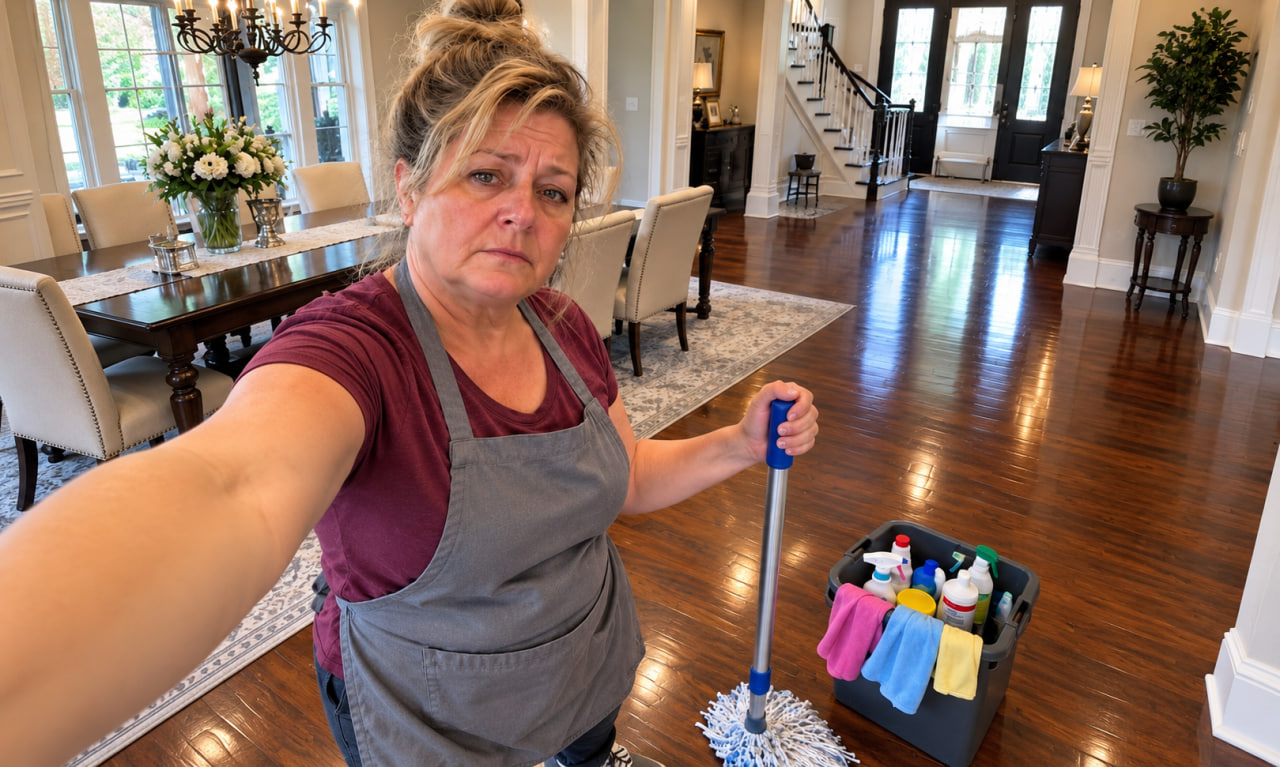
“You cleaned faster than I’d ever seen anyone clean.”
I remembered that day now.
The bathrooms.
The floors.
The kitchen.
The windows.
I remembered leaving before noon.
I remembered Willa’s cough.
I remembered driving straight to urgent care.
What I didn’t remember was Mrs. Whitaker watching from the upstairs window.
She came back to the table.
“The following week, I called my attorney.”
My heart began pounding.
“Why?”
“Because I realized something.”
She sat down.
“You weren’t just cleaning my house.”
“You were keeping your family afloat.”
I looked away.
“I was doing my job.”
“That is what you always called it.”
She smiled sadly.
“You never called it anything else.”
I didn’t know what to say.
Mrs. Whitaker reached for the envelope.
She removed another document.
This one was different.
It was a letter.
The paper was old.
Yellowed slightly at the edges.
There was handwriting on it.
Not Mrs. Whitaker’s.
I recognized the name at the bottom before I even finished reading.
Thomas Whitaker.
Her husband.
My eyes moved across the page.
The letter was dated twelve years earlier.
Before I had ever met her.
Before I had ever cleaned her house.
Before Willa was even a teenager.
I looked up.
“Why are you showing me this?”
Mrs. Whitaker’s eyes filled with tears.
I laughed nervously.
“No. He didn’t.”
“He did.”
“How?”
She looked down at the letter.
“Because the reason I hired you wasn’t an accident.”
The room suddenly felt colder.
“What are you talking about?”
She folded her hands.
“My husband died six months before you answered my advertisement.”
I waited.
“He left instructions.”
My pulse quickened.
“Instructions about what?”
“About you.”
I stared at her.
“That’s impossible.”
“I thought so too.”
She opened the letter.
“Until I found this.”
I watched her eyes move over the page.
Then she read aloud.
“‘If the young woman named Carly Bennett ever comes through your door, don’t turn her away. You’ll know her because she’ll insist she doesn’t need help.’”
My mouth went dry.
I took a step backward.
“Who was he?”
Mrs. Whitaker looked at me.
“My husband?”
“Yes.”
She nodded.
“He was a social worker.”
I shook my head.
“That doesn’t explain how he knew my name.”
“No.”
She turned the letter over.
“That’s the part I’ve been afraid to tell you.”
On the back was an address.
My old address.
The tiny apartment where Willa and I had lived when she was nine.
I stared at it.
I couldn’t breathe.
“I never gave that address to anyone.”
Mrs. Whitaker nodded.
“I know.”
“Then how did your husband know?”
She hesitated.
Then she said:
“Because he was the person who helped you get Willa into that school.”
My mind went blank.
I remembered the school.
I remembered the paperwork.
I remembered someone helping me when I couldn’t afford the enrollment fees.
But I’d always believed it had been a community program.
A nameless charity.
A form I’d signed.
A check that had appeared at exactly the right moment.
I had never known who paid it.
I sat down.
Mrs. Whitaker opened another folder.
Inside was a photograph.
It showed a younger Thomas Whitaker standing beside a woman and a little girl.
The little girl was me.
I stared at the picture.
My entire body went cold.
“I don’t remember this.”
“You wouldn’t.”
“Where was it taken?”
“Outside the community center.”
And then I remembered.
Not the photograph.
The day.
I had been crying because I thought Willa would have to leave her school.
A man had crouched beside me and said, “Sometimes people help because they remember what it felt like when nobody helped them.”