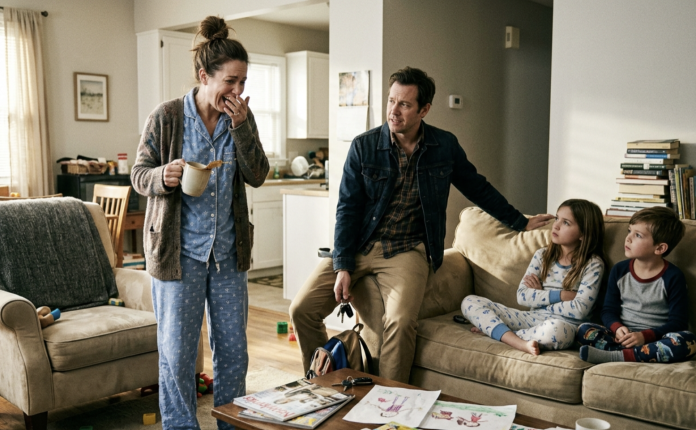
My husband booked my yearly checkup for 9:40 Monday, then sat out in the truck while my doctor asked me why I’d been hitting him.
“He’s been in twice this summer with bruises,” she said carefully. “He says it’s you, and he wants me to sign something.”
She turned a form around on the exam table. Under my name, spelled right and followed by my middle initial, were four words: Petition for Appointment of Guardian.
I had to read them twice. I might have laughed if my hands hadn’t been shaking.
Everybody in Sparks calls me Miss Ro. I spent thirty-one years serving tater tots at the elementary school on Prater Way. No first grader could holler “Rosemary” across a lunchroom and expect me to hear it. I’m seventy-five. I still drive and keep the books for our Thursday bowling league. That morning, my husband of fifty-one years had gone to my doctor and told her I was violent and needed a guardian.
“I didn’t sign this,” the doctor said. “I told him I’d need to see you. Alone.”
That was why the nurse had stopped Ronnie at the front desk.
“Just the patient today, sir.”
He went back to the truck red in the face. In fifty-one years, he had never once let me see a doctor without him.
“Ro, I have to ask,” the doctor said. “Are you safe at home?”
“I’m safe,” I told her. “I don’t know about him. I’m about to find out.”
She still did the memory test for my chart. I answered every question, including the one where I had to draw a clock. I knew the day, the place and why I was sitting there. The test was ordinary. What she told me next wasn’t.
“He also said you’ve stolen before. From the school.”
My face got hot. Because I had.
In 1986, the railroad laid Ronnie off at the Sparks yard, and we were two payments behind on the house. Over one bad month, I took $740 from the lunch money box a little at a time. I paid it back in ten- and twenty-dollar amounts over the next year, out of my own check. Nobody knew but Ronnie.
He held my hand that whole year and said, “We’ll get through it, Ro.”
Now he had handed that old shame to my doctor like a receipt.
“I did take it,” I said. “I paid back every penny, and I’d do it again to keep the lights on.”
The doctor nodded. She told me the bruises were from June and August. Ronnie’s heart medication made him bruise easily. The June bruise was on his forearm, from the step stool while he cleaned the gutters on the new roof we put on in 2015. I iced it myself. The August bruise was on his hip, from the truck door at the Nugget.
Every Tuesday for three years, Ronnie and his buddy Gil had gone to the Nugget buffet. Gil’s wife, Patsy, and I used to joke that it was the only date either man kept. Ronnie called it “Prime rib Tuesday” and came home smelling like cigarettes and quarters.
“I’m glad you told me,” the doctor said. “I can’t tell you what to do at home, but I’m not going to sign something like this based on his word.”
She gave me a copy of the petition. I folded it small and put it in my purse.
Ronnie had the ball game on the radio when I climbed into the truck.
“Everything okay?” he asked. “What’d she say?”
“She says I’m fit as a fiddle.”
He didn’t look relieved. He looked like somebody had moved his chair.
That night I called our daughter, Terri, in Elko. I told her what happened, including the petition and the school money. She went quiet for long enough that I checked the phone.
“Mom, don’t go after Dad,” she finally said.
“I’m not going after him. I’m asking why he did it.”
“If you fight him, he’ll tell everybody we know about that school money.”
“Honey, that was forty years ago.”
“People won’t care. They’ll say you’re just after the house.”
The house is half mine. It has been since 1975.
“Do you think I’m making this up?” I asked.
“No. I think he’s angry, and I don’t want this turning into a public fight.”
I understood what she meant. I also heard what it asked me to do: keep quiet, as I had in 1986.
I didn’t sleep much. I sat at the kitchen table with the petition in front of me and kept looking at the line with my name. Maybe Terri was right that people would see a thief fighting over a house. Maybe it was easier to let Ronnie tell the story first.
Then I thought about that year when I paid the school back in small bills and kept quiet because we were trying to save our home. I had done that once. I wasn’t going to lose my voice along with the house now.
Tuesday morning Ronnie put on his good shirt.
“Back by four,” he said, and kissed the top of my head like always.
At noon I called Gil’s house. Patsy answered.
“Can you put Ronnie on?” I asked.
“Ronnie? Hon, Gil hasn’t been to prime rib in six months, not since his gallbladder.”
I gripped the phone.
“Six months?”
“That’s what I said. Is something wrong?”
“No,” I told her. “I’m sorry. I just needed to know.”
I hung up and sat still. Six months of Tuesdays. The bruises were from things I remembered. The buffet was a lie I could check.
At 4:10, Ronnie’s truck pulled in. I had the petition flat on the kitchen table beside his coffee cup. He saw it from the doorway and stopped with one boot on the mat.
“Ro,” he said. “Let me explain.”
“Fifty-one years. You told my doctor I hit you, and you told her I’m a thief. Gil hasn’t been to that buffet in six months.”
He sat down heavily. He rubbed the bruise on his arm and looked at the floor.
“I didn’t want you finding out from the bank, Ro,” he said. “The house is behind on its payments.”
I stared at him. “How far behind?”
“Far enough that they’ve been sending notices. I thought I could catch it up.”
“With what?”
He didn’t answer right away. Then he admitted that he had borrowed against the house and fallen behind again. He said he’d been trying to cover what he owed and had made the situation worse. The bank had sent notices; this wasn’t a misunderstanding or one late envelope.
I looked at the petition. “And you thought a doctor would help you with this?”
“I thought if she said you couldn’t manage things, I could handle the house before it got worse.”
“You told her I hit you.”
“I know what I told her.” He rubbed his arm again. “I was scared. You’d have stopped me.”
“Stopped you from what? Borrowing more?”
“I was trying to keep us here.”
That sentence caught at me. He had been trying to keep the house, he said, by hiding from me that we might lose it. He had used the school money I’d confessed to as proof against me, and the bruises I’d iced as proof that I was dangerous.
“You could have told me,” I said.
“You would’ve asked where the money went.”
“Yes.”
He pushed the chair back a little. “I didn’t want you thinking I’d done this to us.”
I looked at his good shirt, the one he put on to leave for a Tuesday that no longer existed.
“Did you think the guardian petition would make me agree?”
“I thought it would make this easier.”
“For you.”
He didn’t answer.
I called Terri and asked her to come. She arrived the next day from Elko. I put the petition on the table and laid the bank notices beside it. Ronnie sat across from us, his shoulders rounded. Terri read the notice, then read the petition.
“Dad, you told Mom she was fine when she got home from the doctor,” she said.
“I didn’t know what else to say.”
“You told the doctor she hit you.”
“I was trying to get help with the house.”
“By saying she couldn’t be trusted?”
He looked at me, not Terri. “I didn’t say she couldn’t be trusted.”
“You asked for a guardian,” I said. “You told her I stole.”
Terri set the papers down. “Mom paid that money back.”
“I know she did.”
The words came out quickly. He looked down again.
I had told myself for years that Ronnie’s silence about the school money was loyalty. Maybe, for a long time, it had been. But now he had chosen the one thing I was ashamed of and carried it into a doctor’s office to make his story sound stronger.
Terri turned to him. “Why didn’t you tell me the house was behind?”
“I thought I could fix it before either of you knew.”
“You tried to get Mom declared incapable instead.”
“I didn’t think it would go that far.”
No one spoke for a moment. The notices were right there. So was the petition with my name at the top.
I told Terri I wasn’t going to sign anything about guardianship. I told Ronnie I would not let him make another decision about the house without me. We would speak to someone about the notices and decide together what to do with the property. He could not use the old school money to silence me, and he could not make the house his decision alone.
He started to say the bank had been pressing him, then stopped.
“I was afraid,” he said.
“So was I,” I told him. “You didn’t get to make me the problem because you were afraid.”
I asked him to leave the house while we worked out what came next. Terri stayed with me. Ronnie went. We eventually sold the house, paid what was owed from the sale and divided what remained. We lived apart after that. The house stopped being something he could hold over me, and I stopped pretending that fifty-one years together meant I had to accept what he’d done.
I had paid back the school money. I would not pay for it forever.