PART 3
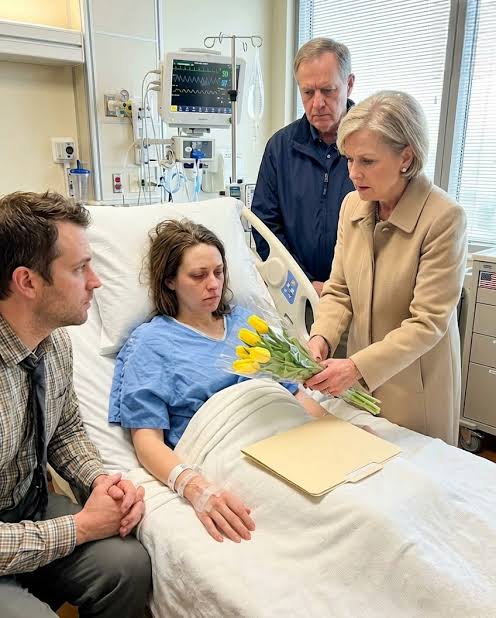
He shifted his weight and cleared his throat. “Your mother told me they called. We figured the doctors would contact us again if it was something serious.”
I stared at him.
“They did contact you again, Dad. Nine times.”
He looked toward the window.
For years, I had imagined that if I ever found myself in a situation like this, my parents would become the people I had always hoped they could be. I imagined fear would strip away their distractions. I thought the possibility of losing me would remind them that I was their daughter, not simply the dependable person who never needed anything.
But there we were, eleven days after my heart had nearly stopped beating for good, and they were still explaining why they hadn’t been there.
Mom pulled a chair closer to my bed.
“Sweetheart, you know how things are with Vivian. She gets overwhelmed easily. She needed us.”
I looked at her.
“And I didn’t?”
Her expression tightened.
“That’s not what I’m saying.”
“Then what are you saying?”
She opened her mouth, but no answer came.
Dad finally stepped forward.
“Look, you’re stable now. That’s what matters. We can’t change what happened, and we shouldn’t spend the rest of our lives arguing about it.”
The rest of our lives.
He said it as though the incident were an unpleasant family disagreement rather than a moment when his daughter had been fighting to stay alive.
I turned my head toward the monitor beside me. Its steady rhythm was the only sound in the room for several seconds.
Then I looked back at them.
“I’m glad I’m stable too.”
Mom seemed relieved that I wasn’t shouting.
“You see? That’s what I’ve always said about you. You’re strong. You’ve always been able to handle things.”
There it was again.
Strong.
For most of my life, I had accepted that word as a compliment. It meant I was responsible, independent, mature, and capable. It meant my parents trusted me to manage whatever life put in front of me.
Only now did I understand what the word had gradually become in our family.
It had become an excuse.
Because I was strong, they didn’t need to check on me.
Because I was independent, they didn’t need to help me.
Because I never asked for money, they could spend theirs on Vivian.
Because I always forgave them, they never had to change.
And because I had survived every disappointment without making a scene, they had mistaken my silence for satisfaction.
I took a slow breath.
“Mom, Dad, I need to tell you something.”
Mom immediately looked concerned.
“What is it? Are the doctors worried about your heart?”
“No. It’s about my documents.”
Dad frowned. “What documents?”
“My will. My medical directives. My power of attorney.”
Mom blinked.
“What about them?”
“I’ve updated them.”
For the first time since entering my room, both of my parents looked genuinely attentive.
“What do you mean, updated?” Dad asked.
“I changed my beneficiaries. I’ve also appointed someone else to make medical decisions for me if I ever become unable to make them myself.”
Mom stared at me as if I had spoken another language.
“You changed us?”
“Yes.”
The silence that followed was so complete that I could hear the faint squeak of a cart passing in the hallway.
Dad’s face reddened.
“Why would you do that?”
I looked directly at him.
“Because when I couldn’t speak for myself, I needed people who would respond.”
Mom stood abruptly.
“We didn’t know you were going to die!”
“Neither did I.”
My voice was quieter than hers, but the words seemed to stop her.
“I didn’t know that morning would be the last time I walked out of my office under my own power. I didn’t know my heart would stop twice in an ambulance. I didn’t know a stranger would have to perform CPR on me while you were choosing curtains for Vivian’s house.”
Dad shook his head.
“That’s unfair. You make it sound like we wanted this to happen.”
“I don’t think you wanted it to happen. I think you believed someone else would take care of it.”
I swallowed against the ache in my throat.
“And someone did. It just wasn’t you.”
Mom’s eyes filled with tears.
For one brief second, I felt the familiar urge to comfort her. I wanted to tell her that I was sorry, that I knew she had been busy, that everything was fine now.
It was an old reflex, one I had practiced for thirty-five years.
But I was exhausted.
I had spent eleven days learning how fragile my body could be. I didn’t have the energy to spend the rest of my recovery protecting everyone else’s feelings about what had happened to me.
So I remained quiet.
Mom picked up her purse.
“I can’t believe you’re doing this to your own family.”
I looked at the yellow tulips.
“No, Mom. I’m finally doing something for myself.”
She turned toward the door.
Dad lingered for a moment, his expression caught somewhere between anger and disbelief.
“You’ll regret making decisions like this while you’re emotional.”
“Gordon helped me review everything. I made the decisions myself.”
“Gordon?” Dad repeated. “You involved your lawyer in a family matter?”
“He’s my attorney. These are my legal documents.”
Dad looked as though he wanted to argue further, but he couldn’t find a response that would make him sound reasonable.
Finally, he followed Mom out.
The door closed softly behind them.
I stared at the empty doorway until Sandra, my nurse, entered to check my medication.
She noticed the flowers and the way I was gripping the blanket.
“Was that your family?” she asked gently.
I nodded.
“Are you okay?”
I considered saying yes.
Instead, I whispered, “I think I’m finally beginning to be.”
She didn’t ask me to explain.
She simply adjusted my pillow, checked my IV, and stayed beside me for another minute.
That small kindness nearly broke my heart.
Because it reminded me that care didn’t always arrive with a family name attached to it.
Sometimes it arrived in the form of a nurse who remembered your favorite tea, a coworker who noticed your absence, or a stranger who refused to stop pressing on your chest when every second mattered.
And sometimes, the people you had spent your entire life trying to please were the ones who taught you that love without action could leave you feeling terribly alone.
Brent came that afternoon carrying a paper bag from the little café across the street.
He stopped when he saw the flowers.
“Yellow tulips?” he asked. “That’s a very specific choice.”
“My mother brought them.”
“Ah.”
He set the bag on the table.
There was no judgment in his voice, but I could tell he understood enough not to ask whether the visit had gone well.
He pulled his chair beside the bed.
“How are you feeling?”
“Tired.”
“Physically or emotionally?”
“Both.”
He nodded as though that answer made perfect sense.
I told him what had happened.
I described the conversation, my parents’ explanations, and the moment they discovered that I had changed my documents.
Brent listened without interrupting.
When I finished, he looked down at his hands.
“I’m sorry,” he said.
I shook my head.
“You didn’t do anything wrong.”
“I know. I just wish I’d found you sooner.”
The words surprised me.
“Brent, you found me. You were the only person who noticed I was missing.”
“After two days.”
“You still came.”
He looked away.
“I kept thinking about what would have happened if you’d been lying in your apartment instead of getting medical help. You live alone. Nobody knew where you were. If I hadn’t checked…”
He stopped.
Neither of us finished the sentence.
Then he opened the paper bag and took out a container of soup.
“The café said this was the least offensive thing they had for someone recovering from a cardiac event.”
I laughed for the first time in days.
It hurt my chest, so I stopped quickly, but Brent grinned.
“There she is,” he said.
I looked at him.
“Who?”
“The person who used to complain that our office coffee tasted like burnt cardboard.”
I smiled.
For the first time since waking up, I felt a little like myself again.
Not the dependable daughter. Not the employee who never missed a deadline. Not the woman who always remembered everyone’s birthday and never expected anyone to remember hers.
Just myself.
A person who had almost died and was still here.
Before he left, Brent asked whether I needed anything.
I told him no.
He raised an eyebrow.
“Try again. That’s your automatic answer, and I’m not accepting it.”
I laughed softly.
“Could you bring me my phone charger tomorrow? Mine is at home.”
“Done.”
“And maybe my favorite sweater.”
“Anything else?”
I hesitated.
“Actually, could you sit with me for a while tomorrow? You don’t have to talk. I just don’t want to be alone all afternoon.”
His expression softened.
“Of course.”
After he left, I lay back and watched the sunlight move across the wall.
For years, I had believed that asking for help was a burden I should avoid whenever possible.
Now I was learning something different.
The right people didn’t always need me to be strong.
Sometimes, they simply needed me to tell them when I wasn’t.
The next morning, Gordon returned with a folder containing copies of my updated documents.
He explained that my new estate plan had been signed and witnessed according to the applicable requirements. He also reminded me that my assets would remain mine during my lifetime and that the beneficiary changes governed what would happen afterward, subject to the terms of each account and policy.
I appreciated that he never treated my decision as an act of revenge.
“Are you certain this reflects what you want?” he asked.
“Yes.”
“Not what you want your parents to feel?”
I thought about that carefully.
“I don’t want to punish them. I don’t want them to suffer. I just don’t want my entire life to be organized around the assumption that they’ll eventually show up for me.”
Gordon nodded.
“That’s an important distinction.”
He explained that I could revise my estate plan again in the future if my circumstances or wishes changed.
The documents weren’t a declaration that I would never love my parents again.
They were a declaration that love did not require me to surrender control over my own future.
Before leaving, Gordon placed a card on the bedside table.
“Take your time recovering,” he said. “You don’t need to make every decision about your family today.”
“I know.”
“And one more thing.”
I looked up.
“You don’t have to prove that you’re hurt by remaining hurt forever. If you eventually forgive them, that’s your choice. If you need distance, that’s your choice too. Neither decision requires you to pretend that what happened was acceptable.”
I held that thought long after he left.
I had always believed forgiveness meant returning to the way things were before.
But perhaps forgiveness could mean releasing the expectation that people would become who I needed them to be.
Perhaps I could love my parents without making them responsible for my safety.
Perhaps I could stop waiting for an apology before allowing myself to heal.
And perhaps I could build a life in which being loved wasn’t something I had to earn by being endlessly useful.
Three days later, my cardiologist told me I could leave the intensive care unit and move to a regular recovery room.
The news should have made me feel entirely happy.
Instead, I felt frightened.
At home, I had been the person who handled everything. I paid the bills, organized the apartment, cooked meals, and managed my work schedule. I rarely allowed myself to slow down.
Now I needed help walking longer distances.
I needed medication reminders.
I needed someone to drive me to follow-up appointments.
And I needed to accept that recovery would not follow the schedule I had imagined for myself.
Brent offered to help organize a few practical things before my discharge.
He contacted my building manager about groceries being delivered to my apartment and helped arrange transportation for my first appointments. He also brought me a notebook so I could write down questions for my doctors.
He didn’t try to take over my life.
He simply helped me make it manageable.
My parents, meanwhile, sent a few messages.
Mom wrote, Let us know when you come home.
Dad wrote, Hope the doctors get you back on your feet soon.
Neither message mentioned the unanswered calls.
Neither acknowledged the conversation in my hospital room.
I read them, put my phone down, and returned to my notebook.
I was beginning to understand that I could not force people to recognize the harm they had caused.
All I could do was decide what I would do with that knowledge.
The day before my discharge, I received an unexpected call from the hospital’s patient liaison.
She explained that someone had contacted the hospital asking whether I was recovering.
It was the stranger who had performed CPR on me.
His name was Michael Reyes.
He had witnessed my collapse in the office parking lot while leaving a nearby building. He had been trained in CPR through his workplace and had started chest compressions before paramedics arrived.
He had stayed until the emergency team took over.
Then he had left before anyone could properly thank him.
The hospital had obtained his contact details through the emergency response process, and he had agreed to pass along his information if I wanted to speak with him.
I sat very still as the liaison explained.
For weeks, perhaps months, I had wondered who had been there during the minutes I could not remember.
Now I knew his name.
I asked whether he would be willing to meet me.
The liaison said she would pass along my request.
After the call, I stared at the ceiling.
My parents had received nine calls and done nothing.
A man who didn’t know my name had seen me fall and given me seven minutes of his life, then continued until help arrived.
I wasn’t ready to decide what that contrast meant for the rest of my life.
But I knew one thing.
When I finally walked out of that hospital, I wasn’t going to spend the rest of my recovery begging anyone to understand why I deserved to be there.
I was going to start living as though my life had value before anyone else agreed.
And for the first time, I was beginning to believe it.