Diane had written our son’s name beside the attorney’s number on a scrap of paper under the sugar bowl. That didn’t fit. She never left things out like that, and she’d told me she was only calling Harold Whitfield about the house papers.
I found it the morning after she died.
Her coffee cup was beside the sink, with the little crack near the handle turned toward the wall. I remember that because I’d told her for years to throw it out. She always said it still held coffee just fine.
I was standing there with the phone in my hand, trying to decide whether I should call our son again, when I saw the scrap. I read the name twice. Darnell. Then I put it back under the sugar bowl.
I wasn’t ready to ask what it meant. I was barely ready to say my wife was dead.
Darnell answered my call after two rings. Music and people laughing came through the phone behind him.
“Your mother died this morning,” I said.
He let out a breath. Not a sob, not even a pause long enough for me to think he hadn’t heard. Just a tired sigh.
“Dad, please don’t turn this into something bigger than it has to be.”
I gripped the counter. Diane’s reading glasses were still on the window ledge.
“What are you talking about?”
“I’m leaving for Europe with Marissa. The tickets can’t be refunded.”
I said his name. I don’t remember if I said it once or three times.
He told me he was sorry. He said Mom would understand. Then he ended the call.
I stayed in the kitchen until the garbage truck went by. The cup stayed by the sink. That was the kind of morning it was. A man could lose his wife and still stand there thinking about a chipped mug.
Diane and I had been married forty-three years. She made a pot of coffee every morning and poured mine first, even when we’d had a fight. She was a churchgoing woman, but she wasn’t soft-headed. She could forgive somebody and still tell them to stop taking advantage. I used to think that was the same as being able to say no.
I should have seen she was getting tired of saying yes.
The funeral home asked how many people to expect. I said I didn’t know. That wasn’t true. I knew my son wasn’t coming. I just didn’t want to say it to a stranger.
I called Mrs. Pette next door. Her husband answered, and she took the phone from him before he finished saying hello.
“I’m coming over,” she said.
“You don’t have to.”
“I know. I’m coming anyway.”
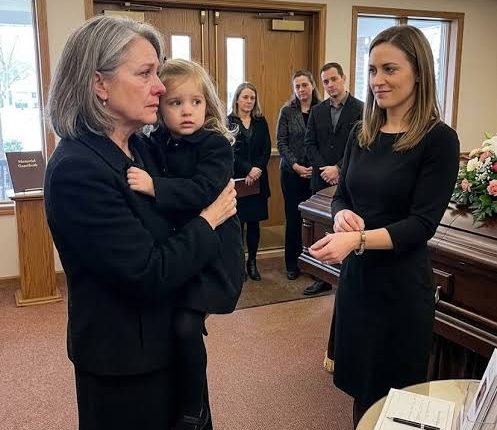
She brought a dish I didn’t eat. Diane’s old friend Beverly came to the chapel wearing the lavender perfume she’d worn at our wedding, which was more than forty years ago now. Deshawn, our mail carrier, came after his route. Diane used to put cold water on the porch for him in July and leave a cup of coffee just inside the storm door when it got cold.
Harold Whitfield came too. He stood near the back and held his hat in both hands.
Five people, counting me.
The little chapel had rows enough for maybe sixty. I could see every empty seat. I gave the eulogy because nobody else knew the small things the way I did.
I talked about her pies, her work at the church food drives, the birthdays she remembered without checking a calendar.
I didn’t mention Darnell.
That was partly to protect him, I suppose. And partly because I didn’t want the people there to hear me say his name and know what he’d done. I wanted to be the sort of man who could keep a family matter inside the family.
I’d been doing that a long time.
After the service, Harold asked if I had a few minutes.
“Not today,” I told him.
He nodded. No argument. He just gave me a card and said, “Call when you’re ready, Raymond.”
I put it in my shirt pocket. By the time I got home, I’d forgotten it was there. I found it in the wash two days later, damp and curled at the corners.
The next clue was the phone bill.
I was sorting the mail because I didn’t know what else to do, and I saw that Diane had called Harold six times in the last three weeks. I knew about two calls. She’d told me she was fixing something with the house papers. The other four were all made during the afternoons when I went to the pharmacy or the grocery store.
Diane wasn’t sneaking around. I don’t want to make her sound like that. She had always managed our bills and kept our papers in order. But she’d begun closing the study door when she talked to Harold. I’d noticed. I just told myself it was private legal stuff.
I put the phone bill in a drawer.
I also didn’t call Darnell. That’s the part I’m not proud of. I told myself he was traveling and I wasn’t going to beg him to care. The truth is, I was scared of what he might say if I did call. I’d already heard enough.
For the first few days, the house felt like I was arriving late to everything. I’d hear a cupboard shut and think Diane was making coffee. I’d start to ask her if she wanted the mail, then remember. I kept buying two bananas because that was what I’d done for years.
Mrs. Pette checked on me. Beverly called. Deshawn asked if he could bring the mail inside while I was out, and I told him I could manage. I was not managing. I just didn’t like having to answer that question.
On the fourth day, I found the sugar bowl on the counter.
I don’t know why I moved it. Maybe I wanted the counter clear. Under it was the scrap with Harold’s number. Diane had written Darnell’s name beside it in blue ink. Below the name was a date, three days before she died.
That night I called Harold.
He asked if I’d found the folder.
“What folder?”
He went quiet for a beat.
“The one Diane left for you.”
I felt the kitchen tilt in my head, though my feet were planted. I asked him why he hadn’t brought it to the house.
“She asked me not to deliver it until after the funeral.”
“Why?”
“I think she wanted you to have time.”
Time for what, I almost asked. But I knew he couldn’t answer that.
He said he could come by the next morning. I told him I’d rather come to his office. That felt easier than having another person sit in Diane’s chair.
Harold had been our attorney since Darnell was in high school. He was a quiet man who kept his files neat and his opinions to himself unless asked. He had a small office on Harper Avenue. Diane had gone there alone, which I knew now.
He put the folder on his desk but kept his hand on it.
“Diane wanted you to read the letter first,” he said.
I didn’t take it yet.
“Was she sick longer than she told me?”
“No.”
“Was she worried about me?”
“She was worried about Darnell.”
I looked at the folder.
Harold eased his hand away. “She said you’d ask that.”
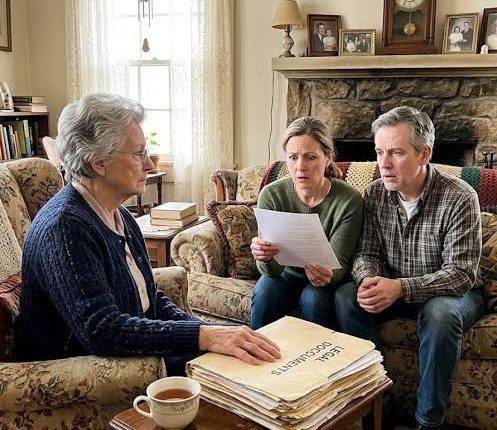
I didn’t open it. Not there. I took it home and put it on the coffee table. Then I left it there for six days.
That sounds foolish, and it was. Every morning I passed it. Every night I told myself I’d look after dinner, then sat in Diane’s chair and watched local news without hearing much of it.
The folder was thin. That made it worse somehow. I’d expected a stack of legal papers, something I could sort through slowly. Instead it looked like a bill I’d been avoiding.
On the tenth day after the funeral, the front door opened.
I’d left it unlocked because Mrs. Pette had said she might stop by with soup. The heels on the hardwood weren’t hers.
“Hello? Raymond?”
Marissa came into the living room with a designer handbag tucked under her arm. She looked dressed for lunch. Her perfume reached me before she did.
“Hi,” she said. “I’m sorry about Diane.”
She didn’t sound cruel. She sounded like she was starting a conversation she’d planned to keep short.
“We wanted to stop by before we leave,” she said. “Darnell’s parking.”
I looked at the folder on the coffee table.
She followed my eyes. “Is that what I think it is?”
“I don’t know what you think it is.”
She sat on the edge of the sofa but didn’t set down her bag.
“I mean, Diane had everything organized. She talked about making sure Darnell was okay.”
The door shut behind her. Darnell walked into the room carrying his coat.
“Dad,” he said.
I didn’t answer right away. I had to look at him and let my eyes adjust to the fact he was standing in my house after missing his mother’s burial. It wasn’t a complicated thing. He’d simply come back from his trip.
Marissa leaned forward. “We don’t want to make this awkward.”
“You already did.”
Darnell looked down at the folder. “What’s that?”
“Your mother’s papers.”
He reached for it. I put my hand on top.
“Wait.”
His fingers stopped. It was the first time he’d looked nervous since he walked in.
Marissa took a breath. “We thought she’d taken care of us.”
“Who told you that?”
“Diane,” she said. Then she glanced at Darnell. “She said not to worry about the loan.”
“What loan?”
Darnell rubbed the back of his neck. “Dad, it’s not the time.”
“What loan, Darnell?”
Marissa’s handbag slid off her knee. She caught it before it hit the floor.
“We had some expenses,” she said. “Diane helped us before. She said she’d help again.”
I looked at my son. He’d gone quiet.
“How much?”
He said nothing.
Marissa looked at him, then back at me. “I thought it was around thirty thousand.”
I opened the folder.
The first pages were the will and the instructions Harold had given me. The house was mine. Diane’s small savings account was divided between the church food pantry and a fund at the community center that helped older people get groceries delivered. She’d written that she wanted it used for the same kind of help she’d spent years giving out without keeping track.
Darnell was not named as a beneficiary.
Marissa read over my shoulder. She let out a small, sharp laugh that stopped as soon as it came.
“She left him nothing?”
“She left what she had to who she chose.”
Darnell sat down, slowly. “Mom never said she was doing that.”
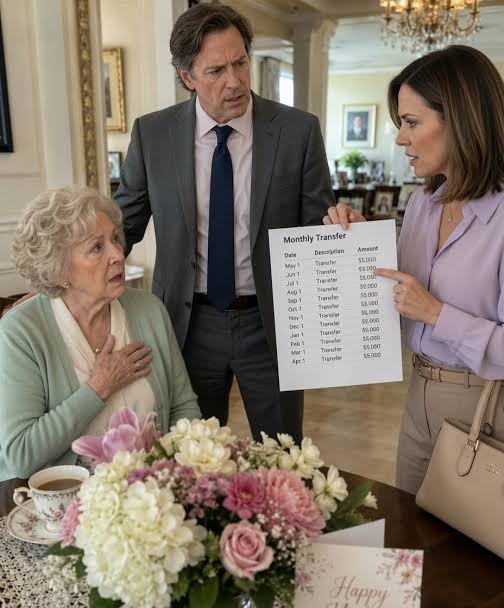
I turned to the second page. A bank statement was clipped behind a letter in Diane’s handwriting. Harold had explained on the phone that Diane wanted me to see the records before I read her note. I had put it off long enough.
There were transfers to Darnell, starting six years earlier. Some were small. Some were not. Two thousand here, $6,400 there. A payment to a card company. A check for a car repair. A wire that covered their rent after Darnell’s work contract fell through.
The total was written in the margin.
$52,614.
I read it once. Then again.
“Darnell,” I said.
He pressed his hands together. “I was going to tell you.”
“When?”
“I don’t know.”
Marissa turned toward him. “You said your mother was helping with the loan.”
“She was.”
“You told me we’d pay her back.”
“I thought we would.”
I looked at the list again. Some of those payments had happened while Diane was still working part-time at the church. Some had come from savings we’d planned to use for the roof. One was dated the week before our anniversary. I remember that because I’d asked why she was so tired that night. She said she’d been on the phone with Beverly.
She hadn’t been.