THE CABIN WAS MINE
Chapter 1: The unexpected text
The message arrived at 6:43 on a Tuesday morning while I was still in my bathrobe, standing at the kitchen window and watching the sprinklers sweep slow silver arcs across the lawn. I had not even taken my first sip of coffee. The house was quiet in the particular way it becomes quiet after you have lived alone for a few years—not empty, exactly, but settled. The refrigerator hummed. A cardinal hopped along the fence. Somewhere down the street, a garage door rolled open. My phone lit up beside the sugar bowl.
It was not James, my son. It was Briana, my daughter-in-law. In four years of marriage, Briana had never been the kind of person who texted me just to say hello. Our messages were usually practical. Could I pick up the children after school? Did I still have the folding table from Thanksgiving? What size batteries did the guest-room lamp take? She was always polite enough, but there was a distance in her politeness, as if warmth were something she preferred to ration. Her message read, “Hey, Sylvia, just so you know, we’ve decided to keep the cabin trip just us and my family this year. Nothing personal. We just need a low-key summer. Hope that works for you. Thanks.”
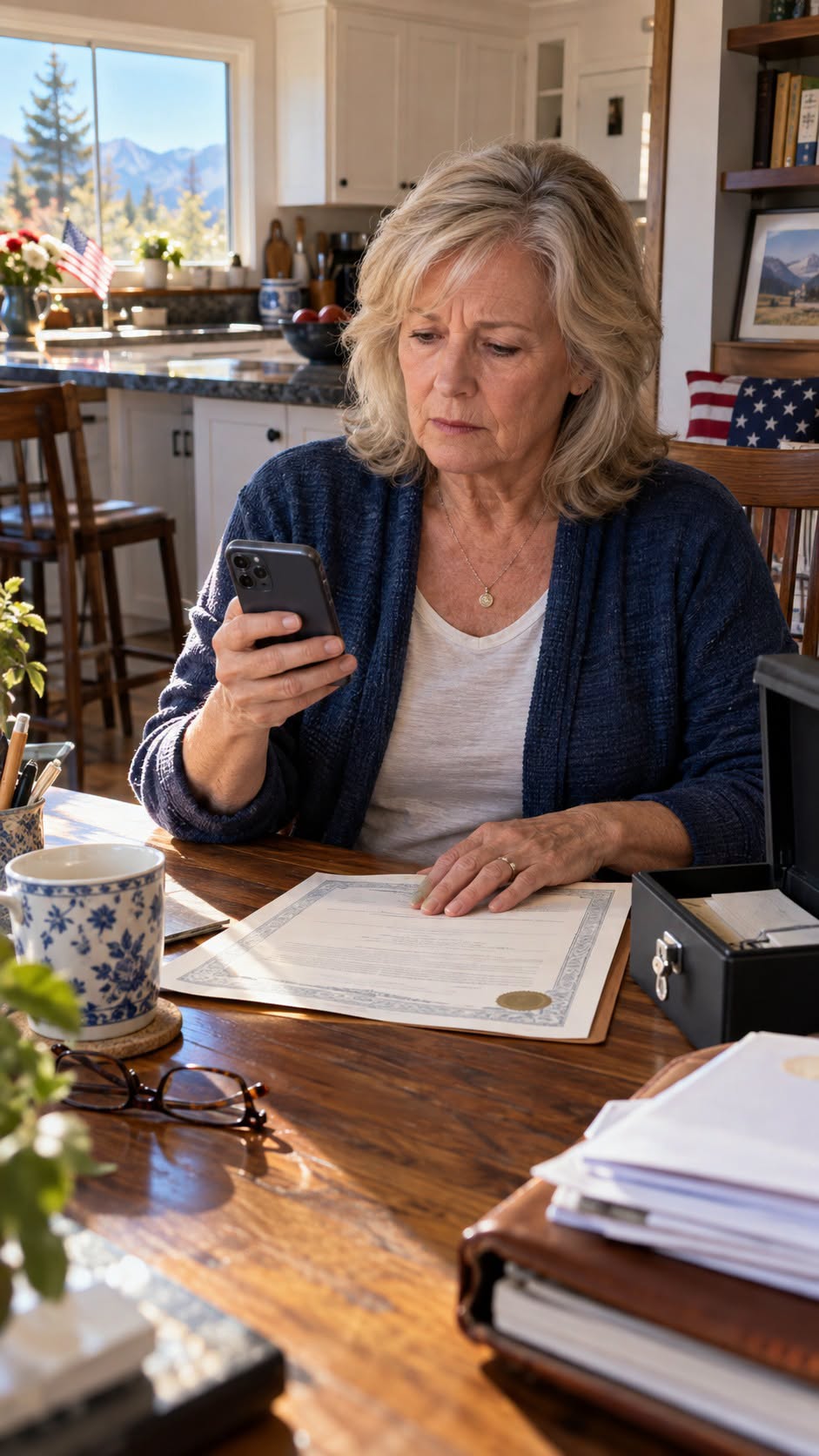
I read it once. Then again. Then a third time, slower. I set the phone face down on the counter and looked at the faucet for a long moment. The cabin was not a rental property Briana and James had reserved. It was not a family timeshare. It was not something they had purchased together. The cabin belonged to me. One hundred fourteen wooded acres outside Asheville, North Carolina, and a three-bedroom log house that my late husband, Robert, and I had built when James was young enough to spend summer evenings catching fireflies in mason jars.
Robert and I had hauled stone for the fireplace ourselves. We had chosen the pine beams one by one. He had laid the hardwood floors while I stained the window frames on sawhorses in the yard. Every board had a memory attached to it. The deed was in a lockbox in my home office. My name was the only name on it. James had called me in April and asked whether he and Briana could use the cabin for a week in July. He said Briana’s parents wanted mountain air, quiet mornings, and time with the grandchildren. I had said yes before he finished explaining. I had even called Bill, the property manager, to have the water heater serviced and the porch screens replaced.
That was the kind of thing I did. I helped before anyone had to ask twice. For years, I had considered that generosity one of my better qualities. That morning, for the first time, I wondered whether other people had started considering it a permanent utility. I poured my coffee and sat at the kitchen table. I did not respond to Briana. At sixty-three, I had learned that the first emotion is not always the one you should let make decisions for you. The first feeling was disappointment. The second was disbelief. The third, arriving more slowly, was clarity.
I looked again at the message. “Just us and my family.” She had written that to the woman who owned the place. What struck me was not only the exclusion. It was the confidence behind it. She was not asking whether I minded. She was informing me of an arrangement she seemed to believe was already settled. That confidence bothered me more than the words. I opened our family group chat. Nothing. No mention from James. No awkward apology. No attempt to explain. I checked his private thread with me. His last message, sent three days earlier, was a photograph of my grandson holding a baseball glove.
I stared at that picture for several seconds. Then I put the phone aside. If James knew about Briana’s message, he had allowed it. If he did not know, that was information too. Either way, I had no reason to answer before I understood what was actually happening. I finished my coffee. Then I walked into my home office and opened the file cabinet.
Chapter 2: Small assumptions
The cabin had always been emotionally complicated for James. It was where he learned to fish, where Robert taught him how to split kindling, where we spent Christmas one year after an ice storm closed half the roads in the county. When James went to college, he brought friends there for weekends. After he married Briana, the two of them began using it several times a year. At first, I liked that. A house survives when people use it. Rooms need footsteps. Porches need coffee cups. Fireplaces need winter evenings. I wanted the cabin to remain part of the family rather than become a polished monument to a life that was gone.
So I made things easy. Too easy, perhaps. James had a permanent access code. He knew where the spare linens were. Bill had his number. If James wanted a weekend there, he usually texted me a few days beforehand and I almost always said yes. Over time, the asking became shorter. “Thinking cabin this weekend. Okay?” Then, “We may head up Friday.” Eventually, sometimes, I learned they had been there only because Bill mentioned it later. I had noticed the change. I had chosen not to make it important. There is a strange line between generosity and surrender. You rarely see yourself crossing it because no single step feels large enough to matter.
A few years earlier, James had asked whether he could replace a worn sofa. I told him to choose something durable and send me the receipt. The next year, Briana changed the dining-room curtains. She texted me a photograph after they were already installed. “Thought these looked fresher,” she wrote. They did look nice. I replied with a heart. At Thanksgiving, Briana’s mother, Elaine, referred to the place as “the kids’ mountain house.” I remember looking across the table at James. He heard it. He did not correct her. Neither did I.
That was on me. The morning of Briana’s text, I pulled the property file from my cabinet and placed it on the desk. The deed was exactly where I remembered. So were the tax records, insurance documents, maintenance invoices, and receipts for the roof work I had paid for two years earlier. Nothing had changed legally. But something had clearly changed in the way the cabin was being discussed when I was not in the room. I began thinking about a conversation from the previous Christmas. Briana had been scrolling through photographs on her phone and mentioned that “the cabin deck really needs a redesign.”
I had laughed lightly and said, “The deck is doing perfectly well.” She smiled. “You know what I mean. It could be more of an outdoor living space.” At the time, I assumed she was brainstorming. Briana liked design. She could walk into a room and immediately imagine a different sofa, different lamps, different paint. Then I remembered another comment from James in March. “Bri’s been pricing some improvements for the cabin.” I had been putting groceries into the trunk of my car when he said it. I barely looked up.
“What kind of improvements?” “Nothing crazy. Just ideas.” I told him not to spend money on anything without talking to me first. He said, “Of course.” I had believed him because he was my son and because most trust is built not from constant proof but from the absence of reasons to doubt. That Tuesday morning, I suddenly had a reason. Not certainty. Just a reason. And a reason was enough to check. Three years earlier, I had opened a joint savings account with James and placed $45,000 in it. The money was intended as a family safety net. If he lost his job, if a major house repair arrived unexpectedly, if one of the children needed something substantial, there would be breathing room.
I had been very clear. “This is not vacation money,” I told him when we opened it. “It is not upgrade-the-kitchen money. It is there so that one bad month does not turn into six bad months.” James had hugged me in the bank parking lot. “I know, Mom. We won’t touch it unless we really need it.” I had not checked the account regularly because checking would have felt like mistrust. That morning, I logged in. The balance was $12,300. For several seconds, I thought I had opened the wrong account.
I refreshed the page. Same number. $12,300. The last time I had checked, about eight months earlier, the balance had been a little over $41,000. I sat very still. Then I opened the transaction history.
Chapter 3: What the numbers said
The first withdrawals were small enough to disappear inside ordinary life. Four hundred dollars. Seven hundred fifty. One thousand. The descriptions were vague. Home service. Vendor payment. Deposit. I scrolled backward, then forward again. Six weeks earlier, the pattern changed. A $9,000 contractor deposit. A $6,000 payment to a business I did not recognize. A $2,000 transfer to a specialty furnishings company. Another payment connected to delivery services in western North Carolina. I copied the business names into a notebook. Then I searched them. The furnishings company sold premium outdoor sets: teak sectionals, stone-top tables, oversized umbrellas, hammocks, and weatherproof lounge chairs. Its website looked like a resort catalog. The least expensive package I saw was more than many families spend on an entire living room.
The contractor’s business page showed decks, screened porches, custom storage, built-in grilling areas, and exterior renovations. I felt my pulse in my fingertips. I called Bill. He answered on the third ring. “Morning, Sylvia.” “Morning, Bill. Quick question. Has there been work happening at the cabin?” There was a pause. Not a long one, but long enough. “Some, yes.” “What kind?” “Well, I figured you knew.” That sentence told me nearly everything before he continued. Bill explained that a contractor had been at the property several times. Some boards on the rear deck had been replaced. New built-in seating had been started. Outdoor furniture had arrived the previous week. Briana had told him she was coordinating “a family refresh.”
I wrote those words down exactly. “A family refresh?” “That’s what she called it.” “Did she tell you I approved it?” Another pause. “She said James had everything cleared with you.” I closed my eyes. “Thank you, Bill. You didn’t do anything wrong. I’m glad you told me.” He sounded uncomfortable. “Do you want me to stop anything?” “Yes. No additional work until you hear directly from me.” “Understood.” After we hung up, I sat in my office and looked at the account history. The issue was no longer a rude text.
The text was simply the first loose thread I had pulled. I called the bank. I did not make accusations. I did not use dramatic words. I asked for a formal account review and an immediate pause on additional outgoing transfers until I could understand several recent transactions. The representative explained the steps carefully. Because the account was joint, the situation required documentation and a conversation about access settings. I listened, took notes, and requested written confirmation of every change. When the call ended, I printed the recent account history.
Then I placed Briana’s text beside it. One page showed where the money had gone. The other showed who now believed she could decide whether I entered my own property. For the first time that morning, I was no longer confused. I was not even especially emotional. I was focused. That feeling surprised me. People often imagine a turning point as something loud. Mine was a printer pushing warm pages into a tray. I arranged the documents neatly. Then I called Carol. Carol had handled Robert’s estate six years earlier. She was practical, patient, and allergic to unnecessary drama. She had once told me that the best legal decisions were usually the ones you could explain calmly on a single page.
Her assistant found thirty minutes for me at three o’clock. I spent the hours before the appointment doing ordinary things. I watered the tomatoes. I folded towels. I answered an email from the library committee. At noon, Briana sent another text. “Just wanted to make sure you saw my message.” I looked at it. I did not answer. Ten minutes later, James called. I let it go to voicemail. His message was brief. “Hey, Mom. Call me when you get a chance. Just want to make sure everything is okay.”
Everything was not okay. But for the first time in years, I did not feel responsible for making him comfortable before I had even decided what I needed. At 2:20, I put the deed, bank statements, printed text messages, and maintenance notes into a blue folder and drove downtown.
Chapter 4: Thirty minutes with Carol
Carol’s office was on the fourth floor of an old brick building that had been renovated without trying to look new. The waiting room smelled faintly of coffee and old paper. I had always liked that about it. She came out herself. “Sylvia. Come in.” I sat across from her desk and gave her the facts in order. I told her about Briana’s message. I told her about the contractor. I showed her the transactions. I explained that I had never given James permission to spend the emergency account on the cabin and had never approved renovations.
Carol read everything without interrupting. When I finished, she folded her hands. “First question. Are you still the sole owner on the deed?” “Yes.” “No transfer, trust change, life-estate arrangement, or shared ownership document?” “No.” “Good. Second question. Did you sign any renovation contract?” “No.” “Did you verbally authorize James to manage renovations on your behalf?” “No.” She nodded. “Then the ownership side is straightforward. It is your property.” The simplicity of her answer was almost funny. I had spent half the day mentally circling the situation, and Carol reduced it to six words.
It is your property. “What do you want to do?” she asked. That question mattered. Not what do you want James to understand. Not what do you want Briana to regret. What do you want to do. I looked through the window behind Carol. Downtown traffic moved below us. People crossed at the light. Someone carried a white bakery box. “I want the cabin unavailable for personal use this summer.” Carol nodded once. “I want the access arrangements changed. I want every property decision to come through me. And I want the financial account separated so this cannot happen again.”
“Reasonable.” “I also want documentation stating that no one can authorize work at the cabin without my written approval.” “Also reasonable.” I paused. “And I do not want to turn this into a family spectacle.” Carol smiled slightly. “That may be the most difficult part, but it is still possible.” She spent the next twenty minutes outlining practical steps. She would prepare a simple property management authorization. I should notify Bill in writing. Any contractor should receive notice that future approvals came only from me. The bank would guide the account separation process. If I intended to rent the cabin, Carol recommended a professional management company so family access and business access remained clearly separate.
“I was thinking the same thing,” I said. “Good.” Then she leaned back. “Sylvia, I’m going to say something you probably already know. The legal part is easy. The family part is going to feel harder because everyone is used to the old arrangement.” “What old arrangement?” “You saying yes.” I looked at her. She did not say it unkindly. That made it land harder. I left the office at 3:42 with a short list of actions in my notebook. I did not drive to James’s house. I did not send Briana a long reply.
I went to the grocery store. I bought chicken, carrots, potatoes, and a bottle of Chardonnay. At home, I seasoned the chicken, put everything in the oven, and sat on the back porch while the sky turned from pale blue to lavender. My phone rang twice. James. Then Briana. I let both calls end. For years, I had treated unanswered calls from family as emergencies in miniature. I would stop what I was doing, dry my hands, leave the garden, step out of a meeting, interrupt dinner. That evening, I learned something.
A ringing phone is only a ringing phone. After dinner, I washed the dishes. Before bed, I checked my email. Carol had already sent a draft of the property notice. I read it once, approved it, and slept better than I expected.
Chapter 5: The cabin becomes a business
The next morning, I called a regional vacation management company I had used years earlier for a different property question. A woman named Tessa answered. I told her I had a three-bedroom log cabin on 114 acres outside Asheville and was considering placing it in summer rental rotation. Her tone changed immediately. “Is it private acreage?” “Yes.” “Mountain views?” “Partial. Mostly woods.” “Fireplace?” “Stone.” “Screened porch?” “Yes.” “Road access?” “Good.” “How soon would you want it available?” “As soon as you can prepare it properly.” She laughed softly. “That’s a clear answer.”
I liked her. By noon, she had emailed a checklist. Two days later, a photographer went to the property. Bill met him there. Bill called me from the driveway. “You should see this furniture.” “I have seen the invoice.” “No, I mean actually see it. It looks like a hotel terrace.” I almost laughed. “Photograph everything for inventory.” “Already doing it.” “Thank you.” Then his voice lowered. “Briana called me this morning.” “What did you tell her?” “That all scheduling questions go through the owner.” I smiled. “And what did she say?”
“She asked, ‘Since when?’” That did make me laugh. “Since always, Bill.” “Exactly what I thought.” By Friday, the rental company had the listing draft ready. The photographs surprised me. The cabin looked beautiful. Morning light poured through the windows Robert had insisted on making larger than the original plans. The stone fireplace anchored the living room. The porch looked into green woods. The new outdoor furniture was elegant, even if I had never approved the purchase. For a moment, seeing the images stirred an old sadness. Robert should have seen this, I thought.
Then a second thought followed. He would have laughed at the price of those chairs. I could almost hear him. “For that much, Sylvia, they better make the coffee too.” I sat at my desk smiling to myself. The rental company suggested a nightly rate higher than I expected. Summer weekends in the area were booking quickly. I approved the listing. Then I asked Bill to change all general access codes and issue temporary codes only through confirmed reservations or direct authorization from me. He handled it that afternoon. At 5:18, James called again.
This time I answered. “Hi, James.” “Mom.” His voice was careful. Too careful. “Everything okay?” “I was going to ask you that.” A short silence. “Briana said you haven’t replied.” “I saw her message.” “She thinks you’re upset.” “I’m not interested in discussing what Briana thinks I feel.” He exhaled. “Okay.” I waited. He was not used to me making him carry a difficult conversation forward. Usually, I rescued silence before it became uncomfortable. He tried again. “She just wanted some time with her parents.” “I understand the sentence she sent me.”
“She didn’t mean you can’t ever go to the cabin.” “That is not what she wrote.” “Mom.” I kept my voice level. “James, did you know she was going to send that message?” Another pause. “I knew she wanted the week to be just her family.” “Did you know she was going to tell me not to come?” “It wasn’t really like that.” There it was. Not an answer. A rearrangement. I looked at the garden through the kitchen window. “Did you authorize renovations at the cabin?” The silence changed.
Longer now. “Some things needed updating.” “That was not my question.” “Briana found a contractor—” “Did you tell her she could spend money from the emergency account?” “Mom, we were going to talk to you.” “When?” He did not answer. I lowered my voice, not because I was weak, but because I wanted every word clear. “The account was created for emergencies. The cabin belongs to me. We never discussed using that money for furniture, contractors, or any other upgrades.” “We thought it added value.” “You thought wrong.” He inhaled sharply.
I continued. “I have asked the bank to pause outgoing transfers while the account is reviewed. I have also placed the cabin into professional rental rotation for the summer. Personal access codes have been changed.” For several seconds, there was nothing on the line. Then James said, “You rented the cabin?” “Yes.” “But July—” “Will not be available.” “Briana’s parents already made plans.” “So had I.” “Mom, this feels extreme.” That word nearly pulled me into an argument. I refused it. “No. It feels unfamiliar.” “What does that mean?” “It means you are accustomed to my yes. You are hearing no.”
He did not speak. I added, “I love you. We can talk again after you have had time to think.” “Mom—” “Goodnight, James.” I ended the call. My hands were steady. That was when I knew the change was real.
Chapter 6: The family weather changes
By Saturday afternoon, the story had traveled. Not the full story, of course. Family stories rarely travel whole. My sister-in-law Linda called first. She was Robert’s younger sister and the unofficial communications center for three generations of relatives. “Sylvia,” she said carefully, “is something going on with James?” “That depends on what you heard.” “That you suddenly canceled a family vacation.” I closed my eyes and almost admired the efficiency of the rewrite. “Interesting.” “So it isn’t true?” “I did not cancel anyone’s vacation. I placed my cabin into rental service.”
“Isn’t that the cabin they were using?” “It is the cabin I own.” Linda became quiet. I told her the rest in four sentences. I did not share account balances. I did not insult Briana. I simply explained that property work had been arranged without my approval, family funds had been used outside their intended purpose, and I had decided to manage my property directly. Linda listened. Then she said, “Oh.” It was a very different “oh” from the one at the beginning of the call. “I didn’t know that.”
“I assumed you didn’t.” “I’m sorry I called like this.” “You’re fine.” Before we hung up, she said something that stayed with me. “Robert always said you would give away your last chair and then stand so everyone else could sit.” I smiled despite myself. “He exaggerated.” “Not by much.” Later that day, I received a message from Elaine, Briana’s mother. “Sylvia, I’m not sure what misunderstanding happened, but we’ve all been looking forward to a peaceful week together. I hope this can be resolved without making the children feel caught in the middle.”
I read the message twice. It was carefully written. There was no accusation in it, yet somehow I was being offered responsibility for the children’s feelings. For once, I did not accept the offer. I replied with one sentence. “The children will always be welcome in my life; the property schedule is a separate matter.” That was all. Elaine did not answer. Sunday morning, I went to church, had lunch with two friends, and spent the afternoon repotting basil. Nothing dramatic happened. Yet beneath the ordinary day, I felt as if furniture were being rearranged inside my life.
The calls slowed. The rental bookings began. The first reservation came from a family in Charlotte. Then a couple from Raleigh booked six nights in August. A third reservation filled a long weekend in July. Each confirmation landed in my inbox with a neat little chime. For the first time, the cabin was producing income directly for me rather than quietly absorbing my money for everyone else’s convenience. I opened a separate account for cabin expenses and income. I created folders. Maintenance. Taxes. Reservations. Repairs. I had always been organized, but there was something satisfying about making the structure visible.
On Monday, Tessa sent me an estimate of summer revenue. I stared at the number. Even after management fees, cleaning, utilities, and maintenance, the property could generate enough in one summer to replace a substantial portion of what had left the emergency account. I printed the estimate and placed it in my blue folder. The same folder now contained Briana’s text. The contrast was almost elegant. One piece of paper had tried to reduce me to a guest who was no longer invited. Another showed exactly what happened when I remembered I was the owner.
Chapter 7: A visit I did not expect
Tuesday afternoon, there was a knock at my front door. James stood on the porch. Alone. I opened the screen door. “Do you have a minute?” “I have several.” He followed me into the kitchen. He looked tired. Not ruined, not shattered, just like a man who had spent a few nights having conversations he could no longer avoid. I made tea. He sat at the same table where he had once done algebra homework while Robert quizzed him with index cards. For a while, neither of us spoke. Finally, James said, “I should have told you.”
“Yes.” He looked up, perhaps surprised by how simple my answer was. “I thought we’d replace the money.” “When?” “Over time.” “With what plan?” He rubbed his forehead. “That’s the problem. There wasn’t really a plan.” I poured tea into two mugs. “Then what was the thinking?” He stared at the steam. “Briana felt like the cabin was becoming more important for family gatherings. Her parents kept saying it needed this or that. She had ideas. I kept saying yes because each thing sounded manageable by itself.” “The furniture was not manageable.”
“I know.” “The contractor deposit was not manageable.” “I know.” “The account was not yours to use that way.” “I know.” Three “I knows.” Not one excuse. That was more progress than I expected. I sat down. “Did Briana know what that account was for?” “Yes.” “Did she know I had not approved the work?” James looked away. “Yes.” There are answers you suspect and answers you hear. They do not feel the same. I let the silence remain. He continued. “She thought you’d be happy once you saw everything finished.”
“And the message asking me not to come?” His face tightened. “She didn’t want the first week to turn into an argument about the upgrades.” I almost smiled, but there was no humor in it. “So the solution was to keep me away from the property I own until the changes were complete.” “When you say it like that—” “There is no other accurate way to say it.” He nodded slowly. “You’re right.” That mattered. Not enough to reverse anything. But it mattered. I asked him why he had gone along with it.
His answer came quietly. “Because it was easier.” “Easier than what?” “Easier than telling Briana no.” There it was. Not a grand scheme. Not some complicated plot. Just the oldest kind of family mistake: one person avoiding discomfort and allowing someone else to carry the cost. James looked at me. “You always seemed like you’d understand.” I set my mug down. “That sentence is the problem.” He frowned. “You assumed I would absorb whatever made your life easier because I had done it before.” “I didn’t think of it that way.”
“I know. That is also the problem.” His eyes filled, and for a moment I saw the boy he had been. The boy who once came home from school devastated because he had forgotten a classmate’s birthday party. The boy Robert and I had raised to be kind. Kindness had not disappeared from him. But courage had become selective. I reached across the table and touched his hand. “I love you, James. That has not changed.” He nodded. “But love is not a permission slip.” He closed his eyes. “I know.”
This time, I believed him. Before he left, he asked whether I would reconsider the July week if they reimbursed the account immediately. “No.” He looked disappointed. “Even if we fix the money?” “The money is one issue. The assumption is another. If I reverse the decision because everyone is unhappy, what exactly have we learned?” He had no answer. At the door, I hugged him. He held on a second longer than usual. “I’m sorry, Mom.” “Thank you.” Then he left. I watched his car pull away and felt two things at once.
Relief. And sadness. Boundaries, I learned, can feel right and still feel sad.
Chapter 8: The Saturday at the gate
One week later, on Friday afternoon, Briana texted me. “Hey, we’re heading to the cabin tomorrow. Just wanted to confirm everything is good to go.” I read the message while standing in the checkout line at the pharmacy. For several seconds, I wondered whether she had somehow missed every conversation James and I had had. Then I understood. She had not missed them. She did not believe me. There is a type of certainty people develop when your previous behavior has trained them to expect surrender. They hear no as the opening position in a negotiation. They assume enough inconvenience, enough family pressure, enough momentum will turn it into yes.
I put the phone into my purse. The woman ahead of me bought cough drops and a birthday card. I paid for my vitamins. Then I went to dinner at my friend Marjorie’s house. We ate salmon on her patio. She told me about her granddaughter’s college plans. I told her about the rental bookings but not the latest message. I was tired of letting Briana occupy every conversation. At 7:14 the next evening, my phone buzzed three times while I was reading. James had left three voicemails. The first sounded confused.
“Mom, call me when you get this. We’re at the cabin and the code isn’t working.” The second was more urgent. “There’s another family here. They say they rented the place. There’s a management sign at the road. I need you to call me.” The third was slower. “Mom. We had to leave. Please call when you can.” I listened once. Then I placed the phone beside my book. The cabin guests had a valid reservation. Bill had confirmed their arrival. There was nothing I needed to solve that night.
Sunday morning, I made coffee and sat on my back porch. Two cardinals worked around the feeder. The sky was bright and clear. At ten o’clock, I called James. He answered before the first full ring. “Mom.” “Good morning.” “We drove four hours.” “I understand.” “Briana’s parents drove separately. The kids were confused. There was a family sitting on the porch.” “The family had a reservation.” “I know that now.” I took a sip of coffee. “You told me the cabin was in rental rotation,” he said. “I just didn’t think you meant our week too.”
“I said personal access was unavailable for the summer.” “I thought there would be an exception.” “There wasn’t.” He exhaled. In the background, I heard a cabinet close. Briana was probably nearby. “Mom, can you understand how embarrassing that was?” I looked across my garden. “Yes.” He waited. I added, “Can you understand how strange it was to receive a message telling me I was not included at my own property?” Silence. “Yes.” “Then perhaps we understand each other better today than we did last week.” A faint sound came through the phone. Briana said something I could not make out.
James lowered his voice. “She wants to talk to you.” “I’m not ready to speak with Briana right now.” “She’s upset.” “That does not require me to be available.” Another silence. Then, to his credit, James did not argue. “Okay.” “I love you.” “I love you too.” “Take the kids somewhere fun today.” He gave a tired laugh. “We’re going to the science museum.” “That sounds better than sitting around discussing adults.” “It probably is.” We ended the call. I returned to my coffee. What surprised me most was that I did not feel triumphant.
I felt calm. I had not arranged for them to drive there. I had not hidden the rental schedule. I had not created a trap. I had told James clearly what was changing. They had simply believed my boundary was less real than their plans. Now they knew otherwise.
Chapter 9: The invoice in the drawer
The following Monday, Bill sent his weekly report. The guests from Charlotte had checked out and left the cabin in good condition. They loved the porch. They complimented the fireplace. They mentioned that the kitchen could use a larger coffee maker. At the bottom of Bill’s email was a note. “Found a folder in the desk drawer that appears to belong to Briana. Want me to mail it to her?” I called him. “What kind of folder?” “Receipts. Design printouts. Contractor notes. Looks like planning material.” “Scan it first and send it to me. Then mail the originals to James.”
That afternoon, the scans arrived. I opened them expecting paint samples and furniture receipts. There were those. There was also a printed page titled “Phase Two.” I leaned closer. Phase Two included a new gravel parking area, a small detached studio structure, landscaping changes, and something described as an “owner storage conversion.” Owner storage. I had to read the phrase twice. A handwritten note beside it said: “Move Sylvia’s old items into off-site storage?” My mouth went dry. I scrolled through the rest. There were sketches of the upstairs bedroom labeled “Elaine + Mark.” The smaller bedroom had notes about bunk beds for grandchildren. The room I had always used—the one with Robert’s old reading chair—was marked “flex guest room / office.”
No one had spoken to me about any of it. Nothing had been signed. Nothing had been approved. They were plans, not completed work. But plans reveal assumptions. I sat back from the screen. The rude text now made more sense. Briana had not simply wanted a private family vacation. She had begun mentally assigning rooms. That evening, James called. I told him about the folder. He went completely quiet. “You knew about Phase Two?” I asked. “No.” “Are you sure?” “Yes. I knew she had more ideas, but I never saw anything called Phase Two.”
I believed him, mostly because his confusion sounded too immediate to be rehearsed. I emailed him the scans. He called back twenty minutes later. His voice had changed. “She never showed me this.” I did not say anything. “She has my parents’ names—sorry, her parents’ names—written into bedrooms.” “I saw.” “And your stuff—” “I saw that too.” “Mom, I swear I didn’t know.” “I believe you.” He sounded relieved for half a second. Then I added, “But you created the conditions that made her think it was possible.”
The relief disappeared. “I know.” We were getting very good at that sentence. He asked what I planned to do. “Nothing dramatic. The rental schedule continues. No work happens without written approval. The access codes remain controlled by management.” “What about Briana?” “That is a conversation for your marriage.” He was silent. “James, I am not going to become the manager of your relationship because you avoided managing boundaries inside it.” “That’s fair.” “Good.” After the call, I printed the Phase Two page and placed it in the blue folder.
I was collecting quite a history in that folder. Yet I noticed something important. I no longer opened it every day. At first, I had needed the papers to remind myself I was not overreacting. By then, I no longer needed proof for my own feelings. The facts had done their work.
READ THE NEXT PART: 👇👇
PART 4 – They Arrived at My Cabin With Luggage—But They Had No Idea What I’d Done