I never brought it up again. That was not because I agreed with him. It was because I understood that my father had chosen the explanation that required the least from him. So I built another life quietly.
MAYA’S STORY
Chapter 1: The Morning Everything Changed
I was sitting at the kitchen table with anatomy notes spread around my cold coffee when Mason started crying in the living room. I had a final exam that evening, the kind of exam that could decide whether I moved forward with the nursing program I had worked toward for years. I had been awake since before sunrise because Mason had been restless, and every line in my textbook seemed to blur the moment I tried to memorize it. I stayed in my chair for a few seconds and listened, hoping someone else in the house would finally get up.
Cynthia appeared around the corner with her phone in one hand. “Can you get him? I’m in the middle of something.” “I just got him settled twenty minutes ago,” I said. “I need to study.” Her expression changed immediately. Cynthia could turn a small disagreement into a referendum on everything she believed I owed her. “You think you’re the only person who gets tired?” I looked back at my notes because I knew where the conversation was headed. If I defended myself, I was disrespectful. If I explained, I was making excuses. If I stayed quiet, I was ungrateful. After years of living in that house, I had learned that sometimes there was no correct answer.
That morning, though, something in me was different. Maybe it was the lack of sleep. Maybe it was the acceptance letter hidden inside my backpack. Maybe it was the small balance in a savings account Cynthia knew nothing about. Or maybe I had simply reached the point where one more demand could no longer be disguised as family responsibility. She crossed the kitchen, lifted my laptop from the table, and moved it carelessly beside the sink while telling me that studying did not excuse me from helping. A moment later, water from the faucet reached the computer. The screen flickered, froze, and went dark.
For several seconds, neither of us spoke. “That has my whole semester on it,” I said. My voice surprised me. It was not loud. It was almost calm. Cynthia folded her arms. “After everything I do for you, this is how you behave? You eat here. You sleep here. You act like this place is a hotel.” I stared at the dark screen. The laptop had assignments, study files, drafts, saved research, and years of small pieces of work I had collected because I could not afford to replace things easily. I had backups of the most important documents, but Cynthia did not know that. She thought she had just taken away my ability to finish the semester.
Then she said the sentence that finally closed a door in my mind. “Maybe you should leave.” I looked at her, waiting to see whether she would take it back. She did not. So I stood up. That seemed to unsettle her more than an argument would have. I walked to my bedroom and pulled a duffel bag from beneath the bed. It had been packed for three weeks: two sets of scrubs, jeans, shirts, toiletries, a folder with my nursing-school acceptance letter, a bank card, copies of important documents, a flash drive, and the small notebook where I had written dates and details whenever something happened in the house that made me question my own memory.
Cynthia followed me halfway down the hallway. “What are you doing?” “Leaving.” “You’re being dramatic.” I zipped the bag. That word had kept me in place for years. Dramatic. Difficult. Sensitive. Ungrateful. Cynthia always had a label ready for any reaction that made her uncomfortable. The labels were useful because they meant she never had to examine the situation itself. Mason was still crying in the next room. My hand froze on the strap of the bag. I loved that baby. None of this was his fault. He was four months old and had already learned that if he cried long enough, I was usually the person who appeared. I knew the exact rhythm he liked when someone rocked him. I knew which bottle nipple he preferred, which blanket made him settle fastest, and the tiny face he made before falling asleep.
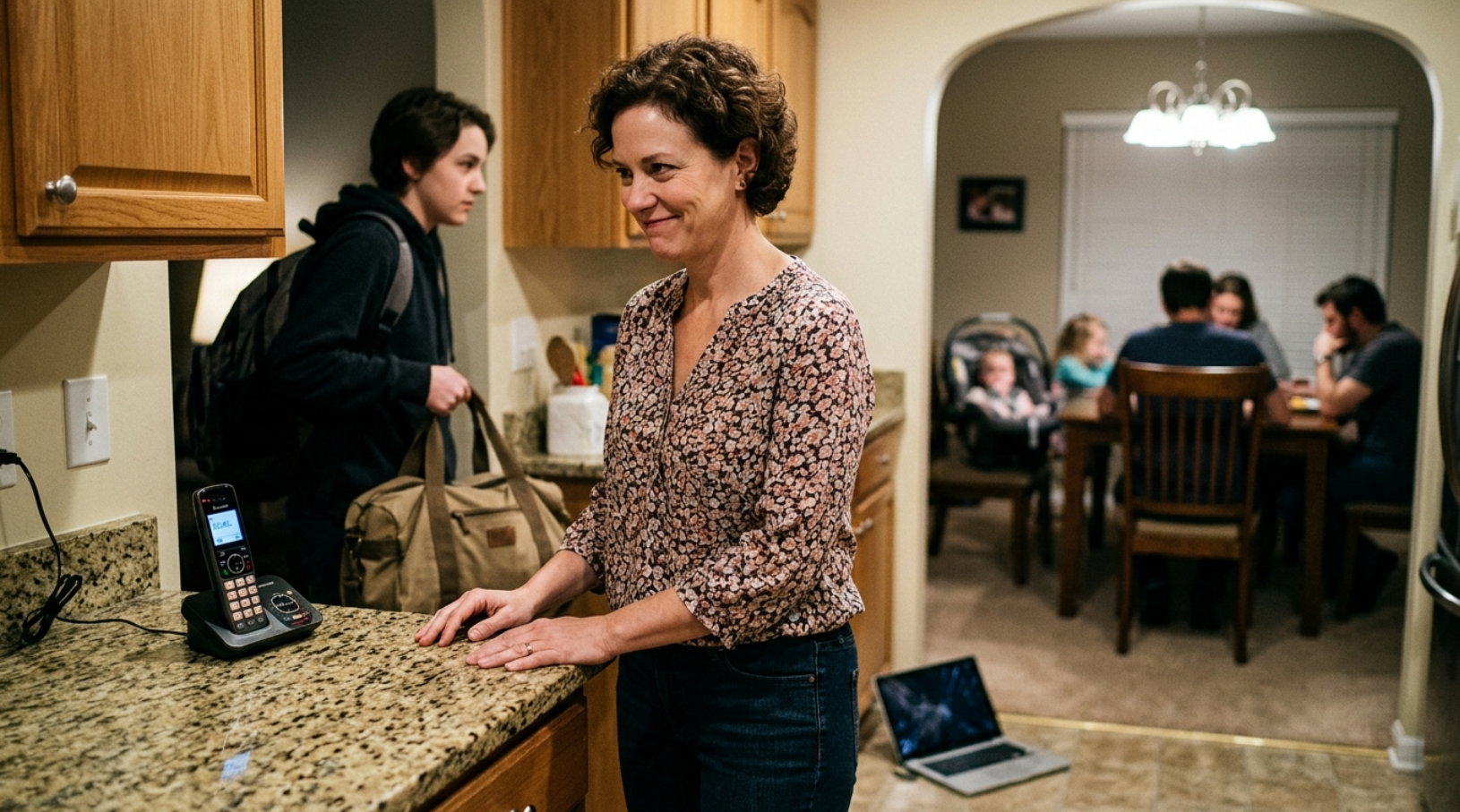
For a second, I nearly did what I had always done. I nearly went back. Then I remembered why the bag was packed. I walked toward the front door. The porch was only a few steps away, but crossing that hallway felt like moving through eight years of history. At the threshold, I stopped and turned around. Cynthia stood near the kitchen doorway. She had the expression she wore whenever she believed she still controlled the story. I said, “I documented everything. I sent the recordings, the messages, and my notes to Dad this morning. I also made a formal incident report weeks ago, so there is already a record.”
The confidence left her face. “You’re lying.” “Check your phone.” Her phone buzzed on the counter. She looked toward it but did not move. That was the first moment I understood something important: people can seem powerful when they control the version of events everyone else hears. The power changes when the record no longer belongs to them. But the real beginning of that morning had happened eight years earlier.
Chapter 2: The House After My Mother
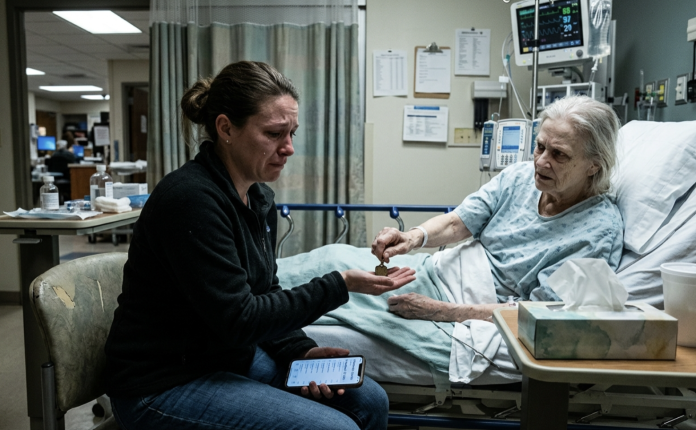
My mother passed away when I was fifteen after a long illness that seemed to reorganize time itself. Before she became sick, our house had ordinary rhythms: coffee in the morning, music while she cooked, grocery lists stuck to the refrigerator, and her chipped sunflower mug always sitting beside the sink. After her illness began, everything became appointments, quiet conversations, and adults lowering their voices when I entered the room. When she was gone, the house felt too large and too quiet. My father, Robert, handled grief by working more. He drove long routes and was often away for days at a time. I understood it even when I hated it. Work gave him somewhere to put his attention. It gave him schedules and highways and delivery times, things that could be measured when the rest of life could not.
Two years later, he married Cynthia. I wanted to believe that a new person in the house might help. I did not expect Cynthia to replace my mother, and I never asked her to. I only hoped we could coexist without turning the house into a place where every memory had to be defended. During Cynthia’s first week living with us, she reorganized the kitchen. That did not bother me. People organize kitchens differently. What bothered me was realizing that my mother’s sunflower mug was gone. I searched two cabinets before asking Cynthia where it was. “I threw it out,” she said. “It was chipped.”
I stared at her. She gave me a practical smile. “We’re starting fresh. You can’t keep every old thing forever.” My father was in the next room. I knew he heard us because the television volume dropped for a moment. He said nothing. At seventeen, I did not yet understand that silence could become a family system. I thought silence was the absence of a decision. Over time, I learned that silence often protects the person who benefits most from things staying exactly as they are. Cynthia was not unpleasant every minute of every day. That was part of what made living with her confusing. When Dad was home, she could be attentive and cheerful. She made dinners, asked about my classes, and told him how responsible I was. She praised me in ways that almost sounded affectionate.
When he left for another trip, the tone changed. There were more chores. More expectations. More reminders that I was living in “her” house, even though it was the same house I had grown up in. If I came home late from class, she wanted to know why. If I bought something for myself, she asked how much it cost. If I stayed in my room, I was antisocial. If I sat in the living room, I was “always underfoot.” The rules shifted depending on what Cynthia needed. At first I worked hard to satisfy them. I cleaned before being asked. I took out trash. I helped with groceries. I learned to keep my schedule written on a small paper calendar because Cynthia said she needed to know when I would be home. Then she started adding errands to the empty spaces.
“Since you’re free at three, you can stop by the store.” “Since you don’t work until noon, you can do the laundry.” “Since your class is online today, you can make dinner.” Nothing sounded unreasonable when taken individually. The problem was that every open hour became available for someone else to claim. My seventeenth birthday taught me how completely appearances had replaced reality in our house. Dad was on the road. Cynthia told him she had arranged dinner and a cake. When he called that evening, she answered in the kitchen while I sat at the table eating a frozen meal I had heated myself.
“She had a great day,” Cynthia told him. “We kept it simple, just family.” She smiled at me while she said it. In the basement, Brandon and two of his friends were eating pizza and playing video games. After the call, Cynthia put the phone down and went downstairs. I sat alone at the table for another ten minutes, then washed my plate. The event itself was small. Nobody had screamed. Nobody had created a public scene. If I had described it to someone, it might have sounded petty. But those small moments accumulate. They teach you where you rank in a household without anyone ever saying the ranking out loud.
A few weeks later, I tried to explain it to Dad. We were sitting in his truck before he left on a three-week route. I had rehearsed what I wanted to say because I did not want to sound emotional. I started with the birthday, then the constant errands, then the way Cynthia’s stories changed depending on whether he was home. I got about four sentences in before he sighed. “She’s trying her best, Maya. We’re all trying our best. Don’t make things harder than they need to be.” I looked through the windshield at the driveway. “Okay.” He reached over and squeezed my shoulder, as if the conversation had ended successfully.
Chapter 3: The Life I Built in Small Pieces
I enrolled in prerequisite classes at the community college and started working part-time at a pediatric clinic. The clinic was small, busy, and usually noisy, but I liked it immediately. Children cried, parents worried, phones rang, printers jammed, and everyone moved quickly. Unlike home, though, effort had visible results. If a room needed supplies, I restocked it. If a parent needed a form, I found the form. If a child was nervous, I could distract them with stickers or ask about the dinosaur on their shirt. The work was not glamorous, but I was good at it. That mattered more than I expected.
At home, competence only made people expect more from me. At the clinic, competence made people trust me. Beth, one of the senior nurses, noticed that I remembered details. She had worked there for more than twenty years and seemed capable of seeing through excuses before the person making them had finished speaking. “You should go to nursing school,” she told me one afternoon. I laughed because the idea felt too large. “I’m serious,” she said. “You already think like one. You just need the training.” That evening I searched nursing programs until nearly midnight. One was four hours away.
I read every page of the website twice. For the first time in years, distance looked less like abandonment and more like possibility. I started saving money in a separate account. Five dollars after one shift. Ten after another. Twenty when I picked up an extra Saturday. I brought lunch from home even when my coworkers ordered food. I kept driving the same old car even after the air conditioner started working only when it felt cooperative. I learned which gas station had the cheapest coffee. The amount grew painfully slowly. Still, it grew. I also started keeping important papers outside the house. My birth certificate, school transcripts, clinic employment records, and application documents went into a locked drawer at work with Beth’s permission. She did not ask why. She only handed me the spare key and said, “Put anything in there you don’t want misplaced.”
The word misplaced was kind. Beth had a way of offering help without making me defend why I needed it. At home, Brandon floated through life with a completely different relationship to responsibility. He was Cynthia’s son from a previous relationship, three years younger than me. He was not a terrible person. That would have made everything simpler. Brandon was mostly passive. He worked at a tire shop, spent money as quickly as he earned it, and assumed someone else would solve problems if he waited long enough. Cynthia solved many of them. When his car needed repairs, she found money.
When he forgot paperwork, she made phone calls. When he missed work because he overslept, she defended him. If I forgot to pick up milk, it became evidence that I was selfish. The contrast was so normal in our house that nobody commented on it. Then Brandon’s girlfriend, Brianna, had Mason. For the first few months, Brandon and Brianna tried to act like young parenthood was simply another schedule to coordinate around work and friends. They bought a stroller, posted pictures, argued about who was more tired, and brought the baby to the house often. Then one Tuesday afternoon, Brianna arrived looking exhausted, handed Mason to Cynthia, and said she needed a few days to figure things out.
A few days became a week. A week became longer. Cynthia held Mason for about ten minutes that first afternoon before placing him in my arms. “You work with kids,” she said. “You know what to do.” I did know some things. I knew how to hold him safely. I knew how to read basic feeding instructions. I knew when a baby’s cry sounded like hunger and when it sounded like exhaustion. What I did not know was how quickly temporary help could become an assigned role. Within days, I was tracking bottles and sleep. Within weeks, I was the person waking up when Mason stirred before dawn.
Brandon visited, but he behaved more like an older brother than a father. He held Mason for pictures, bounced him for a few minutes, then passed him back when the baby became fussy. “You’re better at this,” he would say. Cynthia agreed. That sentence became their permission slip. Because I was better at it, I should do it. Because I cared, I should do more. Because I was already doing more, asking for help became proof that I had an attitude. I did not resent Mason. That distinction mattered to me. I loved him almost immediately. He had a serious little face and a habit of curling one hand into the collar of whoever held him. He calmed when I hummed. He stared at ceiling fans as if they contained the secrets of the universe. On difficult nights, when everyone else disappeared into bedrooms, I would walk circles through the living room and whisper nonsense to him until he relaxed.
The problem was not the baby. The problem was the system around him. Cynthia began telling Dad that I “barely helped around the house.” One evening, I heard her on the phone while I was warming a bottle. “She works, she studies, she comes home and acts like she’s too busy for the rest of us,” Cynthia said. I stood three feet away holding Mason. She looked directly at me and kept talking. The absurdity was so complete that I almost laughed. Instead, I wrote the date down later. That notebook had started as a study tool. I used it to track assignments and shifts. Gradually, the back pages became something else.
April 3 — up with Mason from 2:10 to 4:00. Cynthia told Dad I slept until noon. April 8 — bought formula with my own money. April 12 — Brandon said he would be home by seven. Arrived after midnight. April 19 — Cynthia told me missing study group was “part of being family.” The notes looked insignificant one by one. Together, they formed a pattern I could no longer pretend not to see. One morning at the clinic, Beth found me asleep in the break room with my head against the wall. She set a cup of coffee beside me.
“Baby keeping you up?” I opened my eyes. “Not mine.” “That is not what I asked.” I looked at her. She sat across from me. Beth never rushed silences. Finally I said, “Mason’s staying with us for a while.” “And you’re the one doing nights?” “Mostly.” “Why?” I started to give the usual answer. Brandon works early. Cynthia has migraines. Dad is away. Brianna is figuring things out. I had a complete list of reasons why everyone else’s limits mattered more than mine. Beth listened. Then she said, “You know explanations are not the same as agreements, right?” That sentence followed me home.
It appeared in my head while I washed bottles. It appeared while I studied after midnight. It appeared the next morning when Cynthia left a grocery list beside my keys. Explanations are not the same as agreements. I had never agreed to become Mason’s primary caregiver. I had simply failed to refuse quickly enough. And in our house, anything you did twice became your responsibility forever. The nursing-school application deadline came in early spring. I completed everything at work so Cynthia would not see it. Beth checked my personal statement. Danny, another medical assistant at the clinic, helped me practice for the interview. Danny was the kind of friend who could make a joke in almost any situation but knew when not to. When I told her I was considering a school four hours away, she did not ask what Cynthia would think.
She asked, “When do you find out?” That difference meant more than she knew. I submitted the application from a computer in the clinic office. Then I went home and made dinner. For the next six weeks, my future existed in a password-protected email account while the people I lived with continued treating my time like a shared household resource. The acceptance email arrived on a Wednesday afternoon. I was between patients when my phone vibrated. At first I only saw the subject line. Congratulations. I stepped into the supply room and read the message twice. Then a third time.
My knees actually felt weak. I had been accepted. Orientation was in six weeks. Classes began shortly after. I needed to pay a deposit within ten days. I stood between boxes of gloves and paper gowns and covered my mouth with one hand so I would not make a sound. Beth found me there. I turned the phone toward her. She read the screen. Then she smiled. Beth did not smile often, which made it feel ceremonial. “Looks like you’re leaving,” she said. The word leaving scared me. It also felt like the first honest word anyone had spoken about my future in years.
I paid the deposit two days later. I did not tell anyone at home.
Chapter 4: The Three Weeks Before I Left
The acceptance letter changed the way I saw the house. Before, every difficult day felt permanent. After, everything had an expiration date. Six weeks. Then five weeks and six days. Then five weeks and five days. I counted quietly. At night, after everyone was asleep, I searched for studio apartments near the nursing school. Most were too expensive. Some wanted deposits I could not afford. I made a spreadsheet with rent, utilities, distance to campus, and bus routes. I calculated what I could earn working limited hours while in school and how long my savings would last if nothing unexpected happened.
Something unexpected always happened. My car needed two new tires. Mason needed a different formula. A course fee appeared that I had somehow overlooked. Each time the number in my savings account dropped, panic rose in my chest. I would stare at the balance and wonder whether I was being unrealistic. Maybe I should postpone the program. Maybe I should stay another year. Maybe I should save more. Then I would hear Cynthia downstairs telling someone how little I contributed, and the panic would turn into clarity. If I waited until leaving felt perfectly safe, I would never leave. Danny helped me understand that.
She and I ate lunch in her car one afternoon because the break room was crowded. I showed her my spreadsheet. She scrolled through it. “You have three versions of the same budget.” “One assumes I get ten hours a week at the clinic near campus. One assumes fifteen. One assumes none.” “You also have a category called emergency shampoo.” “It’s toiletries.” “It says shampoo.” “It represents toiletries.” Danny laughed. “Maya, you have planned this like a moon landing.” “I can’t afford to get it wrong.” Her expression softened. “Nobody gets moving out exactly right.” “I’m not just moving out.”
“I know.” She handed my phone back. For a minute we watched people cross the clinic parking lot. Then she said, “You keep acting like you need proof that you deserve your own life. You don’t.” I looked away because that sentence landed too close to something I had spent years avoiding. At home, Cynthia had begun noticing my distance. She did not know about school, but she knew something had changed. I stopped explaining myself. If she asked why I was five minutes late, I said traffic. If she wanted a detailed accounting of my paycheck, I said I had bills. If she tried to turn a simple request into a lecture, I found a reason to leave the room.
She called it attitude. I called it conservation. Every conversation with Cynthia had a cost. I had finally stopped paying for discussions that changed nothing. The incident that pushed me from planning into preparation happened over Mason’s schedule. He had finally settled into a predictable routine. I had written feeding and nap times on a sheet taped beside the refrigerator because consistency helped him. Brandon ignored it whenever he visited. One afternoon, I came home and found Mason overtired and upset while Cynthia insisted that the schedule was “too complicated.” “It’s four lines,” I said. “Don’t take that tone with me.”
“I’m not taking a tone. I’m asking you to follow the schedule.” She stepped between me and the counter, crowding the narrow kitchen space while I held Mason. The movement startled me, and I backed away quickly enough that I bumped into a chair and nearly lost my balance. Mason started crying harder. That was the moment something inside me changed. Not because the exchange was the worst thing that had ever happened in the house. It was not. But for the first time, I saw the situation through Mason’s eyes. He did not know about family history. He did not know about Dad’s work schedule or Cynthia’s moods or Brandon’s excuses.
He only knew whether the adult holding him felt calm. And I did not. I took him to my room, closed the door, and sat on the floor beside the crib until my breathing slowed. The next day, Beth looked at me for about five seconds and said, “What happened?” “Nothing.” “That answer is getting old.” I gave a tired laugh. She waited. I told her about the kitchen. I told her more than I had planned to tell anyone. Not every detail, but enough. Beth listened without interrupting. When I finished, she opened a drawer and handed me a card for a local family-support organization.
“They help people make transition plans for difficult home situations,” she said. “Housing, documents, boundaries, emergency contacts. You do not have to label your situation before you ask for information.” I turned the card over in my hand. “I’m already leaving.” “Good. Then let them help you leave carefully.” That afternoon, I called from my car. A woman named Renee answered. She did not ask me to justify why I wanted help. That surprised me. I had prepared an entire speech explaining that no, Cynthia was not terrible all the time, and yes, I had somewhere I could probably stay, and no, I did not think I was in an immediate crisis.
Renee asked simpler questions. “Do you have access to your identification?” “Yes.” “Your own bank account?” “Yes.” “Transportation?” “Yes.” “Does anyone in the home know where your important documents are?” “No.” “Do you have a safe place to stay if you need to leave earlier than planned?” I hesitated. “Maybe.” “Turn maybe into a name and address.” That evening I asked Beth if I could come to her house in an emergency. She said yes before I finished the sentence. Then she added, “Guest room is small. Ignore the wallpaper.” The room existed. That mattered. Renee also encouraged me to keep factual records of recurring conflicts, damaged property, financial expectations, and childcare responsibilities. Not because every disagreement needed to become an official case, she explained, but because living inside a stressful environment can blur memory.
“Write down what happened, when it happened, and who was present,” she said. “Facts first. Feelings second.” So I did. I copied the handwritten notes from my little notebook into a private file. I saved screenshots of messages. I kept a simple log of Mason’s care: feedings, nights, appointments, expenses. I recorded a few conversations in common areas when I expected another dispute and when doing so was allowed. I also created a written incident record with a local support office after a series of escalating household conflicts, mostly so there would be an outside timeline if anyone later claimed I had invented everything.
The process felt strange at first. I worried that documenting things made me disloyal. Then I read my own notes. The dates did not argue. They did not exaggerate. They simply showed how often my time, money, and energy had been treated as available by default. One Saturday morning, for example, I had a study session scheduled at the library. Cynthia knew about it. As I was leaving, she handed me Mason’s diaper bag. “Brandon has plans.” “So do I.” “He’s going to look at an apartment.” “Then you can keep Mason.” “I have errands.” I looked at her. She looked back.
The old Maya would have canceled the study session before the silence became uncomfortable. Instead, I placed the diaper bag on the hall table. “My exam is in nine days.” “You care more about school than family.” There it was. The sentence was designed to make every personal goal sound selfish. I had heard versions of it for years. That morning, I finally recognized the trick. “School is part of my life,” I said. Then I left. My hands shook all the way to the library. Boundary setting did not feel powerful. At least not at first. It felt rude.
It felt deeply uncomfortable. It felt like I had forgotten an important rule. But nothing catastrophic happened. Cynthia sent three irritated messages. Brandon sent one asking where I was. I put my phone on silent and studied renal physiology for two hours. When I came home, everyone survived. That tiny success became evidence of another kind. The world did not collapse when I said no. Over the next two weeks, I practiced. “No, I can’t cover that errand.” “No, I have class.” “No, I’m not lending money this week.” “No, Brandon needs to arrange his own childcare.” Sometimes Cynthia argued.
Sometimes she performed disbelief, as if the word no had suddenly entered the English language. Sometimes she called Dad and presented a version in which I had become impossible. For the first time, I stopped trying to correct every version. I saved the energy for leaving. The night before my anatomy final, I packed the last items into my duffel. I placed the bag under my bed. My acceptance letter went into the inside pocket. The flash drive went beside it. I put a spare car seat in my trunk because Mason’s situation remained unsettled and I wanted options if I needed to take him somewhere safe temporarily with Brandon’s awareness or my father’s approval.
Then I checked my alarm. 4:30 a.m. Mason woke at 4:27. Of course he did. I carried him around the living room while the house remained dark. He was teething and miserable. I hummed the melody my mother used to sing when I was sick, although I could no longer remember all the words. At some point, his head grew heavy against my shoulder. I stood by the window and watched the sky begin to turn gray. Six weeks, I thought. Just six more weeks. I did not know I would be gone by evening.
Chapter 5: The Doorway
By six in the morning, Mason was finally asleep. I put him down carefully and went to the kitchen. My notes were already organized. Coffee. Anatomy diagrams. Highlighters. Laptop. I had a system. I studied for less than twenty minutes before Mason started crying again. Cynthia appeared with her phone. The conversation unfolded exactly the way years of conversations had unfolded, except I was no longer participating in the old pattern. “Can you get him?” “No. I need to study.” “You always have some excuse.” “I’ve been up with him since four-thirty.” “And I have things to do.” “So does Brandon.”
“Don’t start.” “I’m not starting anything.” That was when she moved my laptop beside the sink and water damaged it. Later, people would ask whether I had expected her to do something like that. The answer was complicated. I did not expect that exact action. But I had expected some consequence for saying no. That was why the important files were backed up. That was why the bag existed. That was why Dad received a scheduled email ten minutes after our argument began. I had written it the night before but had not planned to send it yet. The email was simple.
Dad, I need you to look at the attached files before you call me or Cynthia. Please listen to the recordings and read the timeline all the way through. I am leaving the house. I am safe. I have been accepted into a nursing program four hours away, and I paid the deposit weeks ago. I tried to talk to you before. I am not asking you to choose sides. I am asking you to look at the information before anyone explains it for you. Maya I had attached copies of messages, the caregiving log, expenses, and several short recordings.
My finger hovered over send for a long time the previous night. I scheduled it for the morning instead. Part of me knew I might lose my nerve if I had to press the button myself. So when Cynthia told me to leave, the email was already gone. I packed the last few things and walked to the front door. At the threshold, I turned back and told her about the documentation and formal incident record. Her phone buzzed. The sound seemed unusually loud. “You’re lying,” she said. “Check it.” I did not wait for her to answer. Then Mason cried again.
I went to him. This part mattered, and later I explained it repeatedly because I did not want anyone to think I had simply taken someone else’s child without discussion. I called Brandon from the hallway. He did not answer. I sent a message telling him I was leaving the house, that Mason had been under my care since before dawn, and that I was taking him to Beth’s for a few hours because the house was in chaos. I told him to call me immediately so we could arrange pickup. Then I called Dad and left a voicemail. Finally, I carried Mason to the car.
The spare car seat was already installed. He settled almost immediately once the car started moving. I did not. I made it three blocks before my hands began to tremble. I pulled into a pharmacy parking lot and sat there with both hands on the steering wheel. For years, I had imagined leaving as a dramatic moment of freedom. It was not. It was confusing. I felt guilty. I felt relieved. I felt terrified about money. I felt stupid for worrying about whether Cynthia had breakfast. I wondered whether I had overreacted. Then I looked at the unresponsive laptop on the passenger-side floor and remembered that I had an exam in a few hours.
“Okay,” I whispered. Mason made a soft noise from the back seat. “Okay.” I drove to Beth’s. She opened the door wearing old sweatpants and holding a mug. Her eyes moved from me to Mason to the duffel bag. “Guest room’s ready,” she said. That was all. Inside, there was a portable crib beside a bed covered with a quilt patterned in faded blue flowers. The wallpaper really was terrible. I laughed when I saw it. The laugh turned into tears before I could stop it. Beth stood in the doorway. “You want coffee or quiet?” “Both.” “Good answer.” She took Mason while I showered.
When I came back downstairs, he was asleep in her arms and Beth was reading the email I had received from my professor after I explained that my laptop had been damaged. “You can still take the exam,” she said. “Computer lab. Six o’clock.” “I haven’t studied enough.” “You have studied for weeks.” “I didn’t sleep.” “People take nursing exams tired all the time. Consider it professional training.” I almost smiled. My phone vibrated on the table. Dad. I stared at the name. “Answer it,” Beth said. “I don’t know what he’s going to say.” “You will after you answer.”
I picked up. Dad was calling from a truck stop outside Amarillo. For several seconds, neither of us spoke. Then he said, “I watched the first recording.” His voice sounded older. “Okay.” “I watched two minutes and stopped. Then I read the messages.” I looked at Beth’s kitchen wall. There was a small calendar beside the refrigerator with a picture of a lighthouse on it. September. “I didn’t know,” Dad said. I closed my eyes. There were a hundred answers available. You didn’t want to know. I tried to tell you. You were never home. You believed the easier story.
All of them were true. I chose the one I could live with. “I know.” “No,” he said quietly. “I don’t think you do. I really didn’t know.” “I tried to tell you when I was seventeen.” Silence. “I remember the truck,” he said. That surprised me. “I remember you trying to talk to me. I told you not to make things harder.” “Yes.” “I’m sorry.” The apology did not repair eight years. But it did something smaller and maybe more important. It acknowledged that the eight years had happened. Dad asked where I was. I told him I was safe.
Then I told him about the nursing program. “You got in?” “Yes.” “When?” “Six weeks ago.” Another silence. This one hurt differently. “You didn’t tell me.” “I didn’t feel like I could.” He let out a breath. “Fair.” I looked toward Mason. “He’s with me right now,” I said. “I told Brandon. I’m not keeping him. I just didn’t want him in the middle of the argument.” “I understand.” “Someone needs to make an actual childcare plan for him.” “I know.” “Not me by default.” “I know.” I had never heard my father say those words so many times in one conversation.
When the call ended, I sat at Beth’s kitchen table and cried quietly for about thirty seconds. Then I stopped. “I have an exam,” I said. Beth pushed a plate of toast toward me. “Then eat.”
Chapter 6: The Exam
Danny met me outside the community college computer lab with her laptop under one arm and two coffees. “You look terrible,” she said. “Thank you.” “I mean emotionally authentic.” “That’s worse.” She handed me a coffee. I had told her the short version by phone. Cynthia. Laptop. Leaving. Beth’s house. Dad. Exam. Danny had responded with one sentence. “I’m coming.” Now she walked beside me toward the testing room. “What if I fail?” “Then you take whatever next step exists.” “What if there isn’t one?” “There is always another form to fill out. Institutions love forms.” I laughed despite myself.
That helped. My professor arranged for me to use a school computer because the testing software required a secure system. I sat down, entered my password, and stared at the first question. For ten seconds, nothing made sense. Then training took over. Read the question. Remove the obviously wrong answers. Identify what is actually being asked. Move forward. The method worked for anatomy. Maybe it could work for life. Two hours later, I submitted the exam. The score appeared. Passed. Not barely. Passed comfortably. I stared at the number until the proctor asked whether I was finished. Outside, Danny was waiting.
“Well?” I showed her the screen on my phone. She raised both hands. “Yes!” A student walking past looked at us. Danny lowered her voice. “Sorry. Professional environment.” I laughed again. That night, for the first time in months, I slept for almost seven uninterrupted hours. When I woke, the first thing I noticed was silence. No one calling my name from the hallway. No grocery list beside my keys. No footsteps outside the bedroom door. Just morning light through Beth’s guest-room curtains and the soft mechanical hum of the portable crib. Mason was awake, staring at me. “Morning,” I whispered.
He kicked both feet. For a few minutes, the world felt simple. Then my phone turned on. Nine missed calls from Cynthia. Three from Brandon. Two from Dad. Several messages. I started with Brandon. Where are you? Mom says you lost it. Why is Mason with you? Dad just called me. Call me. The wording annoyed me. Not because he was wrong to ask where his child was. He absolutely should have asked. Because concern had finally appeared only after responsibility became inconvenient. I called him. He answered immediately. “Where’s Mason?” “With me at Beth’s. He’s fine.” “You can’t just take him.”
“I called and messaged you before I left. You didn’t answer.” “I was working.” “And I was studying, working, and doing most of his care for months.” Silence. I kept my voice even. “I’m not arguing about the past right now. You need to decide where he is staying today.” “Mom says you’re making everything sound worse than it was.” “Have you seen what Dad sent you?” Another silence. “No.” “Look at it. Then call me back.” I ended the call. My hands were steady. That was new. An hour later, Brandon called again. His voice was different. “I listened to one recording.”
“Okay.” “I didn’t know she talked to you like that.” I almost said, You never asked. Instead I said, “Now you know.” He was quiet. Then: “Can I come get Mason?” “Of course.” “Are you going to be there?” “Yes.” Brandon arrived at Beth’s before noon. He looked uncomfortable standing on the porch, as though he expected a confrontation and had not prepared for a calm room. Mason smiled when he saw him. That softened something in both of us. Brandon picked him up and held him close. For a moment, I saw the father he could become if everyone stopped making it easy for him not to.
I handed him the diaper bag. Inside was a printed feeding schedule. He looked at it and almost made a joke. Then he stopped himself. “I’ll follow it.” “Good.” He shifted Mason on his shoulder. “Are you really moving four hours away?” “Yes.” “When?” “Soon.” He nodded. Then he said something I had not expected. “I guess I thought you’d always be there.” I looked at him. “That was the problem.” He did not argue. After he left, Beth stood beside me at the front window. “You okay?” “I think so.” “You do not have to be sure yet.” That became another lesson.
For years, I had believed every decision had to be defended with certainty. Leaving taught me that sometimes you make the best decision available while still being afraid. Courage did not arrive before the choice. Sometimes it arrived because of the choice.
Chapter 7: What Happened at Home After I Left
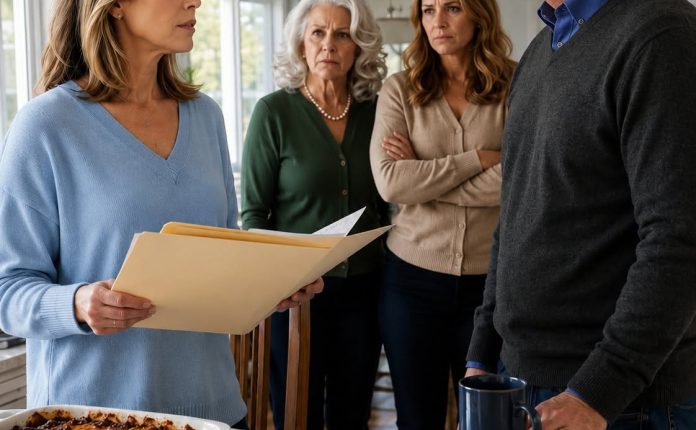
Dad came home three days early. I did not see the conversation between him and Cynthia, and I am glad I did not. For most of my life, I had been forced into the position of witness, interpreter, mediator, or quiet cleaner of someone else’s emotional mess. Leaving meant accepting that some conversations no longer belonged to me. I heard pieces later. Dad sat at the kitchen table with the printed timeline I had sent him. Cynthia began by saying everything had been taken out of context. Then she said I had always been difficult. Then she said she had only been trying to teach me responsibility.
Dad asked why so much of Mason’s care appeared in my notes instead of Brandon’s. She said I was exaggerating. He showed her the messages where she had asked me to cancel study sessions, rearrange shifts, buy supplies, and come home early. She said those were isolated moments. Dad asked why there were so many isolated moments. That question ended the conversation’s first version. Cynthia changed strategies. She told him she was exhausted. She said she felt unappreciated. She said the house had become stressful after Mason arrived and everyone expected her to handle everything. Dad listened. Then he asked a question I wish he had asked years earlier.
“What did Maya expect?” According to him, Cynthia did not answer. Dad did not throw anyone out. He did not create a dramatic family showdown. Real life rarely reorganizes itself that neatly. Instead, he changed practical things. Mason would no longer be left in the house without a clear plan for who was responsible. Brandon had to arrange childcare around his work schedule instead of assuming Cynthia or I would absorb the gap. Household expenses were written down. Dad stopped using Cynthia as his only source of information about what happened while he was away. Most importantly, he told her I was not coming back.
Cynthia called me repeatedly during those first few days. At first, I let the calls go to voicemail. Then I listened to one. “Maya, we need to talk. Your father is acting like I’m some kind of monster because of the way you presented things. You know that’s not fair. Families have disagreements. People say things when they’re stressed. I have done a lot for you, whether you want to admit it or not.” I deleted it. The next message was softer. “I’m sorry your laptop got damaged. I was upset. But you also have to understand how much pressure I’ve been under.”
I deleted that one too. The third message made me angry. “Mason misses you.” He was four months old. Maybe he did recognize my voice. Maybe he did notice my absence. But Cynthia knew exactly why that sentence would hurt. For years, she had turned my care for other people into a lever. I almost called back. Instead, I opened the note on my phone where I had written something Renee, the family-support advocate, told me. A boundary is not a punishment. It is information about what access you are willing to give. I read it three times. Then I blocked Cynthia’s number for a week.
The silence felt unnatural. I kept checking my phone anyway. That is the strange thing about leaving a stressful environment: your body can continue expecting the old interruptions long after the interruptions stop. At Beth’s house, I still woke before my alarm. I still listened for someone moving in the hallway. I still felt guilty if I sat on the couch without doing anything. One afternoon, Beth found me cleaning her already-clean kitchen. “What are you doing?” “Helping.” “You wiped that counter ten minutes ago.” “It had crumbs.” “It had one crumb.” I looked at the cloth in my hand.
Beth leaned against the doorway. “You don’t have to earn staying here every hour.” I laughed awkwardly. “I know.” “No, you understand the sentence. That’s different.” She was right. So I put the cloth down. Sitting still felt harder than cleaning. That was when I realized how deeply usefulness had become tied to safety in my mind. If I was helpful, maybe nobody would be angry. If I anticipated every need, maybe nobody would accuse me of being selfish. If I stayed productive, maybe I deserved the space I occupied. The nursing program was going to be difficult. But that afternoon, I understood that school was not the only thing I needed to learn.
I had to learn how to exist without constantly proving my right to be there.
Chapter 8: Building a Life Four Hours Away
The studio apartment I eventually found was on the second floor of an older brick building twelve minutes from campus. The listing had made it look brighter than it was. The kitchenette had two burners. The bathroom cabinet leaned slightly to one side. The window faced another brick wall. The bedroom was technically the same room as the living room, and the closet door only closed if I lifted it while pushing. I loved it. The landlord handed me the keys on a Tuesday afternoon. I stood alone in the empty room for almost five minutes. No furniture. No dishes.
No curtains. Nothing on the walls. For someone else, it might have looked lonely. To me, it looked unclaimed. I set my duffel bag on the floor. Then I locked the door. Then I unlocked it. Then I locked it again. The sound made me smile. My door. My key. My decision. Dad offered to help with the deposit after he learned how much I had saved. I said no at first. The old reflex again. If I accepted money, would I owe him access? Would the help later become evidence that I could not have managed without him? Dad seemed to understand the hesitation.
“It’s not a condition,” he said. “It’s not a loan unless you want it to be. I missed a lot. Let me help with one thing.” I thought about it for two days. Then I accepted only enough to cover part of the moving cost, not the rent. That compromise mattered to me. I was learning that independence did not require rejecting every form of support. It required knowing the difference between support and control. Danny drove down with me the following weekend in a borrowed pickup. Beth came too. Between the three of us, we moved a secondhand mattress, a small table, two mismatched chairs, a bookshelf, and six boxes into the apartment.
Danny stood in the middle of the room with her hands on her hips. “Very minimalist.” “I own seven towels.” “Luxury.” Beth placed a small box on the counter. “What’s that?” “Housewarming.” Inside was a ceramic coffee mug. White, with small yellow flowers around the rim. I stared at it. Beth suddenly looked worried. “Too much?” I shook my head. “No. It’s perfect.” She did not know about my mother’s sunflower mug. I had never told her. That made the gift feel even stranger, like life had accidentally returned something in a different form. The first night in the apartment, I slept badly.
Every pipe noise woke me. At two in the morning, someone upstairs dropped something. At three, a car alarm sounded outside. At four, I gave up and made tea. I sat at the small table beside the window and looked at the brick wall across the alley. For the first time, being awake before dawn did not mean someone needed me. It meant I was simply awake. That distinction felt enormous. Orientation started the next week. The nursing program moved quickly from the first hour. We received schedules, lab instructions, reading lists, clinical requirements, and enough paperwork to make Danny’s joke about institutions seem prophetic.
I was older than some students and younger than others. Everyone looked nervous. That helped. During introductions, people shared why they wanted to become nurses. Some talked about family members. Some talked about career changes. When my turn came, I said, “I’ve worked in pediatrics for a few years, and I realized I want to do more.” It was true. It was also incomplete. I did not tell a room of strangers that nursing had become the first future I chose without asking my family whether it was convenient. Some truths need time before they become stories you can tell publicly.
My schedule was brutal. Lectures in the morning. Lab in the afternoon. Study groups at night. Weekend shifts at a clinic near campus. For the first month, I lived on simple meals, coffee, and color-coded notes. I was exhausted. But it was a clean exhaustion. That is the best way I can explain it. At home, I had been tired from reacting to other people’s needs. At school, I was tired from building something I had chosen. The difference changed everything. I still called Dad every Sunday. At first, the conversations lasted less than ten minutes. “How are classes?” “Good.”
“How’s the apartment?” “Small.” “Car running okay?” “Mostly.” Then we would run out of safe topics. Trust does not return because someone apologizes once. It returns through repetition. Dad started asking specific questions instead of general ones. “How did the pharmacology quiz go?” “Did you get the schedule for clinicals?” “Is the heater in that apartment working yet?” Specific questions told me he had remembered the previous conversation. That mattered. I began asking him things too. “How’s the route to Denver?” “Did Brandon find childcare?” “How’s Mason?” Mason was doing well. Brandon had arranged a sitter near the tire shop three days a week. On the other two days, he adjusted his work schedule and handled care himself. Brianna had begun visiting more consistently, though her situation remained complicated and I stayed out of the details.
For the first time, the adults around Mason were building an actual plan. Without me. The world had not collapsed. That realization carried both relief and sadness. I was relieved because the burden had never truly required me. I was sad because it proved how long everyone had mistaken my willingness for necessity. A month after I moved, Brandon called. I almost let it go to voicemail. Then I answered. “Hey.” “Hey.” There was a long pause. “I wanted to say something.” “Okay.” “I’ve been doing mornings with Mason.” I waited. “I didn’t realize how much work it is.” I sat on the edge of my bed.
He continued. “I mean, I knew babies were work. I just didn’t realize how much of his schedule you were doing.” I could have made him feel worse. Part of me wanted to. Instead, I said, “Now you know.” “Yeah.” Another pause. “I’m sorry I assumed you’d keep handling it.” That was the first real apology I had received from him. Not perfect. Not complete. But real. “Thank you,” I said. He asked whether he could send pictures of Mason. I said yes. Now my refrigerator has several. Mason sleeping with one sock missing. Mason staring suspiciously at mashed peas.
Mason smiling at the dog. The pictures make me happy because I can love him without being responsible for every hour of his life. That is a healthier kind of love than the one I had been practicing.
Chapter 9: What Freedom Actually Looked Like
People sometimes imagine freedom as a huge moment. A door closing. A car pulling away. A speech. A final confrontation. For me, freedom was mostly administrative. It was changing my mailing address. Buying my own detergent. Updating emergency contacts. Learning the bus route. Choosing whether to answer the phone. Paying rent on the first of the month. Studying at midnight because I chose to, not because someone had taken the daytime hours. It was ordinary. That was exactly what I wanted. I graduated from the nursing program two years after the morning my laptop was damaged. Dad attended. So did Beth and Danny.
Brandon came with Mason, who was old enough by then to be more interested in the folding chairs than the ceremony. Cynthia did not come. That was my choice. Dad asked once. I said I wanted the day simple. He said okay. When my name was called, I walked across the stage and accepted the folder with both hands. For a moment, I thought about the kitchen table. The cold coffee. The anatomy notes. Mason crying. Cynthia’s phone buzzing. The duffel bag under my bed. I thought about how close I had come to postponing school because leaving felt too expensive, too complicated, too selfish.
Then I looked into the audience. Beth was clapping. Danny was waving like she had been personally responsible for the degree. Dad had tears in his eyes. Brandon lifted Mason so he could see me. I smiled. After the ceremony, Dad hugged me. “I’m proud of you.” There had been a time when those words would have meant everything. Now they still mattered. But they were no longer the foundation under my feet. I was proud of myself too. That mattered more. I eventually replaced the cheap apartment with a slightly larger one. The window faced a parking lot instead of a brick wall.
Progress. I bought a small couch. I kept the flowered mug. I still have it. The chip on the rim has gotten slightly larger. I refuse to replace it. Mason visits sometimes with Brandon. He calls me Aunt Maya even though family relationships on paper are more complicated than the word suggests. The first time he visited, he ran straight to the refrigerator and pointed at the old baby picture of himself. “Me!” “That’s you.” “Baby me.” “Very baby you.” He laughed. Then he asked for juice. Children have a useful relationship with history. They notice it. Then they ask for juice.
My father and I still talk every Sunday. Some conversations are twenty minutes. Some are five. Sometimes we disagree. The difference now is that disagreement does not automatically put the relationship at risk. He has learned to listen without immediately solving. I have learned to speak before frustration becomes silence. We are not trying to recreate the relationship we might have had. We are building the one we can have now. Cynthia and I exchange occasional messages. Birthdays. Holidays. A photo of Mason. Nothing more. Maybe that will change someday. Maybe it will not. I no longer treat every uncertain relationship as a problem I am responsible for solving.
That may be the biggest change of all. For years, I thought my role in a family was to absorb discomfort so other people could remain comfortable. I thought being dependable meant always saying yes. I thought being kind meant staying quiet when something felt unfair. I thought leaving would make me disloyal. I was wrong. Dependability includes being dependable to yourself. Kindness without boundaries becomes exhaustion. Silence does not always keep peace. Sometimes it only keeps a pattern intact. And leaving is not always rejection. Sometimes leaving is the first honest answer you give. I still think about the morning at the kitchen table.
Not because it was the worst morning of my life. It was not. In a strange way, it became one of the most important. The laptop was replaceable. The exam was survivable. The apartment was affordable with enough planning. The nursing program was difficult but possible. The thing I had believed was impossible was simply choosing myself without permission. That morning, Cynthia told me to leave because she expected the words to frighten me back into obedience. Instead, the sentence opened the door I had already been preparing to walk through. Three weeks earlier, I had packed a bag. Six weeks earlier, I had paid a school deposit.
Months earlier, I had started saving. Years earlier, I had started imagining another life. Leaving was not one decision. It was hundreds of small decisions finally pointing in the same direction. Save five dollars. Apply for the program. Tell Beth the truth. Make the phone call. Back up the files. Write down the date. Put the documents somewhere safe. Install the car seat. Pack the bag. Say no. Walk to the door. Keep walking. People sometimes ask which of those decisions changed my life. I never know how to answer. Maybe all of them did. Maybe change is rarely one heroic moment.
Maybe it is repetition. A quiet choice made often enough that eventually it becomes a road. The morning after graduation, I woke early. Old habits. I made coffee. I poured it into the flowered mug. Then I sat by the window. No one needed anything from me. My phone was silent. My schedule for the day was open. For years, silence had meant someone was refusing to hear me. Now silence meant peace. I took a drink and looked around the apartment. Textbooks on the shelf. Shoes beside the door. A photograph of my mother tucked into the corner of the mirror.
Mason’s drawings on the refrigerator. A nursing badge on the counter. My life was not perfect. It was mine. And that, I finally understood, was what I had been working toward all along. THE END !