The gravel pullout at Saint Emily’s was where I learned the bus had come back one girl short.
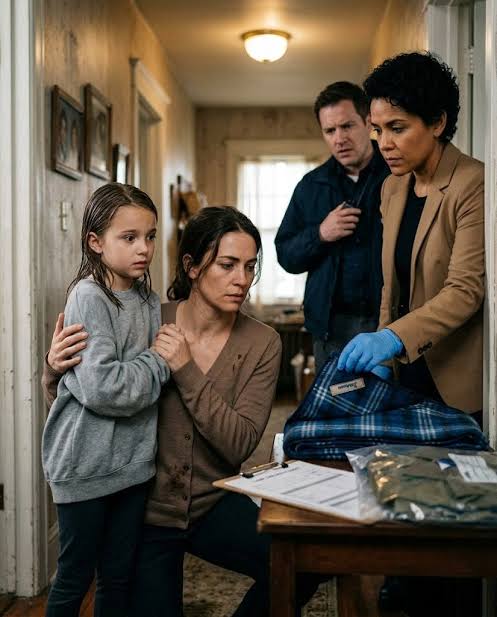
I can still see Renata stepping down last, at 8:40 on a hot August night, her knees pressed together and a gray blanket wrapped around her shoulders. The other kids were loud and sunburned and waving things they’d made. My daughter didn’t look up. Her hair was wet, and she was wearing the wrong shoes.
The coordinator, a woman named Paula, smiled at me before I’d even asked anything. “She got carsick. She just needs some rest.”
Renata was ten. She’d gone to this camp three summers in a row. I trusted the place. That’s the part I keep turning over, even now. I trusted the neat little forms, the photos they posted, the woman who always remembered my name at pickup.
I asked where Renata’s backpack was. Paula said it had been mixed in with the luggage and they’d send it the next day. I asked about her uniform. Renata gripped the blanket tighter and said, “It got wet.”
Paula cut in. “It was an accident. Nothing serious.”
I said, “I asked Renata.”
Paula’s smile stopped. Renata took my hand and whispered, “Mom, let’s go.”
So I took her home. I didn’t call the director on the drive. I didn’t call the camp office. I didn’t even ask why the blanket smelled like harsh soap. I just kept checking the rearview mirror and seeing my kid staring down at her lap.
At home she didn’t go to our dog, Biscuit, who usually knocked her over with his tail. She didn’t ask for food. She stood by the door with her shoes still on.
“I’ll run you a bath,” I said.
“No.”
“Just so you can get changed.”
“I don’t want to go in there.”
She meant the bathroom. I knew that, but I asked anyway. Her breathing got fast. “Don’t close the door.”
I crouched down in front of her, careful not to touch her. I worked the front desk at a dental office then, and I’d learned not to fill every quiet second with questions. I’d also learned to tell myself not to make a fuss. I had told Renata that more than once, usually about things that mattered less than this.
“I’m calling a doctor,” I said.
“No.”
“I need to know you’re okay.”
“The teacher said I wasn’t supposed to tell.”
That was the first time the night stopped feeling like a bad ride home.
I asked which teacher. Renata looked at the floor and shook her head.
“You don’t have to tell me right now,” I said.
“She said the camp would get shut down. Everybody would hate me.”
I called 911. My voice sounded flat, like I was reading a list at work. I said my ten-year-old had come home from camp in pain, couldn’t sit comfortably, was afraid of the bathroom, and had been told by an adult to keep quiet. I asked for an ambulance and a police officer.
The dispatcher told me not to bathe Renata or change her clothes. Don’t wash anything. Don’t ask her for details. I put the phone on speaker and wrote it down on the back of a grocery receipt because I thought I might forget. I still have that receipt in a folder.
Renata was crying without making a sound. “They’ll say I made it up.”
“I won’t,” I told her.
“The director says I’m a troublemaker.”
I asked if the director had talked to her. Renata shut her eyes. “Everybody talked to me.”
The paramedics came first. One checked her gently while the other kept talking to her about our dog and whether he still stole socks. Renata didn’t answer, but she listened. The paramedic saw the blanket and the damp hair, then looked at the officer.
“Take her in now,” she said.
The officer asked which camp. I told him Saint Emily’s Academy, at a retreat house in the Catskills. He stopped writing and glanced at his partner.
I asked what that meant. He said, “We’ll talk at the hospital.”
Renata had heard him. Her fingers curled into the edge of the blanket. “Another girl?”
The paramedic lowered herself beside her. “You don’t have to talk right now.”
Renata stared at the floor. “I thought they only punished Daniela.”
The officer asked who Daniela was. Renata didn’t answer.
At the hospital, the staff kept the blanket and sealed it in a bag. I sat in a plastic chair while the nurse took Renata in for an exam. I could hear the squeak of the cart wheels each time someone went through the hall. I kept looking at the bathroom door, which is a strange thing to remember, but I did.
My phone started buzzing. Beatrice, the camp director, sent one message, then another.
“Renata is confused.”
“It was all an accident.”
“We need our camp blanket back.”
I didn’t answer. The officer took pictures of the screen and told me to keep the phone with me.
Paula and Beatrice arrived about twenty-five minutes later. Beatrice wore a beige coat and carried a purse I’d seen at two parent meetings. I remember thinking she must have come straight from somewhere important. It was a useless thought, but my brain was doing useless things.
“Gabriela, you’re making this much bigger than it is,” she said.
The officer stepped between her and the room. “You can’t go in.”
“I’m the director responsible for the minors.”
“Exactly.”
Beatrice said Renata had fallen in the showers. Paula said it happened by the pool. They looked at each other after she said it. Not for long. Just long enough.
Paula’s phone buzzed in her hand. She tried to turn the screen away, but I’d already read the message.
“We already cleared the cameras.”
Below it was another one.
“We still need to find the red backpack.”
The officer asked for her phone. Paula said it was personal. He asked again, and this time she handed it over. Beatrice started talking about privacy and parents’ rights. Nobody answered her.
A doctor came out and told us Renata needed care and more testing. He was careful with his words. He said the camp had sent a child home in distress without getting her checked by a medical professional. He didn’t tell me what had happened. He didn’t need to. I could see Renata’s face when she heard his voice.
By then I was numb in a way I didn’t know I could be. I kept thinking about her backpack. The red one with a little white zipper pull. I’d packed a snack in the front pocket. That was the kind of thing my mind grabbed instead of the rest.
When Renata came out in a hospital gown, she saw Beatrice and stopped moving. I stood up, but I didn’t rush her.
“Can I hug you?” I asked.
She nodded. I put my arms around her. Beatrice softened her voice and said, “Renata, honey. Just tell them it was a fall.”
Renata stepped farther into me.
“Remember what we agreed on,” Beatrice said.
The officer turned to her. “What did you agree on?”
Renata pressed her face into my shoulder. Then she whispered, “That Daniela was never there.”
The hallway went quiet. Paula sank into a chair. Beatrice turned toward the exit, but the officers blocked her.
Renata looked up at me. Her mouth was shaking.
“Mom, Daniela is still at the house.”
The officer asked, “What house?”
She looked at Beatrice. “The room without windows.”
I didn’t know what to say. I knew only that my daughter had told me to go, and I had taken her home. I hadn’t called the camp. I hadn’t asked her to repeat it for me. But I had spent the first hour thinking about whether she needed a bath.
The officers left for the retreat house. One stayed with us. Beatrice and Paula were taken to separate rooms at the hospital while the police sorted out who was allowed to leave. I sat beside Renata and kept my hand where she could see it. I didn’t touch her until she reached for me.
There was a lot I didn’t know then. I didn’t know whether Daniela had parents who’d been told she’d gone home early. I didn’t know if the room was really locked, or if Renata had misunderstood what she saw. I knew what I’d heard. I also knew how hard it was for my daughter to say it.
A detective called after 11:00. He asked whether Renata could tell him where the room was. I said she’d already told us what she could. He said they were searching the buildings and asked me to keep the phone free.