PART 1
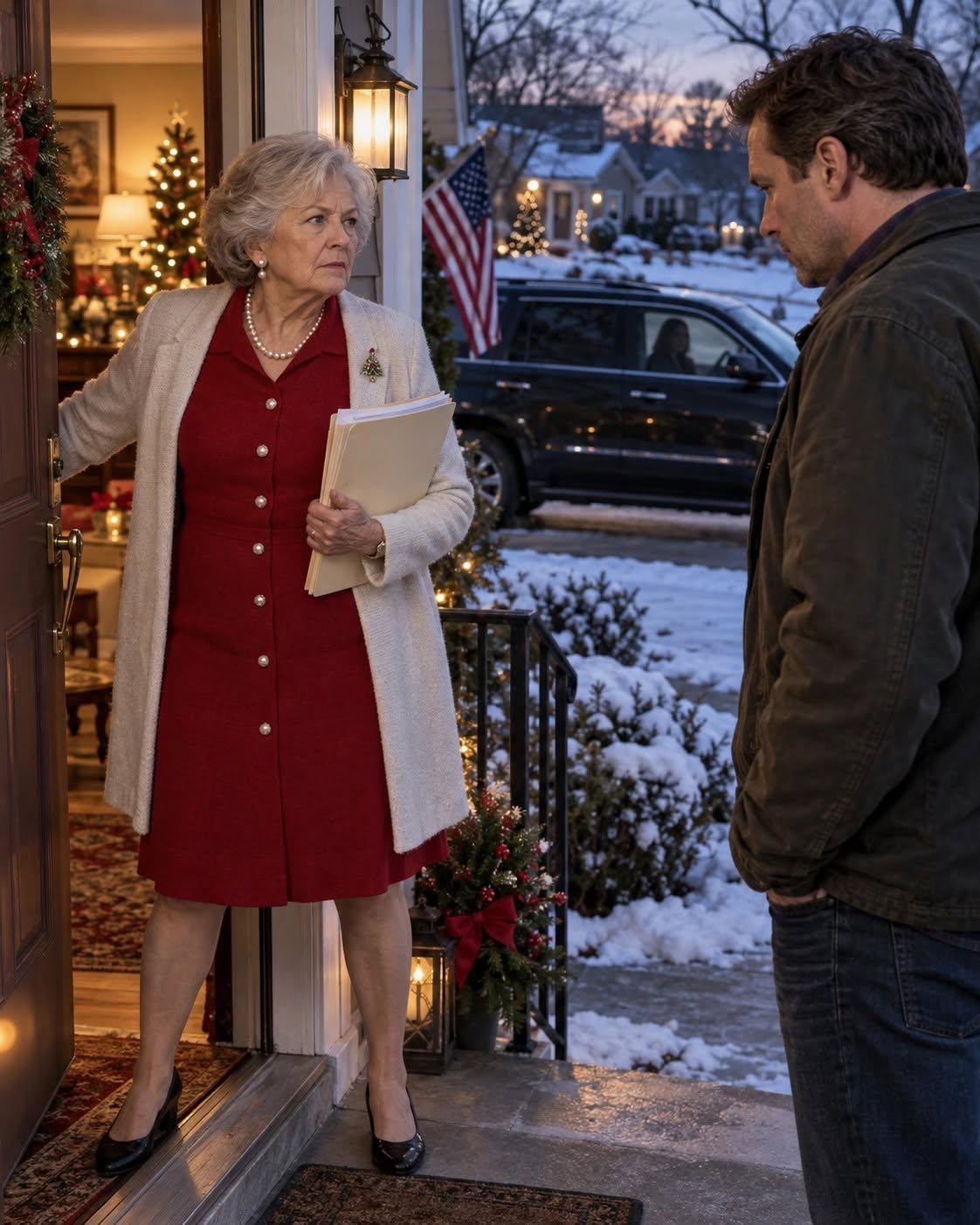
At 4:10 on Christmas afternoon, a courier handed me a manila envelope while the ham I had cooked for my son went cold behind me.
“Mrs. Bennett?”
“Yes.”
He checked his phone, handed me the envelope, and hurried back toward his van.
My daughter-in-law’s handwriting was across the front.
Inside was one card.
Helen,
Sorry for the late change. We’re doing Christmas at Mom’s this year. It just worked out better for everyone. Hope you understand.
Merry Christmas,
Megan and Ryan
I read the last sentence twice.
Better for everyone.
Three places were set at my dining-room table.
Three water glasses.
Three linen napkins.
Three slices of the pecan pie Ryan had loved since he was eight.
The candles had burned almost halfway down.
My husband, Daniel, had been dead for nine months.
This was my first Christmas without him.
And our only son had known for three weeks that I was counting on him to come.
I was sixty-seven years old. I had survived Daniel’s cancer, the hospital bills, the funeral home, Social Security forms, insurance calls, and the unbearable administrative cruelty of changing forty-six years of “Daniel and Helen Bennett” into “Helen Bennett.”
I could survive a changed Christmas plan.
What hurt was the effort they had made not to speak to me.
Ryan had not called.
Megan had not texted.
They had paid a stranger to ring my bell after dinner was supposed to start.
My phone buzzed while I was still standing by the door.
For one hopeful second, I thought Ryan was calling.
It was a photograph Megan had posted online.
She and Ryan were standing behind her parents’ dining table in Fox Chapel, surrounded by twenty people in matching holiday sweaters.
Ryan had one arm around Megan’s shoulders.
The caption read:
Christmas exactly where we needed to be. ❤️
I looked from the picture to my own table.
Then I turned off my phone.
I had spent two days preparing that meal.
Not because Ryan expected it.
Because I needed something familiar.
Daniel had always carved the ham.
He had always stolen one roll before dinner and denied it with butter still on his fingers.
He had always told me to wear the red dress with the pearl buttons because, according to him, it made me look “like Christmas morning.”
I had put it on that afternoon.
At four thirty, I sat alone in it and cut myself a piece of ham.
The glaze was perfect.
I could barely swallow.
I packed everything away in plastic containers.
Ham.
Mashed potatoes.
Green beans.
Rolls.
I left the pie on the counter because putting it away felt too final.
Then I blew out the candles.
Daniel used to say I had a dangerous ability to explain away other people’s behavior.
He never meant it as praise.
When Ryan forgot my birthday, I said he was busy.
When Megan stopped inviting us to Sunday dinners, I said newlyweds needed space.
When they borrowed twelve thousand dollars for a kitchen renovation and took three years to return half of it, I said young couples had expenses.
When Ryan started leaving our house ten minutes after Megan looked at her watch, I pretended not to notice.
Daniel noticed.
He always noticed.
“You don’t have to turn every disappointment into something reasonable,” he told me once.
“I’m keeping the peace.”
“No. You’re doing all the work required for other people to avoid consequences.”
I was angry with him for saying it.
Mostly because he was right.
After he died in March, Ryan came by often for the first month.
He carried boxes.
Changed furnace filters.
Helped me close one of Daniel’s old business accounts.
Then his visits became phone calls.
The phone calls became texts.
By fall, most conversations started with some version of:
Have you decided what you’re doing with the house?
Or:
Did Dad leave the brokerage account in both names?
Or:
You should really let me help organize things before it becomes overwhelming.
I told myself he was concerned.
Daniel would have rolled his eyes.
At ten that Christmas night, Ryan still had not called.
I changed out of the red dress and hung it carefully in the closet.
Before shutting the door, I touched one pearl button.
Daniel had fastened that same button for me before our fortieth-anniversary dinner.
His hands had already started shaking from the medication.
“Still worth the trouble,” he’d murmured.
I closed the closet.
The next morning, I woke before six.
I made coffee and carried it into the backyard wearing Daniel’s old gray cardigan over my pajamas.
A hard frost covered the lawn.
At the edge of the garden stood the bird feeder Daniel had built twenty years earlier.
It leaned slightly to the left because he had measured one post wrong and refused to fix it on principle.
“Birds don’t own levels,” he used to say.
I brushed frost from its wooden roof.
That was when I saw the envelope.
It was wedged behind one support beam.
My first name was written across it.
Helen.
I knew the handwriting before I touched it.
Daniel.
For several seconds, I simply stood there.
Then I pulled the envelope free.
Inside was one line.
Desk. Bottom drawer. Feel underneath.
I left my coffee outside.
Daniel’s oak desk still occupied the small study off the kitchen.
I had barely opened it since his funeral.
His reading glasses lay beside an old yellow legal pad.
A mechanical pencil rested exactly where he used to leave it.
I pulled open the bottom drawer.
Tax files.
Insurance policies.
Old instruction manuals.
Nothing unusual.
Then I ran my fingers underneath the drawer.
Tape.
I pulled.
A second envelope came loose.
A small brass key was clipped to the front.
The note inside said:
If Ryan ever makes you feel like a guest in your own life, use this.
You already own what the key opens.
You just don’t know it yet.
I sat in Daniel’s chair.
Beneath the note was a photocopy of a recorded deed.
The property address was in the Laurel Highlands, a little over an hour east of Pittsburgh.
I had never seen it.
The grantee listed on the document was:
Helen Marie Bennett.
My own name.
I checked the recording stamp.
Three years earlier.
“What did you do, Daniel?”
The empty room offered nothing.
By nine, I had packed an overnight bag.
The drive east took me through bare hills and narrow roads edged with old snow.
The GPS eventually directed me onto a gravel lane outside Ligonier.
At the end stood a cedar cabin with dark green shutters and a stone chimney.
Not a mansion.
Not an investment property.
A house Daniel would have loved.
I walked onto the porch.
The brass key slid into the lock.
It turned.
Warmth did not greet me.
The furnace had been set low.
But familiarity did.
Daniel’s brown leather reading chair sat near the fireplace.
A quilt my mother had made was folded across the sofa.
Our old kitchen table—the one Ryan had done homework on—stood beneath a window.
Photographs lined the mantel.
Ryan at five, asleep on Daniel’s chest.
The three of us at Ocean City.
My parents on their wedding day.
Daniel and me standing beside our first used Buick.
I touched the back of his chair.
Then I cried.
Not because of the cabin.
Because Daniel had built a place out of pieces of our life and never told me.
On the kitchen counter sat another envelope.
Helen,
This was supposed to be your retirement place someday.
I wanted to surprise you.
Then things with Ryan began worrying me, so I changed the plan.
If you are here because you have been shut out, stay long enough to remember something:
Being wanted is not the same as being useful.
Love,
D.
I read it twice.
My phone rang.
Unknown number.
I nearly ignored it.
Then something made me answer.
“Hello?”
“Mrs. Bennett?”
“Yes.”
“My name is Allison Pierce. I was Daniel’s estate attorney.”
I sat down.
Daniel had told me our regular lawyer handled everything.
I had never heard her name.
“I’m sorry to call the day after Christmas,” she said. “Daniel gave me very specific instructions about when to contact you.”
My fingers tightened around his note.
“What instructions?”
“If family circumstances changed in a way that made you question your financial security, I was to ask whether you had found the brass key.”
I stared at it.
“Yes.”
There was a pause.
“Then we need to meet.”
Her office was in a converted brick building near downtown Pittsburgh.
She was in her early sixties, with silver-framed glasses and a way of speaking that made every sentence feel considered before it left her mouth.
I placed Daniel’s key on her desk.
She looked at it.
“So he followed through.”
“With what?”
She opened a locked drawer and removed a thick white envelope.
“Protecting you from the one person he believed you would have the hardest time protecting yourself from.”
I already knew the answer.
I still asked.
“Ryan?”
Allison nodded.
Then she took out a photocopy of a check.
Eighteen thousand five hundred dollars.
My name was signed at the bottom.
I had never seen it before.
I looked at her.
“That isn’t my signature.”
“I know.”
“Where did this come from?”
Allison folded her hands.
“Your son.”