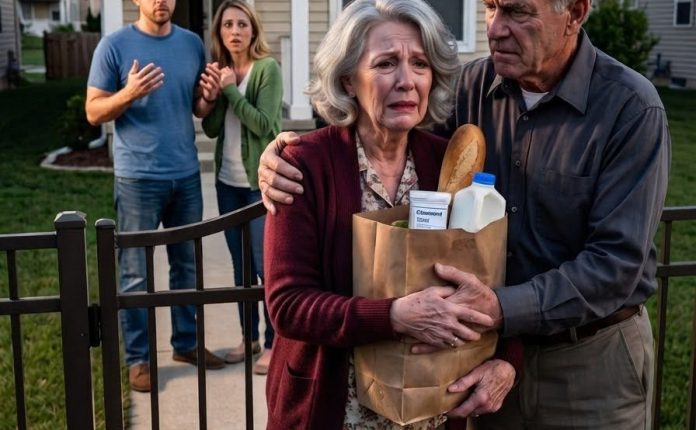
“We have VIP guests. The back patio is more your age.”
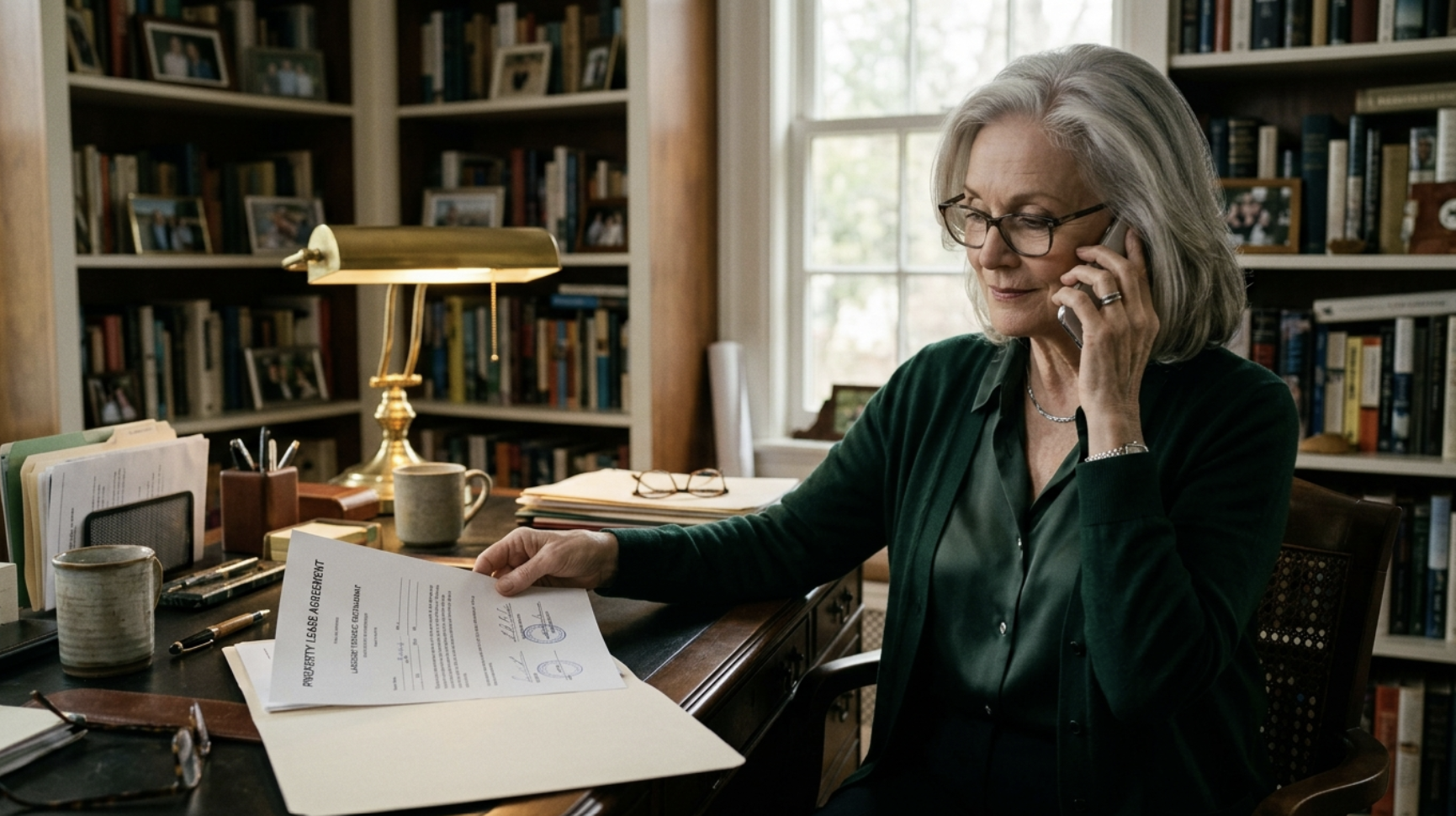
Daniel Mercer said it with a little smile, as though he had offered me a compliment instead of explaining why my seventieth birthday no longer deserved the room I had reserved. I stood at the reception counter of Harbor House, my signed agreement open in front of me, and studied the young manager’s face. Outside the tall glass doors, the lake shone beneath the afternoon sun. Employees were placing white roses along the railing of Sunset Terrace, the very place I had booked eight weeks earlier for thirty-eight people.
My party was supposed to begin at six. Several guests had already started the drive, including friends who lived more than two hours away. My daughter had taken time off work. My granddaughter had come home from college. And this man, with three hours left before dinner, had decided that another birthday was more important than mine.
“Let me understand something,” I said. “My reservation is confirmed, but someone else is using the space.”
Daniel adjusted his jacket. His name was stitched in neat white letters above the restaurant’s crest. “We’ve had a last-minute adjustment to our event schedule. We’re offering you our back patio instead. It accommodates the same number of guests.”
“Does it overlook the lake?”
“Not directly.”
“Does it face the sunset?”
He glanced at his watch. “Mrs. Bennett, we’re doing our best to accommodate everyone.”
I placed my finger on the printed agreement. “Sunset Terrace. Exclusive private event. Thirty-eight guests. Six o’clock. Your restaurant confirmed all of it.”
“I understand.”
“Then why are we having this conversation?”
His patience thinned visibly. “We have VIP guests. The back patio is more your age.”
There it was again. No concern that I had invited thirty-eight people to a place I could no longer give them. No explanation for why someone had entered the reservation system and replaced my event. Just the suggestion that a woman turning seventy should accept a less desirable view and be grateful that the restaurant was still willing to feed her.
“Oh,” I said. “So VIPs don’t need reservations. How convenient.”
His smile disappeared. “There’s no need to be sarcastic, ma’am.”
“And there’s no need to give away something another customer already paid for. Yet here we are.”
A young employee passed behind him carrying a gold birthday decoration. Another followed with a broad arrangement of white roses. I had originally asked for modest flowers and a little space near the railing, because some of my guests used walking canes and I wanted the tables easy to navigate. Those elaborate decorations were not mine. I watched them go through the glass doors and understood that no maintenance emergency had occurred. The terrace was not closed. The kitchen was not overwhelmed. Someone had simply selected a more fashionable celebration and expected mine to disappear into the back of the building.
Daniel lowered his voice. “We’re prepared to refund the terrace charge. We can also provide complimentary champagne.”
“I don’t want champagne.”
“Then what exactly would you like?”
“The terrace I reserved.”
“That isn’t possible.”
“Because?”
“The arrangements have already been made.”
I waited for him to hear what he had just said. Apparently he didn’t. In his mind, somebody else’s decorations were more permanent than my written agreement. The flowers had arrived, so my plans were optional.
“Mr. Mercer, I’ve run a business myself,” I told him. “When you make a commitment to a customer, you don’t get to break it because someone more interesting walks through the door.”
He folded his arms. “With all due respect, Mrs. Bennett, most people would appreciate that we’re still willing to host their event. You have thirty-eight guests arriving in three hours. If you refuse the alternative, you’re putting them in a difficult position.”
That was the first thing he said that truly hurt. He understood perfectly well that I cared about those guests. He was counting on it. He wanted the problem he had created to become my responsibility, because he assumed a woman my age would rather accept a humiliation than disappoint her family.
I thought of Carol driving nearly a hundred miles with a birthday card she had probably spent an hour selecting. I thought of my daughter Susan, who had moved appointments around at work so she could arrive early with flowers. I thought of my granddaughter Emily, who had sent me cheerful messages all week asking whether she should wear the blue dress I liked. I could almost see the confusion on their faces if they arrived and found the terrace decorated for someone else.
“I’m not the one who gave their tables away,” I said.
Daniel sighed. “I really don’t have time to keep discussing this.”
“Then we won’t.” I took my phone from my purse. “Please email me confirmation that Harbor House is refusing to provide the Sunset Terrace specified in our agreement.”
His eyebrows rose. “Why would you need that?”
“Because I prefer important conversations in writing.”
“There’s no reason to make this adversarial.”
“Then there shouldn’t be a problem putting the facts in an email.”
He stared at me for a long moment. Behind him, the hostess kept her eyes on the reservation screen. A server paused with a tray of water glasses and then quietly continued toward the dining room. There were other people in that restaurant whose workdays depended on its reputation. I had no interest in turning the lobby into a spectacle. I wanted the commitment honored, or at least documented honestly if the restaurant would not honor it.
Finally Daniel asked the employee at reception to send me the confirmation. He spoke softly, but I heard the irritation beneath his instructions. I moved aside so an arriving couple could check in, then stood near the window while the young hostess typed.
Eight weeks earlier, I had sat at this very counter with the same folder. The hostess then had been a woman named Patricia, who described the view at six in the evening and showed me a simple floor plan. She had asked whether I was celebrating something special. When I said it would be my seventieth birthday, she had smiled and told me the terrace was particularly lovely at sunset. She walked me outside so I could see how the tables would be arranged, where the candles could go, and whether my friend Carol could sit near the entrance without having to manage a flight of steps.
That little tour mattered to me. My husband Richard and I had often come to the lake during our forty-three years together. We didn’t always eat at Harbor House. Sometimes we brought sandwiches and sat on a bench along the shoreline. Sometimes we drove over after closing our printing shop on a Friday and watched the water turn from blue to copper. Richard believed a sunset was one of the few beautiful things nobody could charge admission for. He said it so often that I could still hear his voice repeating the words.
He had been gone four years. I missed him in a hundred ordinary ways that other people never saw: when I opened a jar without thinking to ask him, when I found a note in his old handwriting, when something amusing happened and I turned toward the chair where he used to sit. I missed him on birthdays, too. We had never been extravagant people. Homemade cakes, crowded tables, and friends leaning against the kitchen counter had been enough. But this year I wanted to gather the people who had helped me through the difficult days after his passing, and I wanted them to see the lake he loved.
I had saved for the celebration. Not because I needed to impress anyone, but because I knew exactly what I was buying. A private setting, a good dinner, a sunset, and a few unhurried hours with the people I cherished. The confirmation arrived that same afternoon eight weeks before the event. I paid the deposit, read the terms carefully, and printed two copies. Thirty-two years in the printing business had taught me that words on a page can be extremely valuable when memories begin to change.
There were other small preparations. Susan helped me assemble the guest list. Emily checked addresses and volunteered to send digital reminders. Tom Reynolds, who had spent three decades planning weddings and private events, reviewed the schedule and said the restaurant’s plan looked sensible. Carol offered to bring a little photo album with old pictures of Richard and me. None of it was extravagant. It was merely thoughtful, which seemed to me a much better thing to be.
Now I could see that same terrace through the glass, covered in decorations for a person I did not know. The view was unchanged. The promise was not.
My phone chimed. Daniel’s email had arrived. It confirmed that the restaurant would not be providing the reserved terrace and that the back patio had been offered as a replacement. The wording was guarded, but the essential fact was there. I saved the message and forwarded a copy to my personal email address.
“Thank you,” I said.
Daniel’s shoulders relaxed. “So you’ll take the back patio?”
“No.”
His face hardened. “Then I don’t know what else to tell you.”
“You’ve told me enough.”
I closed the folder and walked out. Only when the doors shut behind me did my hands begin to shake. I stood beside my car with the keys pressed into my palm, staring at the dashboard clock. Two hours and forty-six minutes remained. Thirty-eight people were on their way to a dinner that no longer existed.
For a moment I could barely think. I had spent years running a company, keeping track of invoices, repairing customer relationships, and finding solutions when machines broke down at the worst possible moment. Yet standing in that parking lot, I felt absurdly uncertain about what to do next. A birthday wasn’t a shipping order. I couldn’t simply move it to Tuesday. Some of the people I had invited would not get another chance to gather in the same room for a long time.
I started toward the restaurant doors. I could accept the back patio, tell everyone there had been a mix-up, and endure the evening. The guests might never know how Daniel had spoken to me. The food would probably be fine. Perhaps the humiliation would ease if I pretended it hadn’t mattered.
Then I stopped. I pictured Richard beside me. He was gentle, and he disliked confrontations more than I did, but he had never believed that keeping the peace required agreeing with somebody who had broken a promise. Once, when a supplier failed to deliver paper for a school program, Richard spent a night finding an alternative and then sent the supplier a polite, exact account of the additional costs. He never raised his voice. He never pretended the problem was acceptable, either.
I turned back toward my car and called Tom Reynolds.
“Birthday girl,” he answered on the second ring. “Everything ready?”
“Tom, I need a favor.”
“What kind?”
“The kind that involves thirty-eight people, a birthday cake, and less than three hours.”
There was silence, followed by the scrape of a chair. “Margaret, tell me what happened.”
I explained. Tom interrupted only to check the number of guests, the timing, and whether the restaurant had actually canceled the agreed location. When I repeated Daniel’s comment about the back patio being more my age, he went very quiet.
“I know one possible place,” he said. “But call Susan first. Tell her nobody goes to Harbor House until we know where we’re sending them.”
“Do you actually have a restaurant in mind?”
“I have a possibility. That’s different from a promise.”
I appreciated that distinction. I had just spent twenty minutes speaking to a man who acted as though promises were things to be rearranged whenever better publicity appeared. I needed someone who could say exactly what he knew and what he didn’t.
Susan answered from a florist’s parking lot. “Mom, I’m picking up the flowers. Do you need anything?”
“A different restaurant.”
The silence that followed was so complete I could hear a passing car through her phone. “What?”
I told her the story, including the written agreement and the back patio. When I quoted Daniel, I heard her draw in a sharp breath.
“He said that to you?”
“He certainly did.”
“I’m coming over there.”
“No, you’re not. I need you to help me save my birthday, not create a second problem before dinner.”
Despite everything, she laughed. “All right. Tell me what to do.”
“Call the people who don’t check their messages regularly. Tell them the location may change and that they’ll hear from us soon. Emily can manage everyone who uses the family group chat.”
“What about you?”
“I’m waiting for Tom to work a miracle.”
“Mom?”
“Yes?”
“Are you all right?”
I looked once more at Harbor House, its windows shining as though absolutely nothing had happened. “I will be,” I said. It was the most truthful answer I had.
I called Emily next. She answered with music playing in the background and immediately asked if I was driving to the restaurant. When I told her what had happened, the music stopped.
“Grandma, they can’t just do that.”
“They’ve done it. At this point, I need to know where everybody is going.”
“Okay. I can handle the group chat. I can also get confirmations so nobody arrives at the wrong place.”
“Good. Don’t argue with the restaurant online. Not today.”
“But—”
“Sweetheart, I know you’re upset. I am, too. Right now, thirty-eight people need a dinner.”
Her tone changed. “I’ll make a list.”
That was my granddaughter. She could become just as stubborn as Susan, but give her a practical problem and she became wonderfully organized. Within minutes she had sorted the guests by who had acknowledged the message, who was driving, and who needed a telephone call instead of a text.
Ten minutes after my first call, Tom rang again. “Willow Point Grill. Elena Brooks manages it. She’s checking with her kitchen.”
I knew Willow Point. It was a smaller restaurant about ten minutes farther around the lake. Richard and I had eaten there several times, though never with thirty-eight guests. It did not have Harbor House’s dramatic entryway or its reputation for glossy events. It had good food, warm lighting, and servers who remembered how Richard liked his coffee.
“Do they have room?” I asked.
“They have a covered patio available. A private luncheon canceled earlier this week. But don’t get excited yet. Elena can’t do your original menu. She can offer a buffet with two main dishes, vegetables, salad, and dessert. She needs a decision quickly.”
“Can she seat everybody together?”
“Yes.”
“Can they see the lake?”
Tom paused. “Margaret, they can practically shake hands with it.”
I closed my eyes. “Tell her yes.”
“I’m putting you on speaker. She wants to explain what she can actually guarantee.”
A woman’s voice came through. “Mrs. Bennett, I’m Elena. Tom says you’ve had a difficult afternoon.”
“You could say that.”
“I have enough staff to prepare a simple dinner for thirty-eight. We can set the patio, provide coffee and iced tea, and have food ready close to six. I’m not going to promise an elaborate event we haven’t had time to prepare. But I can give your guests a comfortable place, a good meal, and a view of the lake.”
“Elena, at this point, perfect would be everyone having a chair.”
“Then I can promise thirty-eight chairs.”
I laughed for the first time since leaving Harbor House. It was a small laugh, almost surprising to me, and it loosened something in my chest.
“Do you have room for a few guests who need chairs with backs and easy access from the parking lot?” I asked.
“Yes. The covered patio has a level entrance, and I can set those seats near the door.”
“One guest cannot eat nuts, and another needs a simpler meal.”
“Tell me exactly what they need, and I’ll tell you what my kitchen can safely prepare. I’d rather give you a clear answer than guess.”
I looked up at the sky through my windshield. That afternoon, careful honesty felt like an extraordinary gift.
Elena sent a written summary of the proposed menu, the price, the seating plan, and what her team could guarantee. We discussed the details instead of rushing past them. I approved the arrangement, confirmed the deposit, and called Susan again with the new address.
“We have a place,” I said.
Susan exhaled so loudly I could hear it over the phone. “You’re serious?”
“Willow Point Grill. Tell everyone. And make sure nobody goes to Harbor House to ask questions on my behalf.”
“Mom, nobody is going there. Emily already put a warning in the group chat.”
“Not a warning. Directions,” I said. “We’re going to a birthday party, not a protest.”
She chuckled. “Directions. Understood.”
I sat in the car for another minute, watching the second hand move around the clock. The crisis was not over. We had only exchanged one enormous problem for a dozen smaller ones: meals, guests, flowers, a cake headed toward the wrong building, and enough time to make all of it work. But those were problems people could solve together. That made them bearable.
By the time I left the Harbor House parking lot, Emily had already created a message with the new address and a map. She sent it to every guest who had a smartphone, then asked each person to reply with a single word confirming they had seen it. Susan took the older relatives and the friends who preferred telephone calls. Tom stayed in touch with Elena. I took responsibility for the one thing I had been planning for weeks and could not bear to lose: my birthday cake.
The bakery had scheduled delivery to Harbor House at five-thirty. The woman who answered recognized my name as soon as I gave it. “Mrs. Bennett, your cake looks beautiful. We’re getting it ready for the driver.”
“I’m delighted to hear that,” I said. “Unfortunately, it’s going to the wrong restaurant.”
She asked me to repeat myself. I explained that our venue had changed and that the new location was only a little farther around the lake. There was a pause while she checked the delivery schedule.
“Has the driver already left?” I asked.
“Not yet.”
“Could you send it to Willow Point Grill instead?”
“Give me the address.”
I nearly cried with relief. We confirmed the change, including the contact name at the new restaurant. She warned there might be a small additional delivery fee. I agreed before she finished the sentence. After hanging up, I stayed parked for a moment and imagined the cake arriving at a restaurant filled with strangers while my own guests waited for it somewhere else. Then I shook my head. There was no reason to borrow trouble when the first problem had been solved.
I called Elena once more to make sure she knew about the cake. She told me she was clearing a side table and had arranged a place for it away from the busy serving area. When I thanked her, she said, “Margaret, we’re going to take this one step at a time.”
It sounded almost like something Richard would have said. Not because it was grand or wise, but because it was practical. One step at a time had gotten us through a broken printing press, a winter when half our staff caught the flu, and the years when we had to count every dollar before taking the business through another month.
The next hour felt longer than it was. I stopped for fuel even though the tank wasn’t empty, because I didn’t want another avoidable problem. Susan called to report that Carol had received the new address. Emily called because one couple had already left home and wasn’t answering their telephone. Tom called to ask whether I wanted the flower arrangements moved from Susan’s car directly to the patio or placed at the entrance. Small questions kept arriving, and each small answer made the plan more real.
At one point, Emily texted that two guests had mistaken Willow Point for a similarly named place farther down the highway. She had caught the mistake because she was checking replies individually instead of assuming everyone had read the same message. I called to thank her. She sounded proud and exhausted.
“Grandma, I feel like I’m running an airport.”
“Then you’re doing better than the person who was supposed to run my birthday dinner,” I said.
She laughed, but I heard her voice soften. “Are you still upset?”
“I’ll probably be upset when the dishes are done. Right now, I’m busy.”
“I’m glad you’re not giving up.”
I watched the road curve around the lake. “I did almost give up,” I admitted. “There’s a difference.”
That confession surprised us both. I had never wanted Emily to think courage meant never hesitating. Sometimes it meant standing alone beside your car, considering the easy way out, and making a different choice anyway.
Forty-five minutes before the party, I pulled into Willow Point’s parking lot. The building was smaller than Harbor House, with pale wooden trim and a row of flower boxes beneath the front windows. The entrance did not announce itself with a fountain or a sweeping staircase. Through the open doors, I could see people carrying chairs, setting tables, and moving with that quick, purposeful energy of a team working against the clock.
The covered patio was not decorated with elaborate flowers or expensive centerpieces. There were clean tablecloths, small candles, simple place settings, and a wide view of the water. The lake lay so close that I could hear gentle waves touching the stones below the railing. I had spent weeks picturing the Sunset Terrace at Harbor House. For the first time that day, I allowed myself to picture this one instead.
Elena approached with dark hair pulled into a neat bun and a pen tucked behind one ear. She looked like someone who knew where every chair belonged and didn’t need to announce it. “Mrs. Bennett?”
“Margaret, please.”
She shook my hand. “Margaret, we’re almost ready.”
I looked around. “You’ve done all this in two hours?”
“My staff did. I mostly stayed out of their way.”
I liked her immediately. She introduced me to the lead server, who explained where the buffet would be placed and which table had been reserved for guests who needed easier access. The kitchen had managed two main dishes, a generous selection of vegetables, salad, and dessert. The menu was simpler than the one I’d planned, but it was clear and sensible. Nobody was pretending it was anything else.
While we were talking, a young employee came out carrying another stack of glasses. She noticed I was looking toward the empty seats. “Don’t worry,” she said. “They’ll all have water when they arrive.”
“I wasn’t worried about water,” I told her. “I was just trying to imagine thirty-eight people sitting here.”
“Then you’ve come to the right place,” she replied. “We’re good at crowded family dinners.”
I smiled. It was the first time that afternoon I’d heard someone talk about my guests as though their presence was a pleasure instead of an inconvenience.
Carol was among the first to arrive. She came through the entrance carrying a small wrapped package and hugged me so hard I had to laugh. She was nearly as emotional as I was, though she pretended she had merely been irritated by the traffic.
“Margaret, Susan told me what happened. What an appalling way to treat somebody.”
“We’re not discussing him yet,” I said. “We’re discussing whether you brought the old pictures.”
She lifted her handbag. “Every embarrassing photograph I could find.”
“Then it’s going to be a wonderful evening.”
More guests arrived. Susan appeared with her flowers, which brightened the center of the tables. Emily greeted people at the entrance, checked off names, and helped an older couple find their seats. When one of the cars took a wrong turn, Tom spoke to the driver and guided them back. The staff kept moving without complaint. The cake arrived with twenty minutes to spare, intact and beautiful beneath its protective box.
I stared at it when the bakery driver lifted the lid so Elena could inspect it. It was decorated simply, with delicate pale flowers and a ribbon of frosting around the edge. Richard had always said that birthday cakes should look welcoming rather than intimidating. I had tried to honor his taste, even in something he would never see.
“It’s perfect,” I whispered.
The driver looked relieved. “Happy birthday, Mrs. Bennett.”
At six-fifteen, everyone was seated. Fifteen minutes later than I’d planned, in a restaurant I hadn’t expected to visit, I looked down the long arrangement of tables and saw thirty-eight familiar faces. People who had traveled, rearranged schedules, and adjusted to a last-minute change were talking and laughing. A few were telling the story of their unexpected drive around the lake, but even that was beginning to sound like an adventure.
Tom stood and raised his glass. “To Margaret. Seventy years old, thirty-eight people who love her, and one spectacular change of plans.”
Laughter rippled across the patio. I blushed and waved for him to sit, but he wasn’t finished.
“I’ve spent thirty years making sure events happen where they’re supposed to happen,” he said. “Today a fine lady reminded me that the location is not what makes an occasion worth celebrating. The people do. And when a door closes, sometimes you find a better view a little farther down the road.”
“That’s enough wisdom for one toast,” Carol called. “Let the woman eat.”
Everyone laughed again. I was grateful. I had no desire to spend dinner being praised for surviving an unpleasant afternoon. I wanted mashed potatoes, birthday cake, and ordinary stories from people I loved.
The buffet was good. The conversation was better. Susan told a story about the summer I taught her to read a map on a road trip. Emily described the chaos of her classes. Tom confessed that he had called in two favors to find us a venue, then amended that to three when Elena raised an eyebrow from across the patio. Carol opened her photo album, and suddenly everyone near her was remembering Richard.
There was a picture of us in the early years of the printing shop, standing behind a secondhand machine we had worked so hard to afford. In another, Richard held a lopsided birthday cake while Susan, still a little girl, reached for the frosting. Someone passed me a photograph of him laughing on a dock by the lake. For a moment I could not speak.
I had spent four years learning how to attend celebrations without him. I knew how to smile when people mentioned his name, how to thank them when they remembered an old story, how to return home afterward to a quiet house. But that evening the ache felt gentler, because everyone around the table understood what was missing without trying to fill the space with cheerful advice.
The sun began to lower over the water. Its reflection stretched toward us like a path made of gold. I thought of Richard’s old remark about nobody being able to charge admission for a sunset. In the end, no restaurant had been able to take it away from me, either.
Then Emily approached with her phone.
“Grandma,” she said quietly. “That’s your terrace.”
On the screen, a young woman stood beneath strands of golden lights at Harbor House. The stone railing behind her was unmistakable. So were the white roses I had watched the employees carry through the glass doors that afternoon.
“I know, honey.”
“No. You need to hear what she’s saying.”
Emily turned up the volume. The young woman was smiling at the camera as comments scrolled past. Someone had asked how she had managed to reserve such a beautiful location at the last minute.
“Oh, the manager was amazing,” she said brightly. “They moved another party inside so we could have this view. Isn’t that sweet?”
Emily’s face flushed. “Grandma, she just admitted it.”
“Not quite,” I said. “She repeated what someone told her.”
Her name was Madison Cole. Emily explained that Madison posted lifestyle videos and had hundreds of thousands of followers. I had never heard of her. I watched another few seconds of the recording and saw a young woman enjoying her birthday with friends. She wasn’t sneering at anyone or bragging about taking something away. She seemed genuinely pleased with what she believed had been a thoughtful accommodation.
I had no reason to assume she knew I had been standing in the lobby with a signed contract while Daniel gave her the space. The distinction mattered. One person had made the decision. Another had accepted what she thought was an available venue. I wasn’t going to pretend they were equally responsible because an angry explanation would be easier to write.
“I’m posting this,” Emily said.
“Not tonight.”
“But Grandma, people need to know.”
“Perhaps they do. Tomorrow.” I gently lowered her phone. “He doesn’t get the rest of my birthday.”
Emily studied me. I could see how much she wanted to do something immediate and dramatic. Then she slipped the phone into her purse. “Okay. Tomorrow.”
“Tomorrow,” I agreed.
We returned to the table just as Susan brought out the cake. Everyone sang, with the usual disagreements about key and tempo. I made a wish I didn’t tell anybody. When I blew out the candles, Tom clapped louder than anyone. Carol complained that he had started before the last note. Susan kissed my cheek. Emily leaned against my shoulder long enough for me to know she had stopped thinking about her phone.
For the remainder of the evening, I stayed where I belonged: with people who wanted me there. The dinner ended slowly. Guests lingered over coffee, traded photographs, and offered to help carry flowers to my car. Elena stopped by to ask whether everything had gone well. I thanked her once, then again, and finally told her I was running out of ways to express myself.
“You can come back another time,” she said. “That would make us happy.”
I believed her. The staff had not done anything theatrical. They had simply fulfilled the promises they made. After the afternoon I’d had, that felt almost luxurious.
When I got home, I put the flowers in a vase and left the wrapped gifts on the dining table. I was too tired to open them. I set the folder containing my Harbor House agreement beside my keys and looked at it for a moment. The documents were still there. The incident had not vanished because the party turned out beautifully. But I was not going to let the papers be the first thing I saw when I woke up.
I moved the folder into my desk drawer, placed a birthday photograph on my phone’s screen, and went to bed with the sound of laughter still in my ears.
The following morning, I was drinking coffee at my kitchen table when an email arrived from Harbor House. It was from Daniel Mercer. I assumed it would concern the refund of my deposit. Instead, it contained three careful paragraphs explaining that the restaurant had offered me a suitable alternative and that I had chosen not to proceed with my event.
He described what happened as an unfortunate disagreement over seating arrangements. He never mentioned Madison Cole. He never acknowledged that Sunset Terrace had been reassigned without my permission. He certainly did not repeat his remark about my age. According to the version of events he had written, I was a difficult customer who had refused the restaurant’s reasonable attempts to help.
I read the message twice. The first time, I was too astonished to feel much else. The second time, I could see exactly how the words had been arranged to keep attention away from the original commitment. He was describing my decision to leave without explaining the decision that forced me to make it.
After thirty-two years running a printing business, I recognized that technique. I had seen suppliers blame a late delivery on a customer’s scheduling, and I had watched unhappy clients become more upset when somebody tried to defend a mistake instead of admitting it. An honest apology was often the quickest way to repair a business relationship. Daniel had chosen a more complicated route.
My doorbell rang around ten. Emily stood on the porch holding two coffees and wearing the determined expression she’d inherited from her mother.
“I brought reinforcements.”
“Come in, counselor.”
She set her laptop on the kitchen table. “Grandma, Madison’s video is still public.”
“Good morning to you, too.”
She grinned, then noticed the email open on my phone. I passed it to her and watched her smile disappear.
“He’s making it sound like you canceled for no reason.”
“That’s how I read it.”
“We can’t let him get away with that.”
“We can tell the truth,” I said. “Nothing more.”
For the next hour, we reviewed every document. I had the signed agreement specifying Sunset Terrace, the deposit receipt, the booking confirmation, and Daniel’s written acknowledgement that the reserved location would not be provided. We added the receipt and confirmation from Willow Point, not because that restaurant was part of the dispute, but because they showed where the birthday actually took place.
Emily saved the relevant portion of Madison’s public livestream. Madison had said that another party had been moved inside. That was not precisely what happened. I had refused the substitute location and moved my own celebration to Willow Point. Her statement was still important, because it showed what she had been told about why the terrace had become available.
We talked about how easy it would be to make the story sound worse than it was. Emily’s first draft described Daniel as a liar who had deliberately humiliated an elderly woman to impress a celebrity.
“Take out celebrity,” I said.
“Why?”
“Because I don’t know whether Madison considers herself one.”
Emily rolled her eyes. “Fine.”
“And take out deliberately humiliated. We know what he said and what he did. We don’t know what was in his head.”
“Grandma, he was awful to you.”
“Yes. And what he actually did is enough.”
She studied me for a moment, then made the changes. We wrote that I had booked Sunset Terrace eight weeks earlier for thirty-eight guests and that Harbor House had confirmed the arrangement in writing. We described the substitute patio and included Daniel’s exact remark. We explained that I had declined the replacement, asked for documentation, and found another restaurant for my family.
Emily attached images of the reservation evidence after carefully covering private phone numbers, payment information, and details unrelated to the dispute. She included the public video clip and pictures from our celebration, with permission from the relatives who appeared most prominently. We made sure the post did not invite anybody to harass employees or contact Madison. It was an account of a customer experience, not a request for strangers to punish people.
Most importantly, we thanked Elena Brooks and the staff at Willow Point for taking thirty-eight people on very short notice. Without them, there would have been no happy ending to the evening. I would not let the post become so focused on one person’s mistake that it erased the generosity of everyone who helped.
Before Emily published it, I read the entire account aloud. We corrected one date and made sure the order of events was clear. I wanted somebody who had never heard of me, Harbor House, or Madison Cole to understand what happened without having to take my word for anything the documents could establish.
“Go ahead,” I finally said.
Emily clicked the button. For twenty minutes, almost nothing happened. A few relatives reacted. Carol left a kind note. Susan sent me a message asking whether I was sure I wanted all those strangers reading about my birthday. I told her that the documents were already public and I wasn’t planning to spend the day watching a screen.
Then a neighbor shared the post. A woman who had once ordered invitations from my printing shop commented that she remembered Richard and me. Someone else recognized the photograph of the Willow Point patio. By lunchtime, several community groups were discussing the story, and strangers were asking what Harbor House did when a confirmed private event was moved without permission.
One woman wrote that she had stopped making restaurant reservations because staff sometimes spoke to her as though being seventy-five meant she couldn’t understand a menu. I stared at her words much longer than at the angry comments. Daniel’s remark hadn’t hurt only because it was rude. It had hurt because it sounded familiar, like a hundred small dismissals that older people are expected to laugh away.
By midafternoon, a local wedding planner shared the post with a note about the importance of written venue agreements. Emily read it aloud to me over the phone: a confirmed event space should not be reassigned without the customer’s consent. I couldn’t imagine a more ordinary principle, but apparently it was one people were suddenly grateful to see stated plainly.
Then Emily hesitated. “Grandma, somebody commented that her parents have their fiftieth wedding anniversary dinner booked at Harbor House next month.”
“Did she say something unkind?”
“No. She said she’s worried about whether the restaurant will honor their reservation.”
I set down my coffee. The couple had done nothing wrong. Neither had their family. Yet now they had reason to wonder whether the date they had treasured for months would be handled with care.
For the first time, I understood that my story was no longer just about my birthday. Other people were looking at the written agreement and asking a question I had never expected to become controversial: when a business promises you something important, can you believe it?
By the following morning, Emily’s post had been shared more times than I cared to count. She called before eight, when I was still standing at the kitchen counter preparing breakfast.
“Grandma, are you sitting down?”
“I’m seventy, sweetheart. I sit down whenever I get the chance.”
She laughed, though I could hear the excitement in her voice. “People are asking Harbor House about their reservations. They’re not just commenting. They’re calling the restaurant. A wedding planner says she’s stopped recommending them until they explain their booking policy.”
I looked through my kitchen window. The neighbor’s dog was investigating my flower bed. The mail carrier was working his usual route. A cardinal stood on the feeder Richard had installed years before. Everything outside my house looked perfectly ordinary, yet a restaurant across town was discovering that a dissatisfied customer did not always disappear when she walked out the door.
“I hope nobody is being cruel to the servers,” I said.
“I haven’t seen anything like that. Mostly people want written confirmation that their reservations are safe.”
“That seems a reasonable question.”
Emily told me a woman had asked the restaurant to reconfirm the private room reserved for her husband’s retirement dinner. Another family wanted reassurance about a graduation celebration. Several people said they had enjoyed Harbor House for years but had never imagined a paid reservation could be moved simply because a more visible guest arrived.
The comments that stayed with me were about something else. One woman wrote, “I’m seventy-six, and I’ve spent years being spoken to as though I’m invisible. Thank you for not accepting it.” I read her sentence three times. For the first time since my birthday, I felt the full weight of the small things I had swallowed over the years.
When I was younger, I assumed age would bring a little authority. I had raised a daughter, worked alongside my husband, managed employees, paid taxes, supported customers through hard years, and kept a printing shop open through two recessions. I knew how to negotiate a contract, spot a billing error, and calm a person who was upset about a deadline. Surely those experiences counted for something.
Yet I had noticed how people sometimes changed when they realized how old I was. A salesman once explained a purchase to Susan while I stood beside her holding the payment card. A waiter used that exaggerated, singsong voice some adults reserve for small children. A clerk insisted I would find an online form too confusing, though I’d spent years managing digital orders. None of those encounters alone seemed large enough to fight over. So I usually let them pass.
Daniel’s mistake was assuming I would let this one pass, too. But in his case the insult had come with a broken agreement and an attempt to make my family pay for his decision. I had not objected because I disliked young people or because I believed my birthday should be more important than Madison’s. I had objected because a business had sold me one thing and tried to give me another without asking.
I didn’t want strangers treating the incident as a competition between generations. Madison was young, and I had been young once. Emily was young, and I’d trust her with any important list in my life. Elena’s staff included young people who had treated me kindly throughout the evening. A single manager’s behavior did not deserve to become an accusation against everyone who shared his age.
Before lunch I drove to the grocery store. The woman at checkout, Ruth, had known me for almost twenty years. She touched my arm as I was paying for a bag of apples.
“Margaret, I saw what happened. Are you doing all right?”
“I’m fine, Ruth. We had a lovely birthday.”
“Good, because that manager ought to be ashamed of himself.”
I thanked her and carried my groceries home. It felt odd to become a subject of conversation at the place where I usually discussed the weather and tomato prices. I didn’t want to spend the rest of my life explaining one unpleasant afternoon. I also wasn’t willing to pretend that the afternoon had not happened simply because being quiet would make other people more comfortable.
The telephone rang at eleven-seventeen. I remember the exact time because I was sitting at my kitchen table looking through photographs from the party, and the clock was beside me. In one picture Susan was laughing with Carol. In another Tom was holding two plates of cake, looking entirely unapologetic. My favorite showed all thirty-eight guests behind me, with the lake glowing in the evening light.
Harbor House appeared on the screen. I nearly let the call go to voicemail. Then I answered.
“Margaret Bennett.”
“Mrs. Bennett, this is Daniel Mercer from Harbor House.”
“I remember you, Mr. Mercer.”
His voice was different. Gone was the smooth confidence he had worn when telling me where people my age belonged. Now he sounded as though he had rehearsed several speeches and could not decide which one to use.
“Ma’am, please make this stop.”
I gave a small, surprised laugh. “I haven’t even lifted a finger.”
“Your granddaughter’s post is damaging our business. People are calling. We’re getting complaints about events that haven’t even happened.”
“Then perhaps you should reassure those customers that you’ll honor their reservations.”
“That isn’t the point.”
“It seems to be exactly the point.”
He exhaled sharply. “I understand you’re upset about what happened.”
“I’m not particularly upset this morning. I was enjoying my birthday photographs before you called.”
“Mrs. Bennett, I’m trying to resolve this professionally.”
I set the photograph down. “Then let’s be professional. What are you asking me to do?”
“Have your granddaughter remove the post.”
“Why?”
“Because it’s creating a false impression.”
“Which part is false?”
“The whole situation has been taken out of context.”
“Tell me one sentence in that post that isn’t true.”
He said nothing. I waited. The silence was uncomfortable, but I had spent enough years dealing with difficult business calls to know that filling every pause usually helped the person who had run out of facts.
Finally he said, “You make it sound like we refused to host your party.”
“You refused to provide the terrace we’d agreed upon. You offered another location, and I declined it. That’s what the post says.”
“But there was still a place for your guests.”
“The back patio wasn’t what I reserved. You knew that when you gave Sunset Terrace to someone else.”
He lowered his voice. “We’re willing to return your deposit.”
“That was already owed for services you didn’t provide.”
“We can also offer a substantial discount on a future event.”
I glanced toward the window. Two cardinals were disputing ownership of the bird feeder. They seemed to have a clearer understanding of whose space was whose than the manager on the telephone.
“I won’t be hosting another event at Harbor House,” I said.
“Then what do you want?”
“Nothing from you personally.”
“Then tell Emily to take it down.”
“My granddaughter told people what happened. You gave her the facts.”
He became quiet again. When he spoke, his voice had hardened. “If this continues, people could lose their jobs.”
That stopped me. The employees had not made the decision to reassign my terrace. The hostess who sent the confirmation, the servers setting tables, and the kitchen staff preparing meals were not responsible for Daniel’s judgment. I had no desire to see their families worried about income because of something they hadn’t chosen.
“Are you telling me your staff’s jobs are in danger?” I asked.
“I’m telling you there are consequences.”
“Yes,” I said. “There are.”
He tried another approach. “If we refund you today, can you guarantee the post comes down?”
“No.”
“Mrs. Bennett—”
“I won’t trade the truth for money. The post describes what happened. If something in it is wrong, put the correction in writing. Emily and I will review it.”
“Then I don’t know how we’re supposed to fix this.”
“You might begin by admitting what you did.”
I heard someone speaking in the background. Daniel covered the receiver, but a few muffled words reached me. When he returned, his voice had become distant.
“I have to go.”
“So do I. Goodbye, Mr. Mercer.”
I ended the call and sat for several minutes without moving. I did not feel triumphant. I felt tired. I had wanted a birthday dinner beside the lake, not an argument that stretched across days. What troubled me most was the way Daniel kept trying to hand his responsibility to somebody else. First he wanted me to believe I had put my guests in a difficult position. Now he wanted me to believe the people who worked for him might suffer because I had refused to erase a factual account.
That was a heavy burden to place on someone, and it was not mine to carry. Still, I knew the employees were real people, not characters in a cautionary tale. I hoped the restaurant’s owner would understand the difference between correcting a manager’s behavior and punishing an entire staff.
At noon, Susan arrived with sandwiches. She found me at the kitchen table with my birthday photographs spread around the phone. When I told her about the call, her expression moved from disbelief to the same practical concentration she used when something went wrong at work.
“He actually asked you to silence Emily?”
“He offered to return my deposit if I could guarantee she’d delete the post.”
“Mom, that sounds like something we should get in writing.”
“That’s what I was thinking.”
We made a written note of the call while my memory was fresh: the time, the number, and the substance of what he had asked. I wasn’t recording conversations or trying to gather material for a dramatic confrontation. I simply wanted to keep the facts straight in case the restaurant’s account changed again.
Susan asked about the extra expenses involved in moving the event. I hadn’t thought much about them during the celebration. Willow Point’s dinner hadn’t been free, of course, and I would have paid for food and service wherever the guests gathered. But there had been additional delivery charges, replacement decorations, and expenses I wouldn’t have incurred if Harbor House had honored its reservation. One detail mattered particularly: I wasn’t entitled to treat the entire birthday dinner as a loss when we had enjoyed that dinner elsewhere. I wanted a fair account, not an exaggerated one.
“I think you should talk to someone who understands contracts,” Susan said. “Not because we want a big dispute. Because you’ve already received two completely different explanations from the same manager.”
I agreed. That afternoon I had a brief consultation with a local attorney. She reviewed the agreement, the deposit receipt, the confirmation email, and my itemized additional costs. She explained that the terms of the contract and the losses I could actually document were much more useful than how embarrassed I’d felt in the lobby. That was exactly the kind of clear answer I wanted.
“Keep your communications polite and in writing where possible,” she advised. “Make a reasonable request, and don’t accept a settlement you haven’t read.”
I thanked her. There was no promise of an enormous reward, no secret strategy, and no dramatic plan to bring the restaurant down. I had spent my career teaching employees to correct errors on invoices rather than argue about them. Now I wanted the same principle applied to my own situation.
Later that afternoon, I learned that the story was troubling people in the local event business for reasons beyond age discrimination. Tom called to say several planners were discussing the importance of confirming private dining arrangements. He did not sound pleased by the attention.
“Margaret, people book anniversaries and weddings months in advance,” he said. “Sometimes the room is the entire reason they choose a venue. If a manager can change the space whenever a better marketing opportunity appears, written agreements become meaningless.”
“I don’t want people canceling simply because they’re angry on my behalf.”
“They’re asking whether the restaurant will keep its word,” he replied. “That’s a business question, not an act of revenge.”
He mentioned the family planning a fiftieth wedding anniversary. Their parents had celebrated birthdays, graduations, and anniversaries at Harbor House for nineteen years. The daughter who had commented on Emily’s post wasn’t demanding a special favor or threatening the manager. She wanted a straightforward written assurance that the private dining area they had reserved would remain theirs.
I thought about that couple while folding laundry later. Richard and I had forty-three years together. We never reached our fiftieth anniversary. I could imagine how precious that milestone must be to someone who had. If the couple wanted to move their dinner, that was their decision. If they wanted to stay, they deserved a genuine assurance rather than a rehearsed explanation.
That evening, Emily sent me a short video Madison Cole had posted. Madison looked considerably less cheerful than she had during her birthday livestream. She spoke directly to the camera, without the golden lights or celebratory music of the earlier recording.
“I want to clear something up,” she said. “I didn’t know the terrace had already been reserved for another event. The manager told us he’d arranged the space. I’m sorry another family was inconvenienced.”