The smell of clove oil from my mother’s Christmas candles got into my scarf before I even took it off. I remember that because Lily kept rubbing the edge of the scarf between her fingers while we stood in the entryway with our cookie tin.
She was four. She’d put the red sprinkles on herself, and some had stuck to the cuffs of her sweater. I could’ve taken one look at the way my family was acting and gone right back to the car.
I didn’t. I wanted one normal Christmas with my daughter and my parents, and I was still stubborn enough to think I could make one happen.
I’d been keeping quiet about something for years. Not the fact that I owned shares in Carter Holdings. My family knew that much. They called them my “silent shares,” like the name explained everything. I’d kept quiet about what the word silent did and did not mean.
I didn’t understand it myself until much later.
My parents’ house was on Maplewood Drive, in one of those neighborhoods where the same white lights go up every December. My father, Paul, had built Carter Holdings from a small local supply company into something with offices and contracts all over the Texas Panhandle. That night, he was telling my uncle about a new expansion deal. He looked pleased with himself. My mother, Diane, wore pearls she’d had since before I was born.
Vanessa, my older sister, was by the fireplace in a cream sweater. She looked at my coat, then my dress, then Lily’s sprinkle-covered sleeves.
“So, you decided to come,” she said.
“Merry Christmas,” I said.
I was trying to sound easy. I know I did that too much back then. I thought if I made myself pleasant enough, nobody would have to feel bad about being unkind.
Lily lifted the tin with both hands. “Grandma, we made these. Mommy let me put the sprinkles on.”
My mother looked at the tin. “How thoughtful.”
She didn’t take it. Lily lowered it slowly, then looked at me to see if she’d done something wrong. I took the tin from her before she could ask.
At the time, I told myself my mother had her hands full. She did have a serving spoon. I saw it in her hand. I saw a lot that night, then tried to explain it away.
I sat with Lily at the far end of the table. My father kept talking about the expansion, and Vanessa described a ski trip she’d booked with friends. Nobody asked Lily about preschool. Nobody asked if she liked the cookies she’d made. Nobody asked how I was doing.
I’d been divorced for three years. My ex-husband had cheated, and when the marriage ended, my father offered to “handle it.” He meant lawyers, public pressure, and making my ex regret it. I said no. I wanted the divorce to be as quiet as possible because Lily was small and I didn’t want her life turned into a family project.
My father never forgave me for refusing his help. Or maybe he never forgave me for making my own choice. I’m not sure those were different things to him.
I worked at a small animal clinic then, doing billing and front desk shifts.
I paid my rent. I packed Lily’s lunch. I kept her preschool picture on the fridge with a magnet shaped like a cow. I had a regular life, and I liked it more than my family seemed able to understand.
We weren’t struggling, exactly, but I watched the grocery bill. My parents had never asked if we needed anything. They had, however, asked if I’d reconsidered letting Dad “take care” of the divorce.
At dinner, I could feel the old conversation sitting there with us, even before Vanessa raised her glass.
“To people who know how to protect the Carter name,” she said.
It wasn’t a toast anybody had asked for. My uncle gave a little cough. My father looked down at his plate.
Vanessa’s eyes found me. “Some people seem to think they can do whatever they want and nobody else has to live with the mess.”
My mother set her fork down. “Choices bring complications.”
I put my fork beside my plate. “What are you both saying?”
Vanessa gave a small smile. “You know what I’m saying.”
“No, I don’t.”
“You left your husband in a way that embarrassed everybody,” she said. “Sometimes a little discretion is more respectable.”
I could’ve said that my ex had embarrassed himself. I could’ve told Vanessa she hadn’t called me once during the divorce unless she wanted to talk about how it looked. Instead, I looked at my father.
He let out a breath. “I don’t want drama at Christmas.”
Lily pressed her hand against my leg under the table. I covered it with mine.
Then she stood up on her chair just enough to make everyone look at her. “My mommy isn’t drama. She’s my best friend.”
I could tell by her voice that she was close to crying. That’s the part I still hear. Not the words. The small crack in them.
My mother placed her napkin beside her plate. “This is an adult conversation.”
“She’s four,” I said. “She didn’t start it.”
Vanessa’s face tightened. “Don’t make her part of this.”
I almost laughed. Not because it was funny. Because Lily had already been made part of it.
My mother looked straight at me. “You made your choices, Elena. Choices have consequences. This house has standards.”
I asked, “Am I not your daughter anymore?”
My mother didn’t move. “You stopped acting like one a long time ago.”
There are answers that make you argue. That one didn’t. It just made me remember how often I had called them after the divorce, hoping for some small sign they were still on my side. I remembered the phone ringing while I sat on the kitchen floor because Lily was asleep in the next room and I didn’t want her to hear me cry.
I didn’t cry that night.
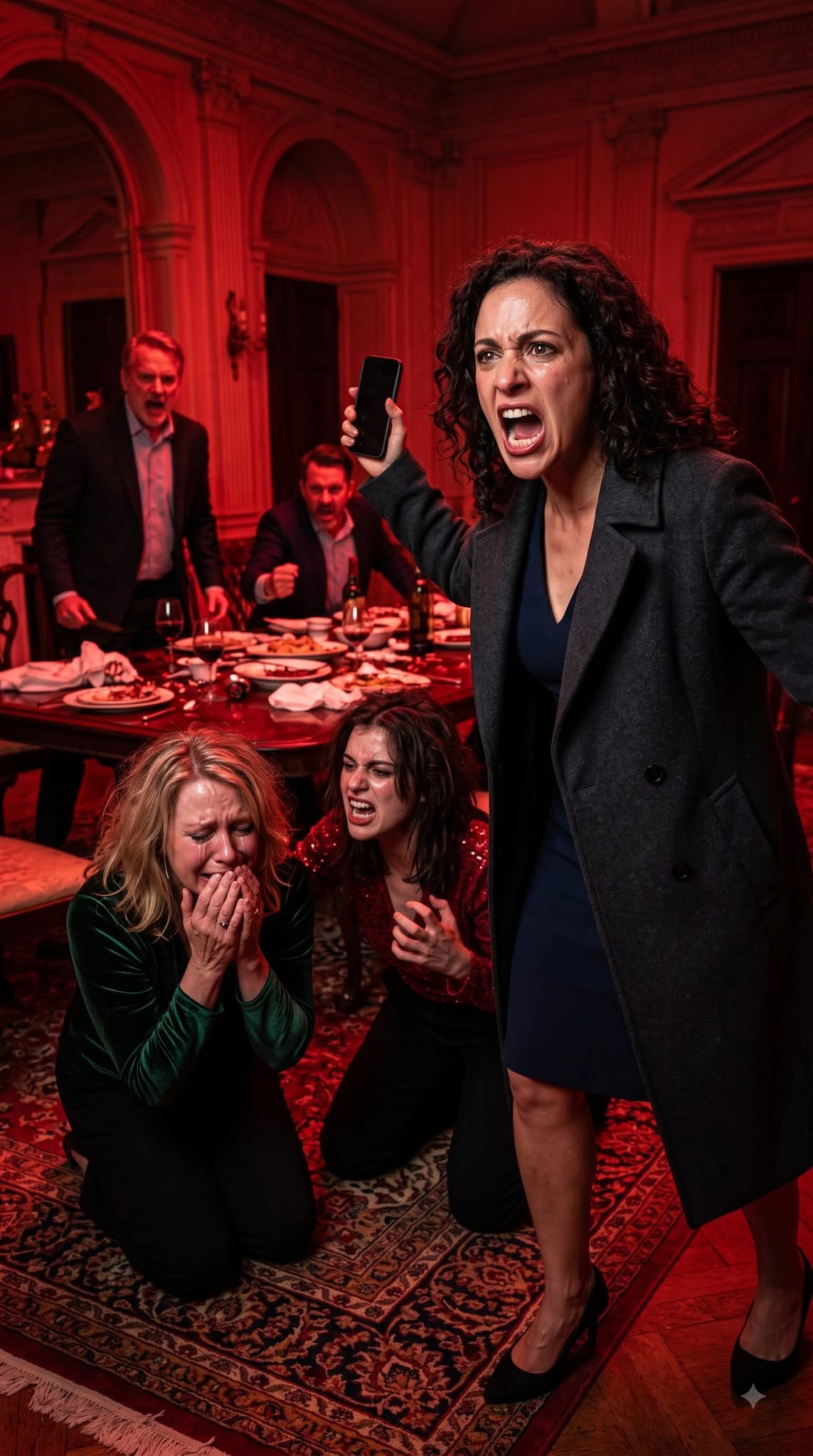
Vanessa pushed her chair back. “Leave. Take your little situation and go.”
Lily stayed beside me, one hand still on the tin. My mother looked at us both.
“Our Christmas is better without you.”
That was the line that ended the evening. Not because it was the worst thing my mother had ever said to me, but because she said it where Lily could hear.
I stood up. I picked up the cookies. I put Lily’s scarf back around her neck, and she let me tuck the loose end under her coat. I didn’t know what to say to her yet.
Vanessa watched me. “Finally.”
I could’ve left then. I should have. But I had spent a long time letting my family decide what I was allowed to do, and I was tired of leaving every hard thing for later.
I took my phone out of my purse.
My father frowned. “What are you doing?”
I said, “Making one call.”
I dialed my attorney first. Not because I needed a lawyer to start a fight. I needed to make sure I understood what I was about to do. We’d spoken about the shares two years earlier, after a letter from the company came to my apartment. I’d put off a meeting, then another. It was easier to believe the shares were just something Grandpa had left me that I’d never have to touch.
My attorney answered. I asked the same question I’d asked him before, only this time I listened to the whole answer.
“Your father’s proxy is still in place?” I said.
“No. It expired in June. The voting rights are yours.”
I glanced at Lily. She was standing very still and watching my face.
I said, “And the expansion loan?”
“Needs shareholder consent. Yours is one of the signatures.”
The call lasted less than five minutes. I told him not to file anything until he sent the notice to the board. Then I ended the call and looked at my father.
His carving knife was still in his hand. The turkey sat in front of him, half cut.
“What did you just do?” he asked.
“I asked my attorney to notify the board that I’m using my vote.”
Vanessa laughed once. It sounded forced. “You don’t have that kind of power.”
I said, “I do.”
I knew the shares existed. They weren’t a mystery. My grandfather had left me thirty percent of Carter Holdings when he died. My father kept running the company, and I didn’t go to meetings or ask for reports. I had no desire to sit around talking about profit margins with people who treated me like an embarrassment at dinner.
The part I hadn’t understood was that Grandpa had never meant for me to be silent. He meant I didn’t have to run the company day to day. He left the vote in my name. My father had used a proxy for years, first because I was young, then because it was easier, then because nobody brought it up.
I’d signed the first proxy at twenty-one. The last one expired six months before that Christmas. I had the notice in a folder at home. I’d let it sit unopened for a week, then called the lawyer, then let the answer sit in my head for another year.
I told myself I wasn’t interested in business. That was true. I also didn’t want to find out what my family would do if I stopped being convenient.
My father put the knife down. “This is not the place to discuss business.”
“You started discussing business before dinner,” I said.
Vanessa stepped around her chair. “You’re going to blow up the expansion because you’re upset?”
“I’m not approving the loan tonight.”
“You can’t just freeze everything.”
“I can refuse my consent.”
My mother had one hand around her wine glass. “Elena, you wouldn’t do that to your father.”
That was how she put it. Not that it would hurt the company or the workers or the family. That I would be doing it to my father.
I looked at her. “You told me not to come back.”
My father walked toward me. His voice dropped, careful now. “You’re being emotional.”
It nearly made me laugh. He’d said the same thing when I declined his plan for the divorce. He’d said it when I told Vanessa I didn’t want her calling my ex to threaten him. If I made a choice they didn’t like, I was emotional. If I agreed with them, I was sensible.
“I’m being clear,” I said.
Lily tugged on my hand. “Mommy, can we go home?”
“Yes,” I said. “We can.”
I turned toward the door. My mother’s confidence slipped then, just a little.
“Wait,” she said. “We can talk tomorrow.”
Vanessa’s voice changed too. “This is a misunderstanding.”
I looked back at her. “What part?”
She didn’t answer.
My father asked, “What do you want?”
For a second, I thought I wanted what I’d always wanted. An apology. A kind word. A reason to believe they would have treated Lily differently if I’d only done something differently myself.
Then I looked at Lily holding the tin against her coat.
“I want you to understand that you don’t get to decide my worth,” I said. “And you don’t get to decide hers.”
I didn’t say it loudly. My voice was steady. That felt strange enough that I noticed it.
My father said my name. “Elena.”
I didn’t turn around.
“If you walk out, everything changes.”
I had come to the house hoping for a place at the table. I was leaving because I finally understood the place they wanted me to have. I’d walked into that house asking for family, while carrying a vote that could stop the project my father had been calling his legacy.
The company wasn’t mine to punish him with. I knew that. There were employees who had nothing to do with our dinner, and I didn’t want their jobs used as a weapon. So I didn’t cancel the loan. I told the board I wouldn’t approve it until I had the full loan terms, the current projections, and a review by an accountant who didn’t work for my father.
That was all. No speeches. No threats. Just a pause and a request for the numbers.
The next morning, the calls started. My father called twice. Vanessa called once. My mother texted that we should speak as a family. Nobody asked if Lily was okay.
My attorney sent the board notice at 8:40. At 9:12, my father left a voicemail.
“Call me before you make this harder.”
At 9:29, Vanessa texted, “You can’t hold the company hostage.”
I didn’t answer either one.
For the next three weeks, the board sent me the loan papers. I read them after Lily went to bed, sometimes with a glass of water sitting beside me until it got warm. The plan wasn’t a scam. My father honestly believed the expansion would work. He’d put years into it, and he was proud. But the numbers were thin, and the loan terms put too much risk on the company if the new contracts came in late.
I hired an accountant on my own dime. I had to borrow a jacket from a friend for the board meeting because mine didn’t fit right at the shoulders anymore. I almost canceled twice. It would have been easier to go back to being the daughter who didn’t want trouble.
At the meeting, my father sat across from me. Vanessa was beside him. My mother wasn’t there. I’d never been in that room before. There were nameplates, water glasses, and one long table that made me feel like I was back in school waiting to be told what I’d done wrong.
My father kept his voice polite. “We can settle this without making it personal.”
“I agree,” I said.
“Then approve the loan.”
“I can’t approve it with these terms.”
Vanessa leaned forward. “You’re not even involved in the business.”
That was fair, in a way. I hadn’t been. I didn’t know all the staff. I couldn’t have told you the company’s sales numbers without reading the report. I had no great love for boardrooms. But the shares were mine, and I had spent years letting someone else use my vote.
“I’m involved now,” I said.
My father looked down at the papers. He didn’t shout. Neither did I. We asked questions. The accountant explained what he’d found. The board agreed to hold the loan and ask the lender to revise two parts of it before anyone signed.
It wasn’t a victory. It was a business decision, and I still felt sick about the people whose work depended on that decision. I also knew I couldn’t sign something I hadn’t properly read just to keep my family from being mad at me.
The expansion moved ahead two months later with a smaller loan and different terms. The company kept its contracts. Nobody lost a job because of me. My father never thanked me for asking for the review. He did tell me the revised deal was “less exciting.”
I told him, “Less exciting is fine.”
We didn’t go back to the way things were. There wasn’t a way back to that. My mother sent Lily a birthday card in February. It had a little lamb on the front and no note inside. I put it on the counter, then threw it out after Lily went to bed. I felt bad about that. I also didn’t want to make a card mean more than it did.
My father and I spoke about the company. Not much else. Vanessa stopped calling. I didn’t chase her. I can’t say I was above wanting them to feel the loss. I wanted them to miss us. I wanted them to look at the empty place where Lily should have been and understand why it mattered.
They may not have. I don’t know.
That next Christmas, Lily and I made cookies at home. She put too many sprinkles on them, so they rolled off the pan and stuck to the counter. I let her do it anyway. We took the same tin from the cupboard, the one I’d carried to my parents’ house the year before. There was still a tiny red sprinkle caught in the seam.
Lily put the cookies inside and asked if we were taking some to Grandma’s.
I said, “Not this year.”
She nodded and asked if she could have one before dinner. I told her yes.
A week before Christmas, my father mailed me the revised loan papers for my records. He’d signed his name on the last page. Beneath it was a note in his handwriting: “You were right to ask.”
It wasn’t an apology. I put the papers in the folder with the old proxy notice, then left them there.
At Christmas dinner, the tin sat between Lily and me. She chose the cookies with the most sprinkles. Nobody told her to leave.
My father had said everything would change if I walked out. He was right. The company went ahead without his original plan, and I stopped waiting for my family to decide I belonged.
But the cruel part is that I had gone to their house with cookies, hoping to be welcomed, while they’d been using my vote for years without asking whether I still wanted to give it.
The tin came home full.