Chapter 1: Ten Is Perfect
My name is Dana Riley. I was forty years old when I spent the first night in the beach house I had worked eleven years to buy.
The house sat three streets back from the water on a quiet stretch of the North Carolina coast. It was not a mansion. It was not the kind of place people photographed for magazines. The siding needed another coat of paint, one upstairs window stuck when the air turned damp, and the back deck leaned just enough to make a carpenter raise an eyebrow. But when the wind came in from the ocean, it carried salt through every open window. From the upstairs hall, if you stood at the right angle, you could see the white flash of a lighthouse beyond the dunes. To me, it was perfect.
I had spent that first evening doing ordinary things very slowly because I wanted to remember them. I put two glasses in the kitchen cabinet even though I was the only adult living there. I lined up coffee mugs above the stove. I folded a blue blanket over the back of the sofa. I placed my grandmother Elena’s old tide clock on a shelf where the afternoon sun would touch it. Then I walked down the bright hallway and stopped in front of two smaller bedrooms.
One had pale green walls, a low bookshelf, and a small wooden star lamp I had built myself after watching three different tutorials and ruining two pieces of cedar. The other had a wide window seat with thick cushions and a narrow shelf beneath it for library books. Two wooden name signs rested face down on the floor, still waiting to be hung. I stood there for a long time. My phone rang a little after eight that evening. My mother’s name appeared on the screen. I almost let it go to voicemail. Almost. Instead, I answered. She did not say hello.
“Pack up the master bedroom,” she said. “Renee needs the space.” For a second I honestly thought I had missed the beginning of the conversation.
“What?”
“Your sister has Greg and the kids. They need a proper home. You have four bedrooms and only one person. It doesn’t make sense.” There was a pause, followed by the faint sound of my father speaking in the background. Then his voice came on the line.
“Dana, be reasonable. A house this size for one woman is wasteful. Renee has a real family to think about.” There are sentences that surprise you because you have never heard anything like them before. Then there are sentences that surprise you because you have heard some version of them your entire life and still cannot believe another human being can say them without hearing what they sound like. I leaned against the kitchen island and looked down the hallway toward the two small rooms.
“Is that all?” I asked. My father sighed, the sound he always made when he wanted me to feel as if patience itself were being wasted on me.
“We’re trying to avoid drama.”
“I see.”
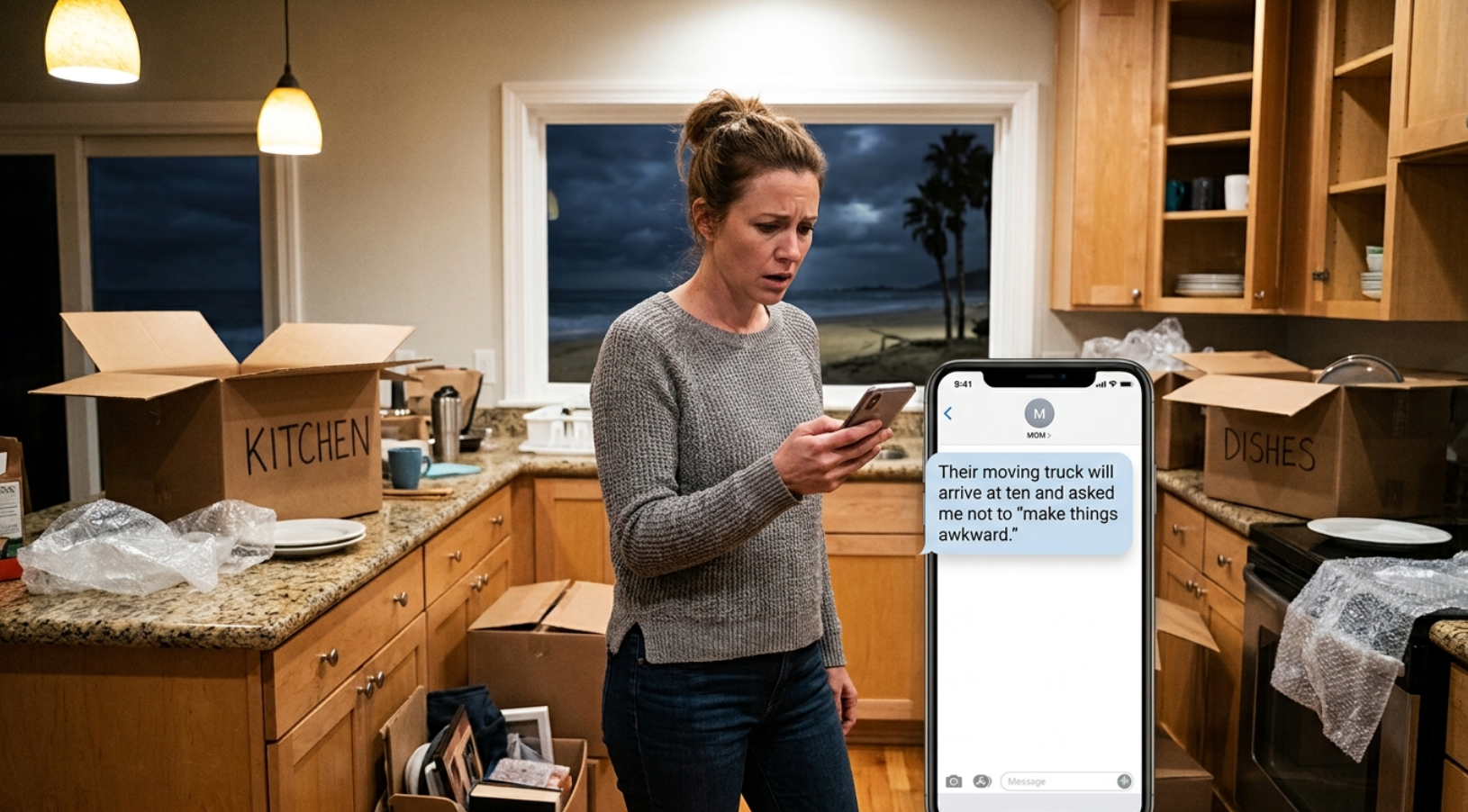
“Your mother will call tomorrow.” The line ended. Thirty seconds later, a text appeared from my younger sister, Renee. Truck at 10. Don’t make this awkward. Just clear out the big rooms and we’ll sort the rest later. I read it twice. Then a strange calm moved through me. Not numbness. Not surrender. Something quieter and stronger than either. I typed three words. 10 is perfect. Renee replied with a thumbs-up emoji. That was the moment I understood they truly believed the house already belonged to them in every way that mattered.
They thought they were driving three hours the next morning to collect what the family had decided I no longer had the right to keep. They believed I would complain, maybe cry, maybe argue for twenty minutes, and then step aside the way I always had. They had no idea why there were two small bedrooms ready at the end of the hall. They had no idea who was scheduled to arrive shortly before ten the next morning. And they had no idea that for the first time in my life, I was not planning to persuade them of anything.
I set my phone facedown on the counter and opened the kitchen window wider. The ocean was invisible in the dark, but I could hear it. Steady. Patient. Returning to the same shore again and again without ever asking permission. I checked the front lock before bed. Then I checked it again. That might sound excessive, except that my family had spent decades treating every boundary I set as a temporary misunderstanding. Years earlier, when I was away on a nursing contract, I had given my parents a spare key to my rental condo in case of an emergency. When the contract ended, I asked for the key back.
My mother stared at me like I had insulted her.
“We’re family, Dana. Why are you making a thing out of a key?” It took me six months to get it back. That was how it worked with us. A favor became access. Access became expectation. Expectation became entitlement. And once entitlement settled in, asking for your own thing back was treated as the real offense. So when I bought the beach house, I had the locks changed before I bought curtains. That night, I walked the hallway one last time. I rested my hand on the doorknob of the green room, then on the one beside it. I could have hung the two wooden name signs. I did not.
Hope had once been taken from me before I knew how to protect it. This time, I would wait until the children were actually home.
“Not yet,” I whispered. Then I went to bed while two different futures were driving toward the same house.