PART 2 — THE CHRISTMAS THEY WEREN’T EXPECTING
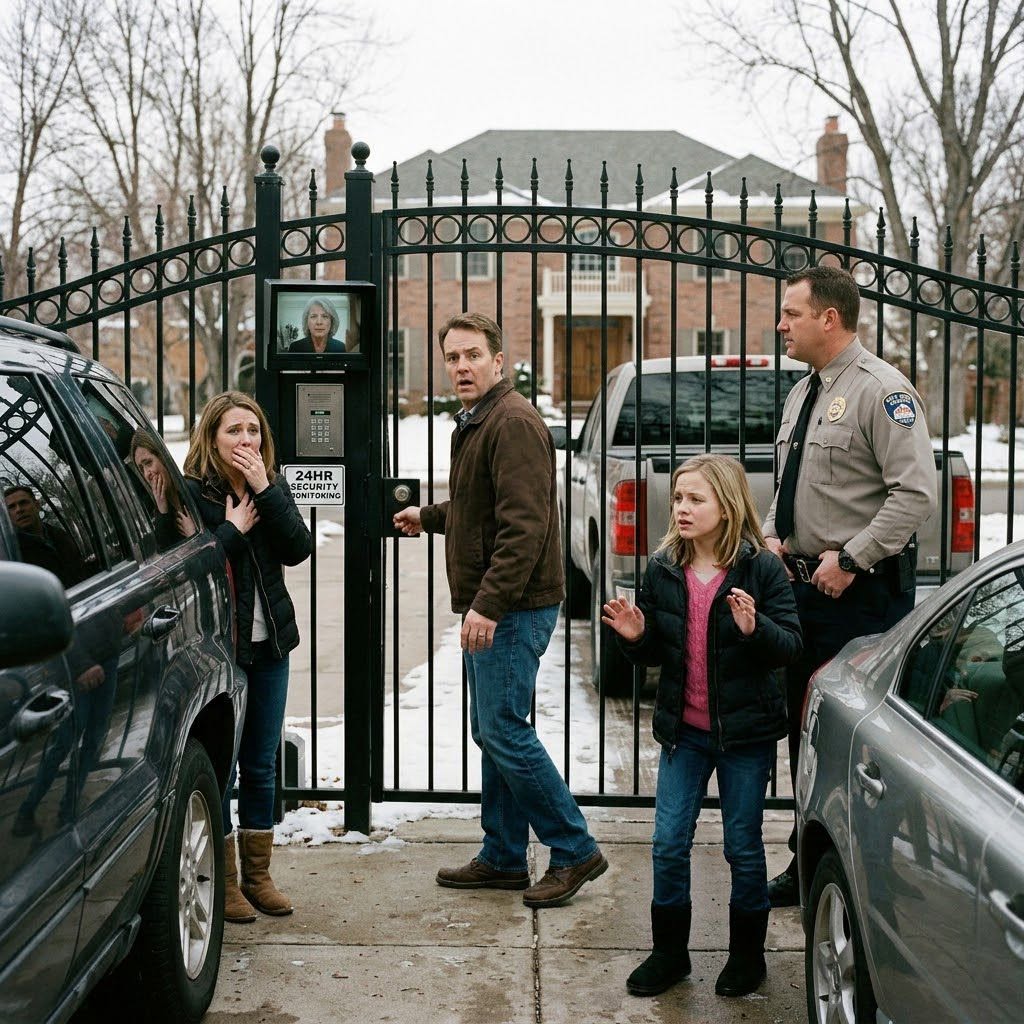
I stared at the security monitor for several seconds.
Michael was still gripping the top of the gate.
Jennifer stood behind him with her arms crossed, looking furious.
Lisa was holding her phone, probably recording the entire thing.
For a moment, I almost laughed.
Not because anything was funny.
But because three months earlier, I would have been terrified.
I would have worried about embarrassing them.
I would have worried about what the neighbors thought.
I would have opened that gate.
I would have said, “Come inside. Let’s talk.”
That was the old Maggie.
The woman who apologized for having feelings.
The woman who called her children just to hear their voices.
The woman who had once taken an Uber home alone after spending a frightening night in the hospital because not one of her children could find the time to come get her.
That Maggie was gone.
“Remove them,” I told the security officer.
Michael’s head snapped toward the camera.
“What?”
The officer stepped closer to the gate.
“You heard her, sir. Please step down.”
Michael dropped back onto the pavement.
“This is my mother’s house.”
“Yes, sir.”
“I’m her son.”
“I understand.”
Michael pointed toward the house.
“Then open the gate.”
“I cannot do that.”
Jennifer pushed the intercom button again.
“Mom, this is ridiculous.”
I stayed silent.
“Mom?”
Nothing.
“We drove all the way here with the kids.”
Still nothing.
Then she said the sentence I had been expecting.
“It’s Christmas.”
I leaned toward the microphone.
“You told me not to call you.”
Jennifer froze.
Michael looked away.
Lisa lowered her phone slightly.
I continued.
“You told me you had your own lives. I finally listened.”
“That’s not what we meant,” Lisa said quickly.
“Really?”
“No. We just meant you were calling too much.”
“I called because I loved you.”
Jennifer rolled her eyes.
There it was.
That tiny gesture.
That little flicker of annoyance.
As though my love had always been an inconvenience.
“Mom,” she said, “we didn’t come here to fight.”
“Then why did Michael try to climb my gate?”
Nobody answered.
Michael shoved his hands into his coat pockets.
“It’s freezing out here.”
“There are hotels in Denver.”
His expression changed.
“You expect your grandchildren to spend Christmas in a hotel?”
“No.”
Jennifer looked almost relieved.
Then I finished.
“I expected their parents to listen when I said they weren’t invited.”
The silence that followed was different.
Heavier.
For the first time, they seemed to understand that I was not performing some dramatic punishment designed to make them apologize.
I meant it.
Jennifer stepped closer to the intercom.
“Fine. We’ll leave. But before we do, we need to talk about the house.”
I smiled.
Of course.
The house.
Always the house.
“What about it?”
Jennifer glanced at Michael.
He answered.
“We think you should sell.”
“No.”
“You’re seventy-two.”
“I know how old I am.”
“This place is too big for you.”
“I like it.”
“It’s almost five thousand square feet.”
“I know.”
“The maintenance alone must be ridiculous.”
“I can afford it.”
Michael’s jaw tightened.
“That’s exactly the problem.”
I stared at the monitor.
“What problem?”
He realized too late what he had said.
Jennifer jumped in.
“He means we’re worried you’re wasting money maintaining a house you don’t need.”
“My money?”
“Mom.”
“My house?”
Nobody answered.
“My life?”
Lisa stepped toward the camera.
“Nobody is trying to control you.”
I almost admired the confidence with which she said it.
“Then leave.”
That ended the conversation.
The security officer escorted them back toward their vehicles.
But before Jennifer reached her SUV, she turned around.
“You’re going to regret this.”
I heard her clearly through the camera.
And something inside me became perfectly calm.
“No, Jennifer,” I whispered to the empty room. “For the first time in years, I don’t think I will.”
Their cars disappeared down the road twenty minutes later.
I made tea.
Then I sat beside the Christmas tree.
The house was quiet.
Richard’s old leather chair was still beside the fireplace.
I touched the armrest.
“You would have opened the gate,” I whispered.
Maybe he would have.
Richard had always been softer with the children.
Even when they disappointed us.
Especially when they disappointed us.
But Richard had also believed something I had forgotten.
Love without respect eventually becomes permission.
Permission to ignore you.
Permission to use you.
Permission to treat your kindness as something guaranteed.
My phone rang.
Thomas Brennan.
My lawyer.
“Maggie?”
“Hello, Thomas.”
“Everything okay?”
“For the moment.”
He paused.
“You sound suspiciously calm.”
I smiled.
“They came.”
“All three?”
“All three.”
“And?”
“I didn’t let them in.”
Thomas exhaled.
“Good.”
I raised an eyebrow.
“That sounded personal.”
“It is. I’ve spent three months watching you discover that the word ‘no’ is a complete sentence.”
I laughed for the first time that day.
Then his voice became serious.
“Maggie, there’s something you need to know.”
My smile disappeared.
“What?”
“Someone called my office yesterday.”
I sat straighter.
“Who?”
“They wouldn’t give my receptionist a name at first. Eventually they identified themselves as representing one of your children.”
My hand tightened around the mug.
“Which child?”
“Michael.”
That surprised me.
I had expected Jennifer.
“What did he want?”
Thomas hesitated.
“He wanted information about your estate.”
I felt something cold settle in my stomach.
“What information?”
“Whether you had recently modified your will.”
I stared at the Christmas lights.
“How would he know?”
“That’s exactly what concerns me.”
Only Thomas and I knew the full extent of what I had changed.
Or at least I thought we did.
“Did you tell him anything?”
“Absolutely not.”
“What else did he ask?”
Thomas was quiet for a second.
“He asked whether you were still considered mentally competent to manage your own financial affairs.”
My stomach dropped.
There it was.
Not concern.
Not Christmas.
Not family.
Competency.
“Thomas.”
“Yes?”
“Could they try to take control of my money?”
“They could try.”
I stood.
“What does that mean?”
“It means someone could petition the court alleging you are incapable of managing your own affairs.”
“But I’m perfectly capable.”
“I know that.”
“Would a judge?”
“With proper documentation, yes. And we prepared for this possibility.”
I remembered the appointments Thomas had recommended.
The medical evaluation.
The financial competency letter.
The independent assessment.
At the time, I had thought he was being overly cautious.
Now I understood.
“You expected this.”
“I hoped I was wrong.”
My eyes moved toward the front windows.
Outside, snow had begun falling.
“Thomas, what exactly did Michael say?”
Another pause.
“He asked whether your recent decisions could be challenged if your family believed you were being manipulated.”
“Manipulated by whom?”
“He didn’t say.”
I thought about that.
Then I remembered something.
Three weeks earlier, Jennifer had asked a strange question during our only brief text exchange.
Are you spending time with new people?
At the time, I ignored it.
Now it sounded different.
“They’re building a story,” I said.
“Yes.”
“That I’m confused.”
“Possibly.”
“That somebody convinced me to change my estate.”
“Possibly.”
Anger rose inside me.
But underneath it was something else.
Relief.
Because this time, I was not reacting after the damage was done.
I was ahead of them.
“Thomas?”
“Yes?”
“Move forward with the final step.”
He went quiet.
“Maggie, are you sure?”
I looked at Richard’s photograph above the fireplace.
Our wedding day.
I was twenty-one.
He was twenty-three.
We had almost nothing.
Everything in this house had been built afterward.
Together.
Our children had inherited our love.
Somewhere along the way, they had started assuming they would inherit everything else too.
“I’m sure.”
“Once we execute it, reversing the structure will be complicated.”
“I understand.”
“And your children are going to be furious when they discover what you’ve done.”
“They’re already furious.”
Thomas sighed.
“All right. I’ll prepare everything.”
We ended the call.
I thought the drama was over for the evening.
I was wrong.
At 7:43 p.m., my security system alerted me again.
Vehicle detected.
My heart jumped.
I opened the camera.
A black SUV was parked outside the gate.
Not Jennifer.
Not Michael.
Not Lisa.
A man stepped out wearing a dark coat.
Then a woman.
She carried a leather folder.
They walked to the intercom.
The man pressed the button.
“Mrs. Margaret Collins?”
“Yes?”
“My name is Daniel Mercer.”
I didn’t recognize the name.
“What do you want?”
“I’m here on behalf of your son.”
My fingers tightened around the phone.
“Michael?”
“Yes, ma’am.”
The woman beside him opened the folder.
Daniel continued.
“Your family is concerned about your welfare.”
“My welfare?”
“They’ve asked us to perform a wellness assessment.”
I almost laughed.
“They were standing outside this gate five hours ago.”
“I understand.”
“They know I’m alive.”
“This isn’t simply about whether you’re alive.”
The woman finally spoke.
“It concerns your ability to safely remain in this home alone.”
And suddenly Thomas’s warning made perfect sense.
They weren’t waiting.
They had already started.
I pressed the intercom.
“You may leave.”
“Mrs. Collins—”
“You are not entering my property.”
“We would prefer to resolve this cooperatively.”
“Then cooperate with my request and leave.”
The man glanced toward the woman.
She whispered something.
Then he looked directly into the security camera.
“Your children believe you may be making major financial decisions without fully understanding their consequences.”
My pulse slowed.
Not quickened.
Slowed.
Because now I knew exactly what this was about.
The gate.
The house.
The will.
The money.
Everything.
They thought the mother who had spent decades solving their problems had suddenly become incompetent the moment she stopped giving them what they wanted.
“Mr. Mercer?”
“Yes?”
“Please tell Michael something for me.”
He waited.
“Tell him I understand my decisions perfectly.”
Then I disconnected the intercom.
They stayed outside another six minutes.
Then they left.
But the night still wasn’t finished.
At 9:12 p.m., my phone buzzed.
A message from Michael.
You’re making a huge mistake.
Another message followed.
We’re trying to protect you.
Then Jennifer.
Mom, please stop being stubborn. We can fix this before it becomes embarrassing.
Finally, Lisa.
Please just tell us what you changed.
I stared at that message longer than the others.
Not:
Are you okay?
Not:
We love you.
Not:
Can we repair this?
Tell us what you changed.
I typed three words.
You’ll find out.
Then I turned off my phone.
Christmas Eve passed quietly.
Christmas morning was peaceful.
For the first time in years, I did exactly what I wanted.
I cooked pancakes.
Played Richard’s favorite Christmas album.
Opened the gift I had bought myself.
At noon, I drove to a community center and helped serve Christmas lunch to seniors who had nowhere else to go.
I sat beside a woman named Ruth whose husband had died the previous spring.
She held my hand before I left.
“Thank you for sitting with me,” she said.
Such a small sentence.
But it almost broke me.
Because a stranger had appreciated one hour of my time more than my children had appreciated years of it.
When I returned home that evening, there was another message waiting.
This one from Thomas.
Call me immediately.
I dialed.
He answered on the first ring.
“Maggie.”
“What happened?”
“Your children have retained an attorney.”
I closed my eyes.
“All three?”
“Yes.”
“What are they doing?”
“They’re requesting an emergency family meeting regarding your estate and living arrangements.”
I laughed softly.
“Request denied.”
“There’s more.”
My smile vanished.
“They’ve obtained copies of some older estate documents.”
“How?”
“I don’t know yet.”
“What documents?”
“The version of your will from six years ago.”
That will divided almost everything equally among Jennifer, Michael, and Lisa.
House.
Investments.
Insurance.
Everything.
Thomas continued.
“They know what they were supposed to inherit.”
“Supposed to?”
“That’s how their attorney described it.”
I walked toward the window.
Snow covered the lawn.
“They think it already belongs to them.”
“That would be my interpretation.”
“Then maybe it’s time they learned otherwise.”
Thomas was silent.
“Maggie?”
“Yes?”
“The documents for the final step can be ready tomorrow morning.”
“Good.”
“But I want you to understand something.”
“What?”
“Once you sign them, your children won’t merely discover that you changed your will.”
I waited.
“They’ll discover that most of what they expected to inherit will no longer be part of your estate at all.”
I looked around the house.
The home Richard and I had built.
The investments we had saved.
The future we had planned.
For seventy-two years, I had been someone’s daughter, someone’s wife, someone’s mother.
Maybe it was finally time to become something else.
Myself.
“Tomorrow morning,” I said.
“Ten o’clock.”
“I’ll be there.”
The following day, I arrived at Thomas Brennan’s office at 9:52.
He was waiting with a thick stack of documents.
But he wasn’t alone.
A woman sat beside him.
Mid-fifties.
Gray suit.
Silver-framed glasses.
A leather briefcase rested beside her chair.
“Maggie,” Thomas said, “this is Evelyn Shaw.”
The woman stood and shook my hand.
“I’ve heard a great deal about you.”
“Good things?”
She smiled.
“Interesting things.”
I sat.
Thomas pushed the first document toward me.
“Before you sign anything, Evelyn is going to explain exactly what happens next.”
Evelyn opened her briefcase.
She removed a folder.
Then she looked directly at me.
“Mrs. Collins, once this is completed, your children will not be able to simply wait for you to die and divide your property.”
I nodded.
“That’s the point.”
She placed the folder in front of me.
“But there is something else you should know.”
“What?”
“Yesterday evening, your children’s attorney filed paperwork.”
My hand stopped above the pen.
“What kind of paperwork?”
Evelyn exchanged a glance with Thomas.
Then she slid a document across the desk.
At the top were my full legal name and a case number.
I read the first paragraph.
Then the second.
My mouth went dry.
“They actually did it.”
Thomas nodded.
“They’re asking the court to intervene.”
I stared at the signatures at the bottom.
Jennifer Collins Parker.
Michael Collins.
Lisa Collins Reeves.
All three.
My children.
United at last.
Just not for the reason I had spent years praying for.
Evelyn leaned forward.
“They believe this filing will stop you from changing anything else.”
I looked at her.
“Will it?”
For the first time that morning, she smiled.
“No.”
She turned the next document toward me.
“Because they’re approximately twenty-four hours too late.”