PART 1
The clock on the office wall read 10:16 a.m. when I signed my name on the final page of our settlement. For twelve years I’d been Penelope Reynolds. At 10:17, I became Penelope Vance again.
I’d imagined this exact moment a hundred times in the exhausting months leading up to the divorce, always expecting my hands to shake or my heart to shatter. Instead, a deep, steady calm washed over me — like stepping outside after years trapped in a house where every window had been nailed shut.
Across the table, my soon-to-be-ex-husband barely glanced at me. Victor signed with a heavy flourish, pushed the papers toward the mediator, and immediately reached for his phone.
“It’s finished,” he said the second someone picked up. “I’m leaving the lawyer’s office now — tell me the doctor’s appointment is still on for eleven.”
I didn’t need to ask who was on the other end. It was Naomi Prescott — the woman Victor had spent nine months insisting was “just a colleague.”
A proud, broad smile spread across his face. Warmth I hadn’t seen directed at me in years. “Tell our boy his father’s on his way,” he said, delighted, before hanging up.
Only then did he finally look at me — no trace of regret in his eyes. “You heard that, Penelope. Naomi’s having a boy. My parents are thrilled something wonderful finally came out of all this.”
I looked down at the documents between us. There was nothing left worth fighting over.
Victor had no idea that within the hour, everything he believed about his shiny new future was going to fall apart.
The Reynolds family treated their name like a legacy that needed guarding at all costs — especially when it came to sons. They’d always been polite to my daughters, Abigail and Charlotte, but underneath the courtesy sat a quiet, constant disappointment.
When Abigail was born, Victor’s mother, Miriam, held her in the hospital room and sighed. “Well — she’s healthy. Maybe the next one carries the family name.” Everyone laughed it off. I laughed too, back then.
Four years later, when Charlotte arrived, Victor’s sister Samantha joked at Thanksgiving that Victor was destined to be surrounded by women forever. I laughed along that time too, because keeping the peace felt easier. Time teaches you that people hide their real feelings inside their jokes.
When Naomi’s pregnancy was announced — a boy — the whole family reacted like an heir to a throne had arrived. Miriam sent flowers. Samantha went to the ultrasounds. Walter, Victor’s father, opened a private investment account for a grandson who wasn’t even born yet.
Meanwhile, Victor started coming home later. Our daughters noticed long before he thought they would.
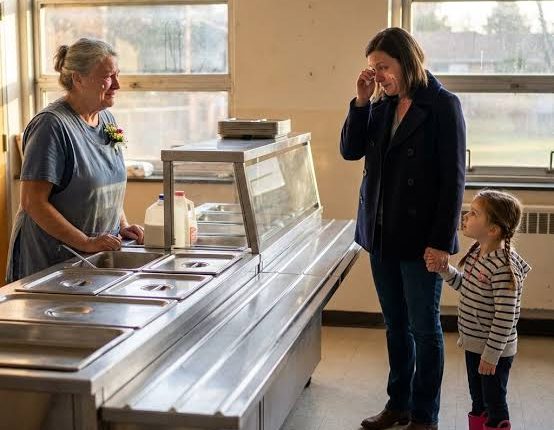
One evening, five-year-old Charlotte sat across from me at the kitchen island, coloring. “Mom, why does Dad always smile at his phone when he thinks we’re not looking?”
I paused. Some questions from children don’t have easy answers. “Sometimes adults make complicated choices, sweetheart,” I said gently.
She studied my face. “Are his choices making you sad?”
That almost broke me. “A little bit, my love,” I whispered.
She reached over and put her small hand on top of mine — more comfort than her father had offered me in years.
By the morning we sat down with the mediator, our marriage had been dead for a long time. Samantha came along to support her brother, arms crossed by the door, while Victor leaned back like an executive closing a profitable deal.
“The penthouse stays with me. So does the SUV — we already settled that,” he said smugly.
“Yes, Victor. We agreed.”
He seemed almost disappointed I wasn’t fighting him on it, so he pushed further. “Since you wanted primary custody, you can handle the girls full-time. I’ll see them when my schedule allows.”
Even the mediator shifted uncomfortably.
“They’re your daughters, Victor. Not meetings you squeeze in between other meetings,” I said, voice flat.
He shrugged. “I’m starting over, Penelope. Naomi and I have a baby coming. My life is getting complicated.”
From the doorway, Samantha gave me a sharp little smile. “Maybe this really is for the best. Victor finally gets the family dynamic he always wanted.”
“He already had a loving family right here,” I said.
The room went dead silent. Victor rolled his eyes. “There she goes, being dramatic again.”
I said nothing. I stood, pulled out the penthouse keys and the car key, and set them gently on the table.
“Keep them both.”
Victor’s face softened into total triumph — he genuinely believed he’d won everything.
Before I turned to leave, I looked him dead in the eye. “Just remember one thing, Victor. Possession and ownership aren’t always the same thing.”
His smirk vanished. “What is that supposed to mean?”
I didn’t answer. I turned on my heel and walked straight into the morning sunlight.
PART 2

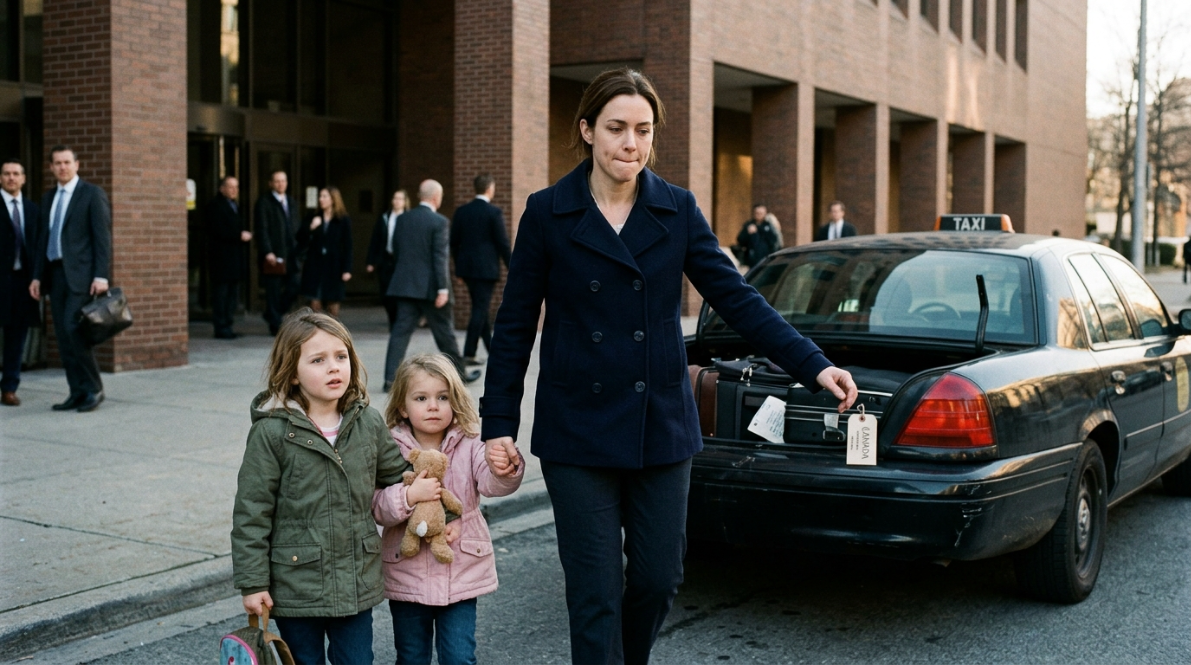
A sleek black town car was waiting at the curb. The driver stepped out and opened the door. “Good morning, Ms. Vance. Your daughters are already at the airport with Mrs. Gable. Your luggage is checked through to London.”
Behind me, I heard rushed footsteps on the pavement. Victor had followed me outside, confusion written all over his face.
“London?” he asked. “You’re leaving the country with my daughters — today?”
“Yes. This afternoon.”
His expression hardened. “You can’t just take my kids out of the country without my permission.”
“You signed the international travel consent three weeks ago. During the preliminary paperwork,” I reminded him.
Realization crossed his face — he had signed those papers. He’d just never bothered to read the fine print.
His eyes shifted to the car. “Whose car is this? How are you paying for any of this?”
I almost laughed. For twelve years, Victor had convinced himself that because I’d stepped back from my career after Abigail was born, I had no money of my own — no resources, nothing.
He knew I’d once worked as a corporate strategist. He knew my grandfather had built a logistics empire out of Ohio. He simply never asked what happened to it. And I’d long since stopped offering information to a husband who dismissed my background the moment I gave it.
“Goodbye, Victor,” I said softly, and the door closed between us, cutting off his bewildered face.
My grandfather, Thomas Vance, started a small transport company decades ago. It grew into Vance Global Logistics — distribution centers across continents. When he passed, the wealth went into a private family trust, quietly managed, giving my family a kind of independence Victor had never once thought to question.
The luxury penthouse we lived in? Victor assumed it was a discounted lease through his business network. In truth, a holding firm under the Vance family trust owned the entire building. The SUV he drove belonged to the same trust. He never owned a single thing he thought he did.
I’d meant to tell him, eventually. But every time I considered it, I watched how condescending he became whenever he believed I depended on his money. He liked reminding me he paid the bills. So I stopped correcting him, and quietly built my own way out.
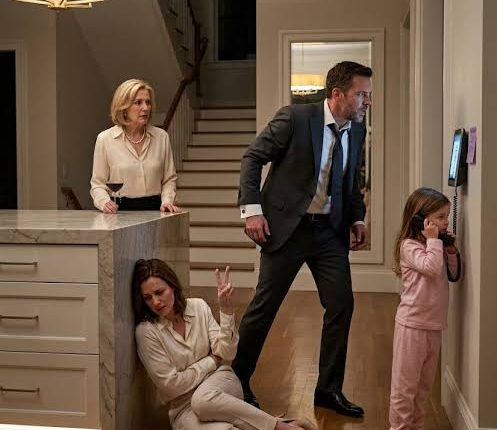
While my car headed for the airport, Victor was pulling into the St. Helena Women’s Health Center. Naomi sat in the waiting room, surrounded by Walter, Miriam, Samantha, and half the Reynolds family, gathered for a routine ultrasound like it was a coronation.
Victor walked in with a bouquet, beaming. “How’s my future boy doing?”
Naomi laughed nervously. “We haven’t even started yet, Victor.”
Miriam squeezed her hand. “Everything will be perfect today, dear.”
Dr. Harrison came in, greeted the packed room, and began the scan. Victor pointed at the screen. “Is that his head?”
“Yes. That’s the fetal profile,” the doctor said.
Walter laughed proudly. “Look at that jawline — the Reynolds chin!”
Samantha grinned. “And Victor’s nose!”
But Dr. Harrison had gone quiet, checking the measurements twice. He flipped back to Naomi’s intake form, his professional ease suddenly gone.
Naomi caught it first. “Is something wrong with the baby?”
“The pregnancy is perfectly healthy,” Dr. Harrison said carefully, eyes still on the file. “But I need to clarify the dates on your intake form.”
Victor frowned. “What’s wrong with the dates?”
“You listed this pregnancy at fourteen weeks,” the doctor said. “But these measurements are consistent with twenty-one weeks.“
The room went silent. “Twenty-one weeks?” Victor repeated blankly.
“That’s my clinical estimate based on today’s development. Dating can vary — but a seven-week gap is significant.”
Naomi went pale. Samantha’s eyes went wide. “Wait,” she said slowly, looking between them. “You two weren’t even together twenty-one weeks ago.”
Victor’s face turned red. “We were talking. Weren’t we?”
“Victor, please,” Naomi said, avoiding every eye in the room. “This isn’t the place.”
Walter pulled out his phone, scrolling his calendar. “Twenty-one weeks ago puts conception in early February,” he said coldly.
Miriam gasped, hand over her mouth. “Victor was in San Diego the first week of February. For that construction conference.”
Four days. He’d been gone four straight days.
“Ultrasound dates are just estimates!” Naomi said, sitting up too fast. “They’re never exact!”
Dr. Harrison backed toward the door. “If there are personal concerns about the timeline, I’d recommend a private consultation.”
The second he left, Victor turned on her. “You told me this baby was conceived after Valentine’s Day!”
“I said I thought it was around then!”
Samantha crossed her arms, all her warmth gone. “You thought?”
The celebration the Reynolds family had planned collapsed in under sixty seconds, leaving them staring at each other in silence.
PART 3

At the airport, my daughters spotted me and came running. “Mom!” nine-year-old Abigail called, throwing her arms around my waist, Charlotte close behind her.
Mrs. Gable, our nanny, stood by the luggage with a reassuring smile. She’d spent months helping me arrange our move to England. My mother had relocated years earlier to run the European headquarters of Vance Global Logistics, and the girls were already enrolled at a lovely school nearby.
We weren’t running away in secret. Victor had our new address, full visitation rights, and had signed every piece of paperwork himself.
Charlotte tugged my coat. “Mom, is our new house going to have a big flower garden?”
“Yes, sweetheart. A massive one, right in the back.”
She squealed with delight.
Standing in that terminal with my girls, I felt free for the first time in over a decade.
Then my phone started buzzing — Victor’s name, again and again. I ignored the first three calls. Then the texts started pouring in.
VICTOR: Call me right now. The building manager says I have thirty days to sign a market-rate lease or vacate.
VICTOR: Why is the leasing company telling me the SUV has to go back to the corporate fleet?
VICTOR: Penelope. Answer your phone.
I smiled faintly. The settlement gave him the right to occupy those properties — never to own them. His own lawyers had asked for the property titles twice during negotiation. He’d waved them off both times, too sure of himself to check.
When the phone rang again, I answered.
“What have you done to my life, Penelope?” he demanded.
“I haven’t done anything, Victor.”
“The penthouse isn’t mine?”
“It belongs to my family’s holding firm.”
“And the car?”
“Same firm.”
A long silence. Then, bitter: “You lied to me. All these years.”
“You never once asked, Victor.”
He took a breath. Then the question that revealed exactly who he was. “Just how wealthy are you?”
I looked out at the plane waiting on the tarmac. “That question stopped mattering the day you decided my worth depended on how much you thought I needed your money.”
He had nothing left to say.
Two days after we settled into our new home in the English countryside, Samantha emailed me. Short and blunt: Things got complicated at the appointment. I see now how horribly we treated you. I’m sorry for what I said in that office.
I read it twice. Didn’t respond. Word came through our attorneys soon after — Victor was demanding a paternity test before he’d offer Naomi another dollar. The grand celebration the Reynolds family had planned had turned into open warfare over dates and broken trust.
I took no pleasure in it. I didn’t want their downfall. I wanted distance — real distance — from a family that measured people by status, control, and whether they’d produced a son.
For years I’d thought winning meant making Victor understand how deeply he’d hurt us. I know now that real freedom was realizing I never needed him to understand anything at all.
Three months later, the girls were thriving at their new school. I’d gone back to work as an executive director in our European division — full days, real peace, nothing left of the life I used to live in.
One rainy Sunday, Charlotte looked up from her breakfast. “Mom, are you happier now that we live here?”
“I’m happier than I’ve ever been, sweetheart.”
Abigail grinned across the table. “I already knew that.”
“How?”
“Because you sing when you make breakfast now.”
I had to blink back tears. Children notice when a parent finally starts healing.
A month later, Victor called, his voice stripped of every ounce of the confidence I remembered. “I’d like to arrange a visit. See the girls.”
“You’re always welcome, Victor. The schedule still stands.”
A long pause. “Penelope… I handled everything back home completely wrong.”
“Yes. You did.”
“I genuinely thought you’d always just be there,” he admitted quietly. “No matter what I did.”
And in that moment, I finally understood the whole marriage. Victor never stayed out of love. He stayed because he assumed I’d always absorb whatever he did and remain right where he left me.
“I was there. For twelve years,” I said gently. “Now focus on your daughters. That’s the only thing that still matters.”
Before hanging up, he asked one last question. “Did you know about Naomi’s timeline before we signed the papers?”
“No. I had no idea.”
“Then why were you so calm that day? When I told you I was leaving you for her?”
I looked out at Abigail and Charlotte playing in the garden under a light rain.
“Because my future stopped depending on your choices the moment you made them.”
He said nothing. We hung up without another word.
I’ve learned that strength isn’t winning arguments or proving someone wrong. It’s walking away with your dignity intact and building something peaceful on the other side.
The money gave me options — a fast, clean exit when I needed one. But the real gift was smaller than that, and quieter: discovering exactly what I was worth, with nobody else’s signature required.
Watching my daughters run through that garden, laughing in the rain, I knew — whatever came next, our future finally belonged to us. Only us.
THE END
Note: This story is a work of fiction inspired by real events. Names, characters, and details have been altered. Any resemblance is coincidental. The author and publisher disclaim accuracy, liability, and responsibility for interpretations or reliance. All images are for illustration purposes only.

My Boyfriend Turned An Entire Billboard Into The Sweetest Marriage Proposal — The Next Morning, Someone Added, “Before You Say Yes, There’s Something You Need To Know.”
 By Bella
I woke up still floating.
The ring caught the morning light on the nightstand, and I lay there staring at it like an idiot while Myles snored beside me — something he’d deny later. Twenty-nine years old, grinning like I’d won a raffle. Six years together, and last night he’d stood at the end of a candlelit table and looked at me like I was the whole plot of his life.
I didn’t even care how ridiculous I looked. I was happy.
“You’re going to sprain your face,” my best friend Priya said over video call, propped against my toothbrush cup.
“It’s shiny!”
“It’s a rock, Nora. Rocks are shiny. That’s their whole brand.”
I laughed and finally lowered my hand. Behind me, our apartment looked exactly the same as yesterday — the ugly green armchair Myles refused to throw out, the floor lamp I’d bought without asking, six years of mismatched furniture and unfinished arguments about throw pillows. Nothing had changed. Everything had changed.
“I still can’t believe he did the billboard thing,” I said. “That is so not him.”
“That’s exactly him when he’s trying too hard. Remember the anniversary scavenger hunt? You ended up in a laundromat.”
We’d said it a hundred times: no wedding talk until we could both breathe. Careers finally stable. Savings finally growing. We’d been so careful.
And then last night happened.
“Priya, real question,” I said. “Do you think he’s been okay lately?”
“Define okay.”
“He’s been exhausted. Taking calls in the hallway. I’ve asked him three times if something’s wrong, and he just kisses my forehead and says he’s fine.”
“Nora. The man was planning a billboard proposal. Of course he was sneaking around. Stop investigating your own fiancé. He’s not a cold case.”
Fiancé. I still had to catch my breath every time I thought the word.
The Night Before
Myles’ voice on the phone had been careful, rehearsed. “I have something special planned tonight. Meet me at our restaurant at seven. Dress up. Call me when you leave and keep me on speaker the whole drive.”
I changed outfits four times. Priya stayed on FaceTime through all of it, cackling as I rejected dress after dress for crimes like “too Sunday school” and “makes my elbows look aggressive.” I finally called Myles from the car and pulled onto the highway.
We were talking about nothing when the billboard rose out of the dark ahead of me — huge, lit up, impossible to miss. Our faces. Four enormous words: WILL YOU MARRY ME?
I cried so hard I nearly missed my exit.
“So, honey,” Myles said, laughing as he realized I’d finally seen it, “will you marry me?”
“Yes! Of course, yes!”
“Then hurry up. Your fiancé is waiting.”
The rest of the night was champagne and shaking hands and a ring sliding onto my finger while I sat across from the man I loved, thinking nothing in my life had ever felt this settled.
I had no idea how wrong I was.
The Next Morning
After Myles left for work, I decided I wanted one more look at that billboard. Maybe a photo for my mom. Maybe just proof I hadn’t dreamed the whole thing.
The drive felt different in daylight. Quieter. Less magic.
Then I turned the corner and slammed the brakes so hard the car behind me honked.
Across our faces — across “Will you marry me?” from twelve hours earlier — someone had scrawled in dripping red spray paint:
“BEFORE YOU SAY YES, THERE’S SOMETHING YOU NEED TO KNOW.”
I pulled onto the shoulder and just stared.
“This is a bit,” I said out loud, to nobody. “One of his idiot friends is pulling a prank.”
I called Priya, hands shaking. “Someone graffitied the billboard. It says there’s something I need to know before I say yes.”
A long pause on her end. “Okay. Breathe. You’re spiraling.”
“I’m not spiraling.”
“You’re on the side of the road calling me at 7:40 in the morning. You’re spiraling. It’s probably Kenny. Kenny thinks he’s funny.”
“Kenny isn’t funny.”
“Exactly. Which is why he’d do this.”
I wanted to believe her. I drove to work in a fog instead — refreshing traffic cameras, Googling billboard companies, chewing a pen until the ink cracked in my mouth. Should I tell Myles? If it was a prank, I’d wreck his high. If it wasn’t a prank… I couldn’t even finish that thought.
The Knock at the Door
By 5 p.m. I was home, shoes off, pouring a glass of wine so full it counted as two. Myles had texted — stuck on a call, running late.
Then three quick raps on the door.
“You forgot your key again, didn’t you?” I called out, smirking, already imagining superglue.
I opened the door. It wasn’t Myles.
A man stood in the hallway — maybe forty, black cap pulled low, windbreaker zipped to his chin, glancing over his shoulder like the hallway itself might swallow him.
“Are you Nora?”
“Who’s asking?”
“Please.” He held up both hands. “Myles can’t know I talked to you. If he pulls up right now, I’m gone. You got my message, right? The one on the sign? Tell me you haven’t said yes yet.”
The ring, which had felt weightless all morning, suddenly felt like a bolt on my finger.
“I already said yes,” I heard myself say.
Something in his face collapsed. Not smugness. Not glee. Guilt.
“Oh no.”
“Oh no, what? Who are you?”
“Two minutes,” he said. “Just the doorway. Then I’ll leave. But you need to hear this before he gets home.”
I looked at my ring. I looked at the stranger who’d defaced my proposal. And I stepped aside just enough to let him in — one foot braced behind the door, heart hammering under my hoodie.
“Start with your name,” I said. “Then tell me why you’re whispering my fiancé’s name on my doorstep like we’re in a spy movie.”
He pulled off the cap. Tired eyes. “Devin. I run a sign company. Small crew — mostly me and my brother.”
“Okay, Devin. Why did you write over my proposal?”
He winced. “Because your fiancé hired me to put it up. And then he stopped answering my calls.”
The Truth Comes Out
“He paid the deposit in cash,” Devin said. “Really nice guy on the phone. Kept saying it had to be perfect — the exact intersection, the exact time the lights kicked on. Second half of the invoice was due the morning after. He ghosted me. Voicemails, texts — nothing. I’ve got a shop lease due Friday. I panicked. Figured if his fiancée saw my message, maybe he’d finally call me back.”
“You vandalized your own billboard over an unpaid invoice?”
“When you say it like that, it sounds bad.”
“It is bad, Devin.”
“I know. I saw you pull over yesterday morning. I was across the street in my truck. I — I followed you to work. And then here.”
I gasped and stepped back.
“I’m not here to cause trouble,” he said quickly, hands up again. “I just want my money.”
I didn’t know whether to run, laugh, or throw my wine glass at him. Instead, I pulled out my phone.
Myles picked up on the second ring, cheerful. “Hey, future wife!”
“Come home. Now. There’s a man named Devin in our entryway who says you owe him money.”
The silence on the line lasted long enough that I heard him swallow.
“I’m five minutes away.”
He made it in three.
The Confession
Every drop of color left Myles’ face when he saw Devin by the coat rack. He set his keys down like they were made of glass.
“Devin. I was going to call you tomorrow. I swear.”
“You said that Monday.”
“I know.”
“And Tuesday.”
“I KNOW.”
I crossed my arms. “Somebody talk. Preferably the one wearing my ring’s receipt.”
Myles wouldn’t look at me. He stared at the armchair we’d fought about for two years instead.
“I’ve been broke,” he said quietly. “For months.”
“Broke how?”
“The promotion got delayed. My car needed the transmission redone. I’ve been driving for a delivery app three nights a week and telling you I had late meetings.”
The exhaustion. The hallway calls. Asleep on the couch by 9 p.m. Every strange little detail clicked into place at once.
“I wanted the proposal to be right,” he said, voice cracking. “We said we’d only do this once we were on our feet. I wasn’t on my feet — I was faceplanting. I thought if I could just pull off one perfect night, I could catch up before you noticed.”
“The ring?”
“Financed. Twelve months, no interest.”
“The billboard?”
“The deposit cleaned out my checking account. My card got declined at a gas station and I just… froze.”
Devin studied the ceiling like it held answers.
What I Chose
I felt about eight things at once, but relief was the loudest. No other woman. No secret life. Just a proud, stupid, wonderful man who couldn’t say the word “broke” out loud.
“I’ll pay him,” I said. “Right now. Get me the checkbook.”
My hands shook so badly I wrote the amount twice. Devin apologized about six times on his way out the door. “For the record,” he said, pausing on the mat, “he really did want it perfect. Guy called me four times just about the font.”
The door clicked shut, and the apartment went very, very quiet.
I slid the ring off my finger and set it on the coffee table like evidence.
“The billboard almost didn’t ruin us,” I said. “You did. You decided alone that I couldn’t handle the truth.”
“Nora, I was going to tell you—”
“When? After the wedding? After a honeymoon we can’t afford?”
“On our feet first meant together, Myles. Not you grinding yourself into the ground in secret.”
His eyes went wet. “I built the perfect night in my head because I thought if it wasn’t perfect, you’d realize you could do better than me.”
That cracked something open in me. I’d known he felt one step behind. I hadn’t known he’d been carrying it like a suitcase, alone, for months.
“You dork,” I said softly. “I didn’t fall for a billboard. I fell for the guy who, in my head, would’ve proposed over burnt pancakes on a random Tuesday.”
He laughed, then choked on it.
I picked the ring back up. “I’ll put this on again. But we redo the yes. No productions. Budget on the table. Debts on the table. Wedding whenever we can actually afford it.”
“Deal.”
“And you tell me when you’re drowning.”
“Deal.”
Weeks Later
I drove past that intersection again. The billboard was gone — replaced by a car insurance ad with a smiling gecko. I laughed out loud, alone in the car.
Myles proposed again, at home, just the two of us. No lights. No cameras. No sign guy waiting on an unpaid invoice.
I said yes again.
My aunt Rosa offered her backyard for the wedding whenever we’re ready. Priya is already fighting me about the playlist. And Myles has been sleeping through the night for the first time in months.
The best “yes” I ever gave wasn’t the one under the billboard. It was the second one — the one that came after the truth.
Note: This story is a work of fiction inspired by real events. Names, characters, and details have been altered. Any resemblance is coincidental. The author and publisher disclaim accuracy, liability, and responsibility for interpretations or reliance. All images are for illustration purposes only.